

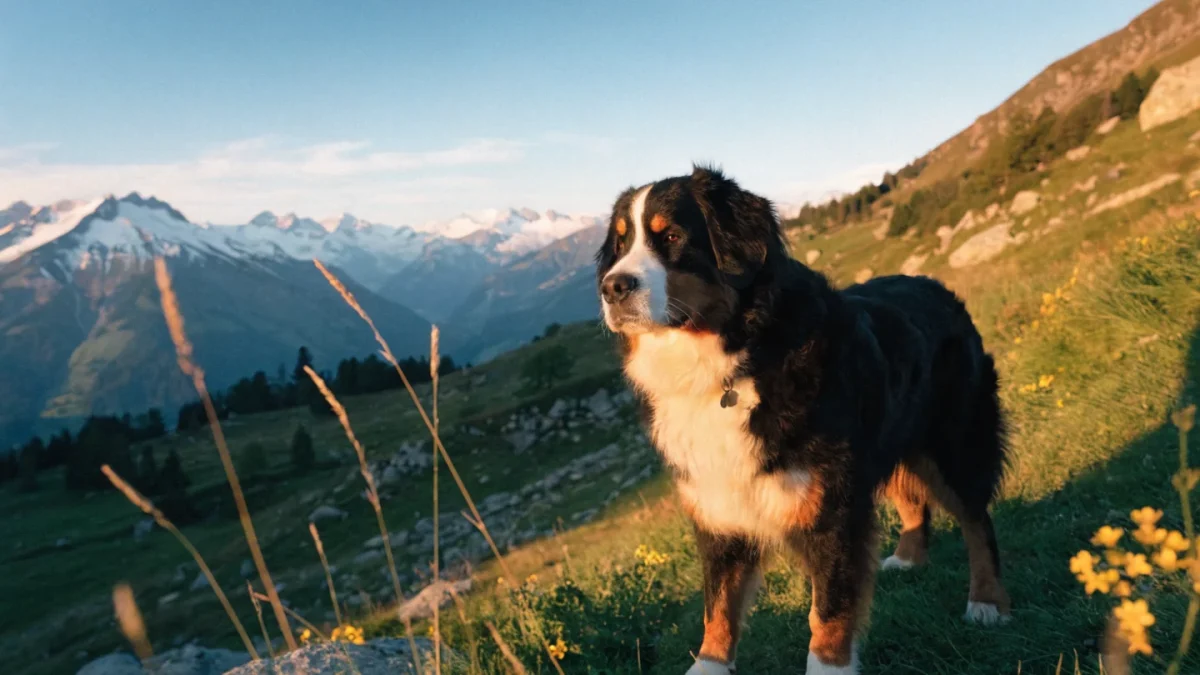
Why does everyone bury the lifespan? That's the first thing I want to know when I pick up a Bernese mountain dog breed guide, and it's almost always the last thing they get around to telling me — tucked somewhere after the grooming section, softened with phrases like "shorter than some owners expect." The median lifespan of a Bernese mountain dog is roughly 7 to 8 years. Some live to 10. Many don't. Cancer takes a disproportionate number of them, often before age 8, and it's not a fringe risk — it's the single leading cause of death in the breed. If you're considering a Berner, that's not a footnote. That's the decision.
This isn't a reason not to get one. Plenty of people know the math and get the dog anyway, because the Bernese mountain dog is genuinely one of the most warm-natured, people-bonded, visually magnificent breeds in existence. But the lifespan belongs at the front — because it changes how you think about the dog, the cost of care, and what you're signing up for. Everything else about the Berner is wonderful. This part is hard, and it deserves to be said plainly.
Origins and History
The Bernese mountain dog's working history predates written pedigrees by centuries. Dogs of this general type — large, tricolored, heavy-boned — appear in records from the canton of Bern going back to at least the early 1800s, though their presence on Swiss farms almost certainly stretches further. They served as draft dogs (pulling carts of milk and cheese), cattle drovers, and general farm guardians. The Swiss called them Dürrbächler, after a small hamlet near Riggisberg where the type was especially common.
By the late 1800s, these dogs were in trouble. Industrialization had made draft dogs less necessary, and the St. Bernard's growing fame overshadowed other Swiss breeds. Albert Heim, a Swiss geologist and prominent dog fancier, became instrumental in classifying and preserving all four Sennenhund types. He pushed for formal recognition, and in 1907 the Swiss Kennel Club established the breed standard for the Berner Sennenhund. For more on the breed's history and near-extinction, including the population bottleneck that still affects their genetics today, that story deserves its own telling.
The breed arrived in North America in the 1920s and 1930s but remained relatively obscure until the 1970s. Popularity grew steadily through the 1980s and 1990s. Today, the Bernese mountain dog sits comfortably in the top 25 breeds by registration volume in several countries — popular enough to have established breeding communities, but not so trendy that puppy mills have overwhelmed the market the way they have with some breeds.
Physical Characteristics
Size and Build
This is a substantial dog. Males typically stand 64 to 70 cm at the shoulder and weigh 39 to 50 kg. Females are somewhat smaller, ranging from 58 to 66 cm and 32 to 44 kg. The build is sturdy and balanced — broad chest, strong back, and heavy bone that reflects the breed's drafting heritage. These dogs were built to pull weight, and they look it.
Despite their size, Berners should not look cumbersome or lumbering. A well-structured Bernese mountain dog moves with surprising fluidity for an animal that weighs as much as a teenage human.
Coat
The coat is long, thick, and slightly wavy or straight — the hallmark that distinguishes the Bernese from the other three Sennenhund breeds, all of which are short-coated. The tricolor pattern is strictly defined: a jet-black base with rich rust markings (above the eyes, on the cheeks, on all four legs, and on the chest) and clean white markings (a blaze down the center of the face, a chest marking often described as a "Swiss cross," white feet, and a white tail tip).
That coat is gorgeous. It also sheds with astonishing volume. The double coat — dense undercoat beneath the longer outer coat — blows heavily twice a year and sheds moderately the rest of the time. If you've never lived with a heavy-coated giant breed, you genuinely cannot imagine the amount of fur.
Distinguishing Features
The Bernese head is flat on top with a moderate stop, giving the face a gentle, intelligent expression. The eyes are dark brown and slightly oval, set well apart. The ears are medium-sized, triangular, set high, and hang close to the head. The tail is bushy and carried low when relaxed, rising when alert but never curling over the back.
Temperament and Behavior
The Bernese mountain dog temperament is the breed's greatest selling point and the reason people forgive everything else. These are deeply affectionate, genuinely gentle dogs that bond tightly to their families and prefer to be in the same room as their people at all times. They're not clingy in the anxious way of some breeds — they're calm about it. They simply position themselves near you and stay there.
If the golden retriever is the enthusiastic extrovert who loves everyone equally, the Bernese mountain dog is the loyal introvert who has a small circle and would do anything for it. Berners are typically friendly with strangers but not effusively so. There's an initial reserve — a moment of assessment — before the tail starts wagging. This is a dog that was bred to guard a farm, not just work on one.
What Most People Get Wrong About This Breed
The misconception I hear most: "They're just big teddy bears — easygoing and lazy."
Berners are calm by giant-breed standards, yes. But they are not lazy dogs. They were bred to work — hauling carts, driving cattle, patrolling property — and they retain moderate energy and a genuine need for daily activity. A young Bernese mountain dog that doesn't get adequate physical and mental engagement will develop behavioral problems just like any other working breed. The calm demeanor is the product of maturity and exercise, not an inherent default.
The other thing people get wrong is the stubbornness. Berners are intelligent, but they're not golden retrievers. They have an independent streak inherited from their farm-dog roots. They'll consider your request, decide whether it makes sense, and then comply — or not. This isn't defiance. It's a working dog's judgment. Training requires patience and consistency, and owners who expect instant obedience will find the Bernese frustrating.
Social Dynamics
Bernese mountain dogs are generally excellent with children. Their size demands supervision around small kids — not because of aggression, but because a 45 kg dog wagging its tail can knock a toddler across the room without meaning to. With other dogs, Berners are typically polite and non-confrontational. Males can occasionally be assertive with unfamiliar male dogs, but overt aggression is uncommon and outside the breed's temperament profile.
They tend to be watchful rather than territorial. A Berner will bark to alert you that someone is at the door, then step back and let you handle it. Some are more vocal than others, but persistent, excessive barking is unusual.
Health Profile
I won't sugarcoat this section. The Bernese mountain dog has one of the most challenging health profiles of any breed, and anyone considering this dog needs to face that head-on.
Cancer
Cancer is the leading cause of death in Bernese mountain dogs by a wide margin. Multiple studies have documented cancer-related mortality rates between 45% and 55% in the breed. Histiocytic sarcoma — a particularly aggressive cancer affecting the immune system — is disproportionately common in Berners. This single disease accounts for a substantial percentage of breed deaths and has a very poor prognosis once diagnosed.
Other cancers that occur at elevated rates include lymphoma, mast cell tumors, and osteosarcoma. For a deeper look at what current research is revealing about the genetic underpinnings, see Bernese mountain dog genetics and cancer research.
Lifespan
The median lifespan for a Bernese mountain dog is approximately 7 to 8 years — a large Swiss study of over a thousand dogs put it at 8.4 years overall, split unevenly between 7.7 years for males and 8.8 for females. An older UK Kennel Club health survey found it worse: a 6.8-year mean life expectancy, the shortest of any breed in that survey. This makes the Bernese one of the shortest-lived breeds, and the primary driver is the cancer rate. Individual Berners do live to 10, 11, or occasionally 12 years — but these are outliers, not expectations.
This is the reality that every prospective Bernese owner must accept. You will almost certainly have less time with this dog than you want.
Orthopedic Issues
Hip dysplasia and elbow dysplasia are common. The breed's size and heavy build make joint problems a persistent concern. Screening parent dogs through standardized evaluation programs reduces risk but doesn't eliminate it. Cruciate ligament injuries also occur with meaningful frequency.
Other Health Concerns
- Gastric dilatation-volvulus (bloat): Life-threatening stomach torsion. Common in deep-chested large breeds. Owners should learn the symptoms — restlessness, unproductive retching, distended abdomen — because the window for treatment is narrow.
- Progressive retinal atrophy (PRA): Genetic eye disease leading to blindness. DNA testing available for certain forms.
- Von Willebrand disease: A blood clotting disorder. Type I is the form found in Berners and is typically mild.
- Degenerative myelopathy: A progressive spinal cord disease. DNA testing exists.
- Hypothyroidism: Manageable with medication but requires lifelong monitoring.
Grooming Requirements
A Bernese mountain dog's coat is a commitment. There's no way around it.
Coat Care
Brush thoroughly at least three times per week using a slicker brush and an undercoat rake. During the two major shedding periods (spring and fall), expect to brush daily. The feathering behind the ears, on the chest, and on the backs of the legs mats quickly if neglected. A metal comb through these areas every few days prevents tangles from becoming problems.
Bathing every six to eight weeks is reasonable for most Berners, though active outdoor dogs may need it more often. The thick double coat takes a long time to dry — a high-velocity dryer speeds the process significantly and helps remove loose undercoat. Never leave a Bernese coat damp; moisture trapped against the skin creates hotspot conditions.
Trimming
Bernese mountain dogs are a natural breed and should not be heavily sculpted. Light trimming of the fur between paw pads improves traction and prevents ice balls in winter. The feathering on the ears and hocks can be tidied for neatness. Beyond that, the coat should be left to do its job.
Never shave a Bernese mountain dog. The double coat regulates body temperature in both heat and cold. Shaving disrupts this system and the coat often grows back with an altered, woolly texture.
Nails, Ears, and Teeth
Trim nails every two to three weeks. Those triangular, close-hanging ears trap warmth and moisture — clean them weekly. Dental care matters here as in all breeds, though Berners are not especially prone to dental issues beyond the baseline for dogs their size.
Exercise and Activity Needs
The Bernese mountain dog needs 45 to 60 minutes of moderate exercise daily. This isn't the marathon athlete that a pointer or retriever is — Berners were built for sustained pulling and walking, not sprinting. Long walks, moderate hikes, and play sessions in a yard suit the breed well.
What Works Best
- Walking and hiking: The breed's sweet spot. Berners are steady trail companions who handle varied terrain well. Avoid extreme heat — that thick coat makes them overheat quickly.
- Carting and drafting: The original purpose. Some owners train their Berners to pull small carts or sleds, which satisfies deep instinctive drives. Organized carting trials exist in several countries.
- Swimming: Many Berners enjoy water, though not universally. Those who take to it benefit from the low-impact exercise.
- Play sessions: Berners play in bursts rather than marathons. A 20-minute game of fetch followed by a rest is more their style than an hour of nonstop activity.
Exercise Cautions
Puppies and adolescents need careful exercise management. Large breeds with heavy bone are especially susceptible to growth-plate injuries from repetitive high-impact exercise. Avoid stairs, jumping from heights, and forced running on hard surfaces until at least 18 months. Free play on soft ground is fine — let the puppy set the pace.
Heat sensitivity is a year-round concern, not just a summer issue. That double coat retains body heat effectively. Exercise in the coolest parts of the day and always carry water. If the dog lies down and refuses to continue, listen to it.
Nutrition Fundamentals
Feeding Approach
Feed measured meals — two per day for adults, three for puppies under six months. Large-breed-specific puppy formulations are worth considering because they control calcium-to-phosphorus ratios and caloric density to support steady rather than rapid growth. Fast growth in large breeds is associated with increased orthopedic problems.
Adult Berners at a healthy weight and moderate activity level typically need somewhere in the range of 1,500 to 2,200 calories per day, depending on size, metabolism, and activity. Individual variation is significant, so body condition scoring matters more than any formula.
Weight Management
A Bernese mountain dog at a healthy weight has a waist visible from above, ribs palpable without pressing hard, and an abdominal tuck when viewed from the side. Excess weight is devastating in this breed — it accelerates joint degeneration, stresses the cardiovascular system, and may compound cancer risk. Every extra kilogram matters when you're working with a short baseline lifespan.
Bloat Prevention
Large, deep-chested breeds are at higher risk for bloat. Feeding two or three smaller meals rather than one large meal, avoiding vigorous exercise immediately after eating, and using slow-feeder bowls for dogs that eat too quickly are standard precautions. Some owners discuss prophylactic gastropexy with their veterinarian — a surgical procedure that tacks the stomach in place to prevent torsion.
Living Situation Compatibility
Indoor Life
Bernese mountain dogs are emphatically indoor dogs that need outdoor access, not outdoor dogs that tolerate being inside. They bond deeply to their family and being isolated in a yard is psychologically harmful to them. They need to be where their people are.
That said, "where their people are" will be covered in fur. A Berner in the house means dog hair on every surface, a water bowl that somehow creates a splash zone three feet in every direction, and a large animal that doesn't understand why the couch can't accommodate both of you.
Space Requirements
A house with a fenced yard is ideal. Apartment living is possible but demanding — you'll need to be diligent about exercise, and a 45 kg dog in a small space creates logistical challenges. The breed is calm enough indoors that apartment dwellers can make it work, but it requires real commitment.
Climate
Berners thrive in cool and cold climates. They're genuinely happy in snow and cold temperatures. Heat is a serious concern — this breed overheats faster than most, and heatstroke is a real risk in warm, humid conditions. If you live somewhere consistently above 30 degrees Celsius in summer, you need to plan carefully around air conditioning, timing of outdoor activity, and access to shade and water.
The Right Owner for This Breed
A Bernese mountain dog is right for you if:
- You accept — genuinely accept — a likely lifespan of 7 to 8 years and the emotional weight that carries
- You have the space and climate for a large, cold-weather breed
- You can commit to consistent grooming several times per week and tolerate significant shedding
- You're financially prepared for serious health costs, including cancer diagnosis and treatment
- You want a calm, devoted companion that will be your shadow without being neurotic about it
- You value steady loyalty over flashy obedience
A Bernese mountain dog is wrong for you if:
- You want a long-lived breed and the short lifespan would devastate you beyond what you can manage
- You live in a hot climate without reliable air conditioning
- You want an off-leash dog park athlete or a jogging partner for distance runs
- You're not prepared for the financial reality of a breed prone to expensive health conditions
- You expect a dog that learns fast and obeys immediately — the Berner operates on its own timeline
- You need a low-shedding, low-maintenance coat
The Bernese mountain dog gives you everything it has, and it doesn't hold back. The cruelty of the breed is that it gives it for fewer years than almost any other dog this size. Knowing that going in — and deciding the time is worth the grief — is the first requirement of being the right owner.
Frequently Asked Questions
How long do Bernese mountain dogs actually live?
The median lifespan is approximately 7 to 8 years, with cancer being the primary driver of early mortality. Some individuals live to 10 or beyond, but planning around the median rather than the best case is the honest approach. The breed's lifespan is among the shortest for dogs of any size, which surprises many people who assume giant breeds live 10 to 12 years.
Are Bernese mountain dogs good with children?
Generally, yes. Berners are patient, gentle, and tolerant dogs that tend to be very good with children. The main caution is their size — a 40-plus kg dog can easily knock over a small child during normal play, so supervision matters. Teach children to interact respectfully, and never leave any dog unsupervised with very young children regardless of breed.
How much do Bernese mountain dogs shed?
A lot. The long double coat sheds moderately year-round and heavily during spring and fall coat blows. Expect to brush three or more times per week, vacuum frequently, and accept that your clothing will always carry some evidence of your dog. People who are genuinely bothered by pet hair should consider other breeds.
Can Bernese mountain dogs live in warm climates?
They can survive in warm climates, but they won't thrive without careful management. The thick double coat makes them prone to overheating. Air conditioning, exercising only during cool hours, constant access to water and shade, and monitoring for signs of heat stress are all essential. Berners are happiest in cool to cold environments.
Do Bernese mountain dogs need a lot of exercise?
They need moderate exercise — roughly 45 to 60 minutes daily. This isn't a high-endurance breed; long walks, moderate hikes, and play sessions suit them better than intense running or agility work. Young Berners have more energy than adults, but even they prefer bursts of activity followed by rest rather than sustained high-intensity exercise.