

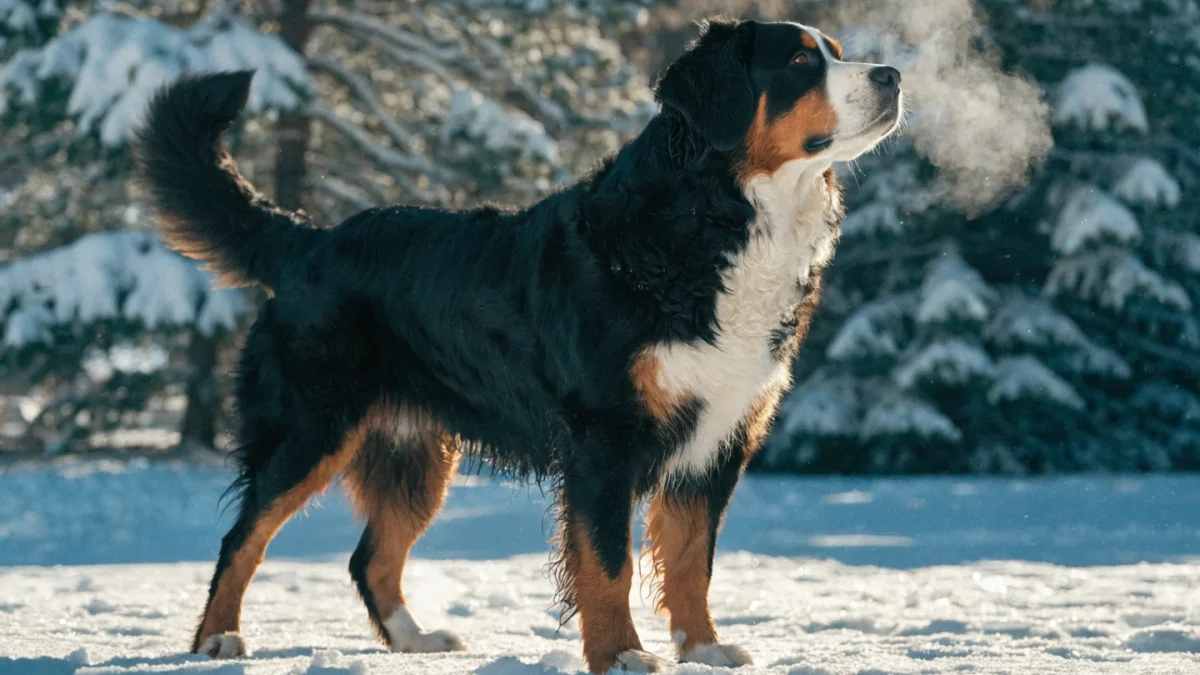
The Bernese mountain dog occupies a strange place in popular perception. It's well-known enough that most people recognize the tricolor coat on sight, but rare enough that few people have actually lived with one. That gap — between recognition and experience — is where misconceptions thrive. And some of these misconceptions cause real problems for dogs and owners.
Here are the five I encounter most, and what the breed actually requires.
1. "They're Just Big, Lazy Dogs"
This is the misconception that creates the most disappointed owners. People see a calm Bernese mountain dog lying on someone's porch and assume the breed is naturally sedentary — a giant couch potato content to loaf around all day.
They're not. Bernese mountain dogs were bred to work. For centuries, these dogs hauled loaded carts through mountain terrain, drove cattle, and patrolled farms. The calm demeanor people associate with the breed is the product of adequate exercise, mental stimulation, and maturity — not an inherent default. A young Berner that isn't getting 45 to 60 minutes of daily exercise and some mental engagement will show it through destructive chewing, digging, barking, and general restlessness.
The calm you see in well-managed adult Berners is earned, not given. As covered in the Bernese mountain dog temperament profile, these dogs are moderate-energy working dogs that need their brains and bodies engaged daily.
2. "They Live About as Long as Other Large Breeds"
This misconception may be the most consequential, because it shapes expectations that reality can't meet.
Most large breeds live 10 to 13 years. Great Danes, another giant breed, average 7 to 10 years. The Bernese mountain dog's median lifespan sits at approximately 7 to 8 years — on par with or below the shortest-lived giant breeds. Cancer, particularly histiocytic sarcoma, is the primary driver.
People research the breed, see "large dog," and mentally file it alongside golden retrievers (10 to 12 years) or German shepherds (9 to 13 years). The reality is starkly different. A Berner purchased as a puppy may reach only its seventh birthday. Some don't make it that far. Entering ownership with expectations calibrated to the wrong lifespan bracket creates grief that accurate information could have softened — not eliminated, but softened.
3. "They're Basically the Same as Saint Bernards"
Both are large Swiss dogs. Both have gentle temperaments. Both look impressive in snow. That's roughly where the similarities end.
Saint Bernards originated in the western Swiss Alps and were bred for mountain rescue. Bernese mountain dogs come from the central Swiss lowlands and valleys, bred for drafting and farm work. The Saint Bernard is heavier, typically calmer to the point of genuine placidity, and uniformly friendly with everyone. The Bernese is lighter, more active, more alert, and maintains a reserved quality with strangers that the Saint Bernard lacks.
Their health profiles also differ. While both breeds face orthopedic challenges common to giant dogs, the Bernese mountain dog's cancer burden — especially the histiocytic sarcoma predisposition — is more severe than what Saint Bernards typically face.
Confusing the two breeds leads to mismatched expectations. Someone wanting a Saint Bernard's placidity will find the Berner's moderate energy and occasional stubbornness surprising. Someone wanting a Berner's loyalty and watchfulness will find the Saint Bernard's indiscriminate friendliness disappointing.
4. "Their Calm Nature Means They Don't Need Much Mental Stimulation"
A calm exterior does not mean a vacant interior. Bernese mountain dogs are intelligent, observant dogs that were bred to make independent decisions on the farm — when to move cattle, when to alert, when to stay put. That cognitive capacity doesn't disappear in a domestic environment. It just redirects.
A Berner without mental stimulation doesn't usually become hyperactive the way an under-stimulated border collie might. Instead, it becomes stubborn, disengaged, or develops displacement behaviors — excessive licking, sighing, staring at nothing, or a generalized flatness that owners sometimes mistake for contentment. It's not contentment. It's boredom wearing a calm mask.
Puzzle feeders, scent work, obedience sessions, novel walks, and even simple games like hide-and-seek engage the Berner brain in ways that passive companionship doesn't. The physical exercise requirements are moderate. The mental requirements are underestimated by almost everyone.
5. "They're Great Off-Leash Dogs Because They're Not Runners"
Berners are not sprinters or escape artists, and they generally don't have high prey drive. This leads people to assume they're naturally reliable off-leash. The reality is more complicated.
Bernese mountain dogs have an independent streak. Their farm-dog heritage includes making decisions without human direction — following a scent, investigating a sound, choosing to rest instead of responding to a recall. Off-leash reliability requires training, not breed assumptions.
A Berner in an unfenced area who decides that the interesting smell 200 meters away is more compelling than your recall command will follow its judgment. They're not bolting like a sighthound — they're ambling like a dog with its own agenda. The outcome is the same: a large dog that isn't where you need it to be.
Off-leash privileges should be earned through consistent recall training in progressively distracting environments, not assumed because the breed isn't known for running. The Bernese mountain dog breed guide covers training and exercise considerations in detail.
Every one of these misconceptions stems from the same root error: seeing the Bernese mountain dog's calm surface and assuming everything underneath is equally simple. It isn't. This is a thoughtful, sensitive, moderately active working breed that requires engaged ownership. The dogs that look like perfect, effortless companions are the ones whose owners put in the work that you don't see.