

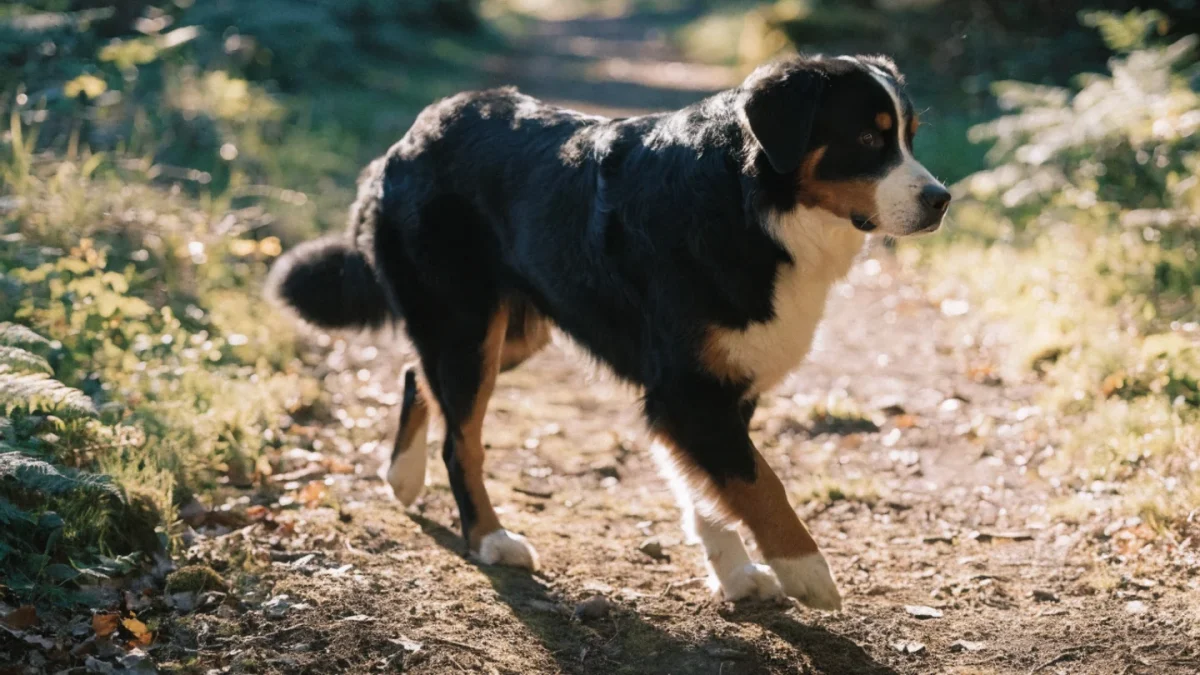
The Bernese mountain dog was never built for speed. These dogs spent centuries hauling loaded milk carts along Swiss mountain roads — work that demanded steady power, reliable endurance, and the good sense to pace themselves over long distances. That heritage didn't vanish when the breed moved out of the canton of Bern and into suburban homes. The engine is still a diesel, not a sports car. And it still needs to run.
A Bernese mountain dog needs roughly 45 to 60 minutes of moderate exercise daily. That's less than a retriever or a pointer, but significantly more than many people expect from a breed they've been told is "calm." Calm and sedentary are not the same thing. Understanding the difference is what separates owners with well-adjusted Berners from owners with destructive, overweight ones.
What Moderate Exercise Looks Like
Walking
The single best exercise for a Bernese mountain dog is a good, purposeful walk. Not a stroll to the end of the driveway. Not a meandering sniff-session where the dog sets the pace entirely. A 30- to 45-minute walk at a moderate pace — fast enough that the dog is moving with intent, not so fast that it becomes a jog — is the foundation.
Two walks per day is ideal. One longer walk and one shorter outing works for most adult Berners. Vary the route. These are intelligent dogs, and walking the same loop every day bores them. A bored Berner on a walk becomes a stubborn Berner on a walk, and then you're the one being exercised.
Hiking
This is where the breed shines. Berners are outstanding trail dogs — steady, sure-footed, and content to maintain a consistent pace for miles. The draft-dog build gives them good endurance on rolling terrain. They handle uneven ground, mud, and moderate climbs without difficulty.
Avoid hiking in heat. That double coat retains body heat efficiently, and a Bernese mountain dog can overheat on a warm day faster than most owners realize. Early morning or late evening hikes in summer, and carry water regardless of season.
Play Sessions
Berners play in bursts. A 15-minute game of fetch or tug in the yard provides good exercise, but don't expect an hour of nonstop activity. These dogs will engage enthusiastically for a period, then lie down and observe. That pattern — active burst, rest, active burst — reflects their working heritage. Cart dogs didn't sprint continuously. They pulled, rested at stops, and pulled again.
Carting and Drafting
If you want to give your Bernese mountain dog the most breed-appropriate exercise possible, train it to pull. Carting — having the dog pull a small wagon or sled — engages muscles and instincts that nothing else replicates. It satisfies the breed's fundamental purpose. Many Berners take to harness work with obvious enthusiasm. Organized drafting events exist in several countries.
Start with a properly fitted harness and an empty cart. Build weight gradually. This is an activity that requires some equipment and learning, but the payoff in physical and mental engagement is substantial.
Swimming
Not every Bernese mountain dog is a natural swimmer, but many enjoy it once introduced properly. Swimming provides excellent low-impact exercise — particularly valuable for a heavy breed prone to joint issues. If your Berner likes water, it's one of the best exercise options available, especially in warm weather when land-based exercise needs to be limited.
Puppy Exercise: The Growth-Plate Reality
Large-breed puppies are vulnerable. Bernese mountain dog puppies carry a lot of mass on developing bones, and their growth plates don't close until approximately 18 to 24 months. Forced, repetitive exercise on hard surfaces during this period — jogging on pavement, extended stair climbing, jumping from heights — risks permanent damage.
The common guideline of five minutes of structured exercise per month of age, twice daily, is a reasonable starting framework. A four-month-old puppy gets roughly 20 minutes of structured activity per session. Free play on soft ground — where the puppy controls the pace and self-regulates — is different from forced exercise and can be more liberal.
No long-distance walks until the dog is at least 12 months old. No running on hard surfaces until growth plates have closed, confirmed by a veterinary professional if there's any question. This is one area where protecting the future matters more than entertaining the present.
Heat: The Constraint Nobody Can Ignore
The Bernese mountain dog temperament is well suited to a calm indoor life, but the breed still needs outdoor time — and heat makes that complicated. The thick double coat that protected Berners in Swiss mountain winters works against them in warm climates.
Signs of overheating include excessive panting, drooling, stumbling, a bright red tongue, and reluctance to continue moving. If a Bernese mountain dog lies down during exercise and refuses to get up, the dog is telling you something. Listen.
Exercise during the coolest parts of the day. Provide constant access to fresh water. Avoid asphalt, which absorbs heat and burns paw pads. If the temperature is above roughly 25 degrees Celsius, shorten the duration and reduce the intensity. Above 30 degrees, limit outdoor exercise to brief outings and rely on indoor play and mental enrichment.
When Exercise Isn't Enough
If your adult Bernese mountain dog is getting daily walks and appropriate activity but still displays destructive behavior — chewing, digging, excessive barking — the problem may not be physical exercise. It may be mental. Berners are working dogs with working-dog brains. They need problems to solve.
Puzzle feeders, scent work, hide-and-seek games, and short obedience-training sessions provide mental stimulation that tires the brain. A 15-minute nose-work session can exhaust a Berner more effectively than an extra 30 minutes of walking. As covered in the Bernese mountain dog breed guide, the breed's exercise needs are moderate compared to sporting dogs — but their mental needs are real and shouldn't be overlooked.