

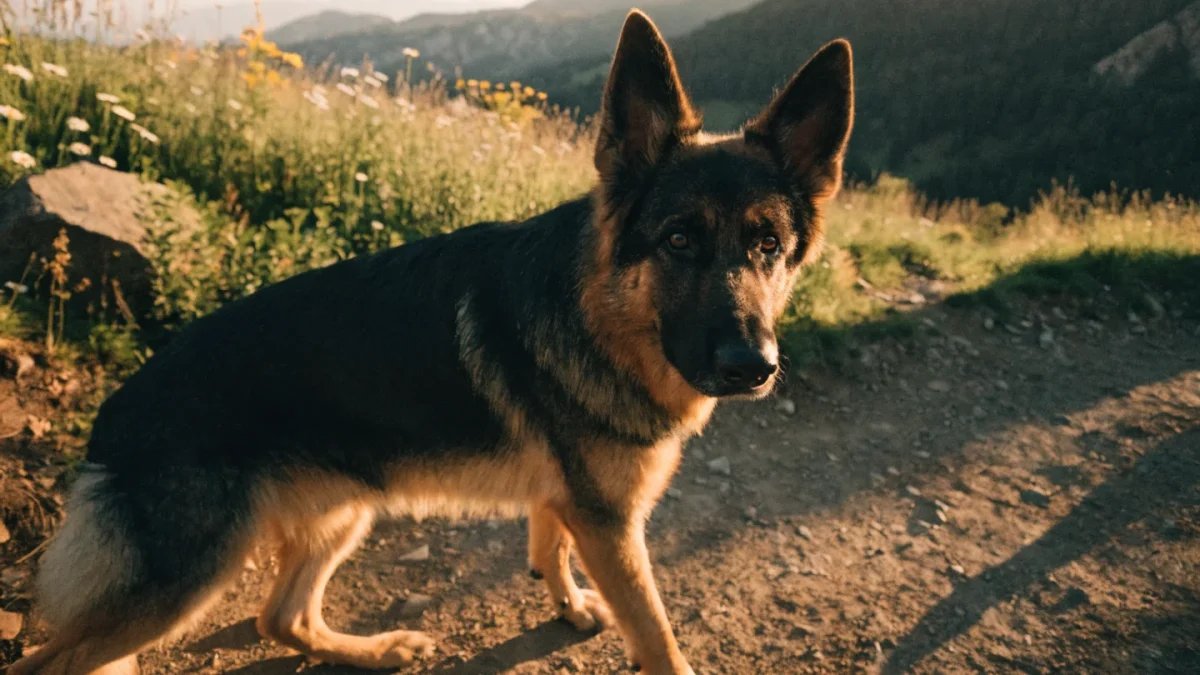
The german shepherd exists because one man decided that Germany's regional herding dogs weren't good enough. In April 1899, a German cavalry officer named Max von Stephanitz attended a dog show in Karlsruhe and spotted a medium-sized, wolf-like herding dog named Hektor Linksrhein. Von Stephanitz bought the dog on the spot, renamed him Horand von Grafrath, and registered him as the first german shepherd — entry number one in the brand-new breed registry he founded that same month. The entire breed descends from that single strategic decision.
German shepherds are large, versatile herding dogs bred in 1899 Germany for intelligence, obedience, and physical capability. They demand daily vigorous exercise, early and ongoing socialization, and consistent mental engagement. If you're looking for a german shepherd breed guide that addresses the real considerations — structural health controversies, temperament variations between lines, and the honest commitment this breed requires — this is it.
This is not a breed you drift into casually. German shepherds have been the subject of more mythology, more misunderstanding, and more irresponsible breeding than almost any other dog on earth. Some of those myths are flattering. Some are harmful. I want to address both.
The Real History Behind the German Shepherd Breed
Von Stephanitz wasn't a hobbyist. He was an agricultural science student and military officer who approached dog breeding with an engineer's precision. His founding principle was "utility and intelligence" — he wanted a working dog first, a pretty dog never. That philosophy defined the breed's first three decades.
The Verein für Deutsche Schäferhunde (SV), the breed club von Stephanitz founded in 1899, grew into the largest single-breed club in the world. Von Stephanitz served as its president for 36 years and maintained iron-fisted control over breeding standards. He introduced mandatory working tests — if a dog couldn't perform, it couldn't be bred, regardless of appearance. That standard has eroded considerably in the century since, and the consequences are visible in the breed today.
The german shepherd's early gene pool was broader than most people realize. Von Stephanitz drew from herding dogs across Thuringia, Franconia, and Württemberg. These weren't genetically uniform animals — they varied in size, coat type, and structure. The standardization happened through aggressive selective breeding over roughly 20 years.
Wartime and Global Spread
World War I transformed the german shepherd from a regional working breed into a global phenomenon. The German military used an estimated 48,000 dogs during the war, the majority german shepherds, for messenger duty, sentry work, and casualty location. Allied soldiers encountered these dogs in the field and brought them home. In Britain, anti-German sentiment led to the breed being temporarily renamed "Alsatian" — a name that persisted officially until 1977.
The breed's popularity surged in the 1920s through the 1960s, driven partly by film dogs like Rin Tin Tin (rescued as a puppy from a bombed war-dog kennel in France in 1918) and Strongheart. These media portrayals cemented the breed's image as intelligent, loyal, and heroic — an image that's largely accurate but dangerously incomplete.
The Show Line Divergence
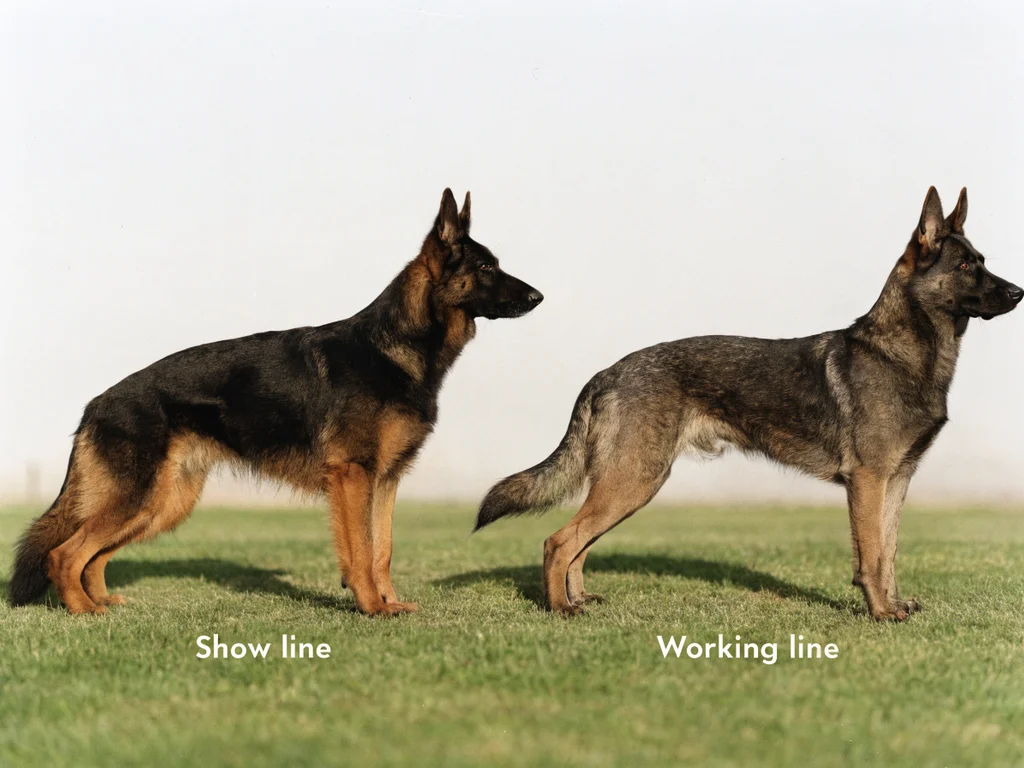
Starting in the 1960s and accelerating through the 1970s, a significant split developed between working-line german shepherds and show-line german shepherds. Show breeders, particularly in Germany, began selecting for an exaggerated rear angulation — the steep slope from withers to hips that's now characteristic of show-bred dogs. Working-line breeders continued selecting for structural soundness and drive.
This isn't a cosmetic debate. The exaggerated rear angulation in some show lines has been linked to increased incidence of hip and spinal problems, and it's one of the most contentious issues in the breed world today. If you're researching german shepherds, understanding this split is essential. The dog you get from a show breeder and the dog you get from a working-line breeder can look and behave like different breeds entirely.
Physical Characteristics of the German Shepherd
Size and Build
Males typically stand 60 to 65 cm at the shoulder and weigh between 30 and 40 kg. Females range from 55 to 60 cm and 22 to 32 kg. The breed standard calls for a dog that is slightly longer than tall — roughly a 10:8.5 ratio of length to height. The head is clean-cut, wedge-shaped, and proportional to the body, with a moderately pointed muzzle and that characteristic attentive expression.
The build should convey athletic power without bulk. A well-bred german shepherd in working condition looks like an endurance athlete — deep-chested, with firm musculature and no excess weight. Overweight german shepherds are distressingly common, and extra weight accelerates every joint problem this breed is predisposed to.
Coat Types and Colors
The standard coat is a double coat: a dense, harsh outer coat lying close to the body with a thick undercoat. Coat length varies — the "stock coat" (medium length) is most common, but long-stock coats (with feathering on the ears, legs, and tail) also occur and are now accepted in most breed standards after decades of exclusion.
The most recognized color is black and tan (the classic saddle pattern), but german shepherds come in solid black, sable (individual hairs banded with multiple colors), bi-color (predominantly black with minimal tan), and black and red. Solid white german shepherds exist but are disqualified from conformation showing under most breed standards — they're genetically german shepherds in every way, with color being the sole difference. Blue and liver colors result from dilution genes and are considered faults.
That double coat sheds heavily. Twice a year, during seasonal coat blows, the undercoat comes out in clumps. Between those periods, daily shedding is still substantial. If dog hair in your house bothers you, reconsider this breed.
Structural Variation Between Lines
Working-line german shepherds typically have a straighter topline (the back profile from withers to croup), more moderate angulation, and a more compact build. They tend to be smaller and more agile than show dogs. Their coats are often shorter and more practical.
Show-line dogs, particularly those from German show breeding, display the pronounced rear angulation, a more dramatic "flying trot" gait, and often heavier bone. American show lines differ again — they tend to be larger overall with an even more extreme angulation than German show lines.
These aren't just aesthetic differences. They affect how the dog moves, what health risks it carries, and what kind of work or activity it can sustain. Prospective owners need to understand which type they're looking at.
German Shepherd Temperament: What Most People Get Wrong
The biggest misconception about german shepherds is that they're naturally aggressive guard dogs that just need a backyard to patrol. That's backwards. German shepherds are working dogs bred for partnership with a handler. Without that partnership — without training, socialization, and daily purposeful interaction — they don't become protective guardians. They become anxious, reactive, and unpredictable.
Intelligence and Trainability
German shepherds consistently rank among the most trainable breeds. They learn new commands quickly and retain them reliably. But trainability isn't the same as easy. A dog this smart needs a reason to cooperate. They evaluate whether a task is worth doing, and they get bored with pointless repetition faster than most breeds. Short, varied training sessions work. Hour-long drills of the same command don't.
Their intelligence also means they learn bad habits as quickly as good ones. An undersocialized german shepherd that learns to lunge at strangers on leash has learned that behavior just as efficiently as it would learn a polished heel. Every interaction is training, whether you intend it or not.
Drive and Energy
Working-line dogs tend to have higher prey drive, more intensity, and greater endurance than show lines. But even show-bred german shepherds are high-energy dogs by any reasonable standard. A healthy adult needs a minimum of 90 minutes of daily exercise — and that means actual movement, not standing in a yard.
Mental exercise matters as much as physical. Puzzle feeders, scent work, obedience drills, and structured play all count. A german shepherd that gets a two-hour hike but no mental stimulation will still find ways to entertain itself, and you probably won't like those ways. Destructive chewing, excessive barking, and obsessive behaviors are boredom symptoms, not personality flaws.
Socialization Requirements
German shepherds have strong natural suspicion of unfamiliar people and situations. This trait made them excellent military and police dogs. It also means that without deliberate, early, and ongoing socialization, they can become fearfully aggressive or excessively reactive.
The critical socialization window closes around 14 to 16 weeks, but socialization shouldn't stop there. Adolescent german shepherds (6 to 18 months) often go through a "fear period" where previously neutral stimuli suddenly become alarming. Continued positive exposure during this phase is essential.
A well-socialized german shepherd is confident, discerning, and calm in novel situations. A poorly socialized one is a liability. There's no middle ground with this breed.
Bonding and Separation
German shepherds bond deeply to their primary handler, sometimes to a degree that becomes problematic. Separation anxiety is common in the breed. Dogs that can't tolerate being alone may bark incessantly, destroy property, or injure themselves trying to escape confinement.
This isn't a breed that does well left alone for 10-hour workdays. They need companionship and routine. If your lifestyle involves long daily absences, a german shepherd is probably not the right fit — or you need a solid plan for daycare, walkers, or a work-from-home arrangement.
Health: The Uncomfortable Realities
German shepherds face significant breed-specific health challenges. Pretending otherwise does prospective owners a disservice. The average lifespan is 9 to 13 years, with many dogs developing mobility-limiting conditions well before the end of that range.
Hip and Elbow Dysplasia
Hip dysplasia is the breed's most well-known health problem, and it's been documented in german shepherds since the 1960s. The condition involves abnormal development of the hip joint, leading to arthritis, pain, and progressive lameness. Elbow dysplasia — a parallel condition in the front limbs — is also prevalent.
Both conditions have genetic and environmental components. Responsible breeding programs screen parent dogs through radiographic evaluation and only breed dogs with good or excellent joint scores. But genetics isn't destiny — overfeeding puppies, excessive exercise during growth (before 18 months), and obesity all increase the risk and severity regardless of genetic background.
Degenerative Myelopathy
Degenerative myelopathy (DM) is a progressive spinal cord disease that causes gradual hind-limb paralysis. It's been compared to ALS in humans. German shepherds are disproportionately affected. The disease typically appears after age 7 and progresses over 6 to 36 months. As Cornell University's College of Veterinary Medicine states plainly, there is no cure — and no pharmacological treatment has demonstrated efficacy in slowing progression.
A genetic test for the SOD1 mutation associated with DM is available. Dogs that are homozygous for the mutation (carrying two copies) are at significantly elevated risk. Responsible breeders test for this gene and make breeding decisions accordingly.
Exocrine Pancreatic Insufficiency
German shepherds account for roughly two-thirds of all canine exocrine pancreatic insufficiency (EPI) cases caused by pancreatic acinar atrophy, according to veterinary gastroenterology literature reviewed by the Universities Federation for Animal Welfare — a condition where the pancreas fails to produce adequate digestive enzymes. Symptoms include chronic weight loss despite normal appetite, poor coat condition, and voluminous, pale stools. EPI is manageable with enzyme supplementation but requires lifelong treatment.
Gastric Dilatation-Volvulus (Bloat)
As a deep-chested breed, german shepherds are at elevated risk for GDV — a life-threatening emergency where the stomach distorts and rotates. Risk factors include eating one large meal per day, eating rapidly, exercising immediately after meals, and advanced age. Prophylactic gastropexy (surgical stomach tacking), often performed during spaying or neutering, reduces the risk significantly.
Other Conditions
Perianal fistulas occur more frequently in german shepherds than in any other breed. Allergic skin disease is common. Hemangiosarcoma is a particular concern — a 2013 review in ISRN Veterinary Science found German shepherds carry an odds ratio of 4.7 for visceral hemangiosarcoma compared to other purebred dogs — and osteosarcoma (bone cancer) appears at elevated rates across large breeds, German shepherds included. Cardiac conditions, particularly aortic stenosis, have been documented but are less common than the orthopedic and digestive issues.
None of this means every german shepherd will be sick. It means that buyers should demand health testing documentation from breeders (hips, elbows, DM, and cardiac screening at minimum) and maintain a long-term health budget that accounts for these possibilities.
Grooming the German Shepherd
Coat Maintenance
The german shepherd's double coat is relatively low-maintenance compared to breeds with long or curly coats, but "low-maintenance" still means regular work. Brush two to three times per week with an undercoat rake and a slicker brush to remove loose hair and prevent matting in the undercoat. During seasonal coat blows (spring and fall), daily brushing is necessary — and you'll still find hair everywhere.
Bathing should be infrequent — every 6 to 8 weeks unless the dog gets genuinely dirty. Over-bathing strips the natural oils from the coat and can cause dry skin, which german shepherds are already prone to. Use a gentle formulation designed for double-coated dogs.
Ears, Nails, and Teeth
Those iconic erect ears are actually an advantage for ear health — air circulation reduces moisture buildup compared to floppy-eared breeds. Check ears weekly for debris or odor, but don't overcleanliness routines that irritate healthy ears.
Nails should be trimmed every 2 to 3 weeks. German shepherds that walk regularly on pavement may need less frequent trimming, but check dewclaws regardless — they don't contact the ground and can grow into the pad if neglected.
Dental care matters more than most owners realize. Daily tooth brushing is ideal. Dental disease is one of the most common health issues across all dog breeds, and german shepherds are no exception.
Feeding and Nutrition
German shepherds do well on high-quality diets appropriate for large, active breeds. Puppies need a large-breed-specific formulation that controls growth rate — rapid growth in large breeds increases the risk of developmental orthopedic disease. Switching to an adult formulation typically happens around 12 to 18 months.
Adults generally eat 2 to 3.5 cups of food per day, split into two meals. Feeding twice daily rather than once reduces GDV risk. The exact amount varies dramatically based on the dog's activity level, metabolism, age, and the caloric density of the food.
Weight management is critical for joint health. You should be able to feel your german shepherd's ribs without pressing hard, and there should be a visible waist when viewed from above. A lean german shepherd is a healthier german shepherd. Breed enthusiasts sometimes confuse a healthy weight with being "too thin" because overweight dogs have become so normalized.
Exercise and Mental Stimulation
A german shepherd that doesn't get enough physical and mental exercise will create its own entertainment. That entertainment usually involves furniture, shoes, door frames, or your neighbor's patience.
Physical Exercise
Minimum 90 minutes daily for a healthy adult. This can include structured walks, jogging, hiking, swimming, fetch, or dog sports. Puppies need much less — the common guideline of 5 minutes per month of age (twice daily) for forced exercise is reasonable, though free play in a safe area can exceed that.
Avoid repetitive high-impact exercise (jumping, hard running on pavement) before skeletal maturity at 18 to 24 months. German shepherd growth plates close later than those of smaller breeds, and premature stress on developing joints contributes to dysplasia.
Mental Stimulation
Scent work is outstanding for this breed — it engages their natural abilities and tires them mentally faster than physical exercise alone. Scatter feeding in grass, hide-and-seek with treats or toys, and formal nosework training all work well.
Obedience training beyond basics keeps their minds engaged. German shepherds excel at advanced obedience, tracking, and agility (after skeletal maturity). Structured training sessions of 15 to 20 minutes, two to three times daily, are more effective than one long session.
What Happens Without It
An under-exercised german shepherd becomes a problem dog. Excessive barking, destructive chewing, digging, pacing, tail chasing, and reactivity on leash are all common symptoms of insufficient stimulation. These behaviors are frequently mislabeled as aggression or dominance when they're actually frustration and boredom. Fix the exercise deficit first — many "behavioral problems" resolve on their own.
Living Arrangements
German shepherds are adaptable to various living situations, but some work better than others. They can live in apartments if their exercise needs are fully met — it's the daily commitment that matters, not the square footage. That said, access to a secure outdoor area makes the daily routine significantly easier.
They tolerate cold weather well thanks to their double coat. Heat tolerance is more limited — in hot climates, exercise should shift to early morning and evening hours. Black-coated german shepherds absorb more heat and need particular attention during summer months.
German shepherds can coexist peacefully with other dogs and cats, especially when raised together from a young age. Same-sex aggression can occur, particularly between intact males. Introductions to existing pets should be gradual and supervised.
What Most People Get Wrong About This Breed
The german shepherd's pop culture image — the police dog, the military hero, the unflinchingly loyal protector — sets owners up for disappointment. Here's what that image leaves out:
They're sensitive. Despite their tough appearance, german shepherds are emotionally attuned and respond poorly to harsh correction. Punishment-based training methods are counterproductive with this breed. They don't need to be dominated. They need clarity, consistency, and fairness.
Protection isn't automatic. An untrained german shepherd is not a protection dog. It's just a large dog that might bark. Real protection work requires hundreds of hours of professional training. Most pet german shepherds will never need to protect anyone, and they shouldn't be encouraged to act territorial.
They're vocal. German shepherds bark, whine, grumble, and "talk." If you need a quiet dog, this breed will test you. The vocalizations are communication, not defiance — but they're persistent, especially when the dog is under-stimulated.
The breed's reputation precedes it. In some communities, german shepherds are subject to breed-specific restrictions or landlord bans. Insurance companies in some regions charge higher premiums or refuse coverage for households with german shepherds. This is a practical reality that prospective owners must research before committing.
Choosing a German Shepherd: Honest Assessment
The right owner for a german shepherd is someone who genuinely wants a partnership. This is a dog that wants a job, wants your attention, and wants to be part of every activity. If that sounds exhausting, it probably is — for you.
Good candidates: active individuals or families who are home regularly, committed to daily training and exercise, willing to invest in early socialization classes, and prepared for breed-specific health costs. Experience with dogs is helpful but not mandatory if you're willing to learn.
Poor candidates: people seeking a low-maintenance pet, families that are away from home most of the day, anyone who wants a dog that will "guard the house" with no training investment, or people who are uncomfortable with shedding, barking, and a dog that follows them from room to room.
If you've read this far and you're still interested, that's a good sign. The german shepherd rewards commitment like few other breeds. They are extraordinary dogs for people willing to meet them halfway. Just don't expect halfway to be easy.
Frequently Asked Questions
How much exercise does a german shepherd need daily?
A healthy adult german shepherd needs a minimum of 90 minutes of combined physical and mental exercise per day. This should include structured walks or runs alongside mental stimulation like obedience work, scent games, or puzzle feeders. Puppies need significantly less forced exercise — follow the 5-minutes-per-month-of-age guideline to protect developing joints.
Are german shepherds good family dogs?
German shepherds can be excellent family dogs when properly socialized from puppyhood and given adequate exercise and training. They bond strongly with family members and are typically patient with children they've been raised with. However, their size, energy level, and need for daily engagement mean they're best suited for families that can make them an active part of daily life rather than a background pet.
What is the difference between working line and show line german shepherds?
Working-line german shepherds are bred for drive, structural soundness, and task performance. They tend to have straighter backs, more compact builds, and higher energy. Show-line dogs are bred for conformation standards and display more angulated rear structure, heavier bone, and a more dramatic gait. The distinction affects health risk profiles, energy levels, and the type of activity the dog is best suited for.
How long do german shepherds live?
German shepherds typically live 9 to 13 years. Lifespan is influenced by genetics, diet, exercise, weight management, and proactive health screening. Dogs from health-tested parents with documented hip, elbow, and DM clearances tend to have fewer mobility-limiting conditions in later years, which affects both quality of life and longevity.
Do german shepherds shed a lot?
Yes. German shepherds have a dense double coat that sheds year-round, with two heavy shedding periods in spring and fall when the undercoat comes out in large clumps. Regular brushing (two to three times weekly, daily during coat blows) manages loose hair but doesn't eliminate it. If dog hair on clothing, furniture, and floors is a dealbreaker, this breed is not the right choice.