

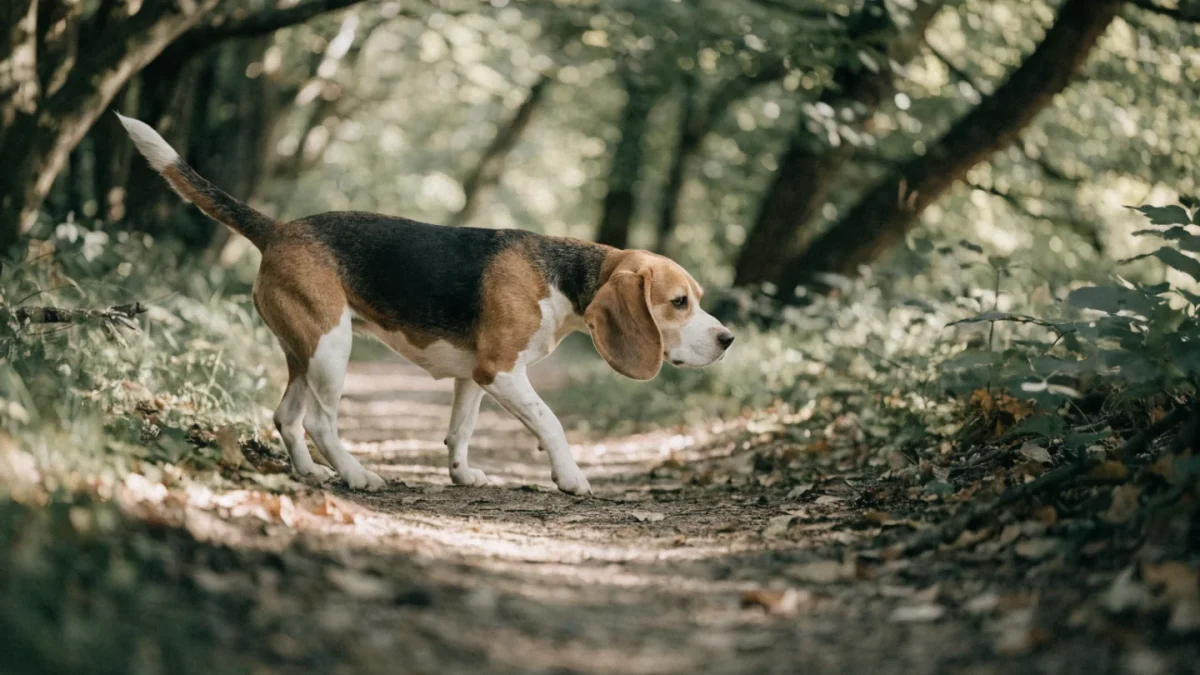
The beagle gets sold as the perfect family dog. Friendly, manageable, good with kids, not too big, not too small, recognizable from every cartoon and commercial ever made. And then people get one and discover the real dog — which is a compact, relentlessly driven scent hound that will follow its nose through a gap in a fence you didn't know existed, sing an aria at a passing rabbit at 6 a.m., and look at you with complete innocence when you call its name from across the yard because it heard you perfectly well and decided the smell under that bush was more important.
This is one of the most popular breeds in the world and one of the most frequently surrendered to shelters. That is not a coincidence. The gap between what people expect from a beagle and what a beagle actually is doesn't come from anything the dog does wrong — it comes entirely from the marketing. "Family dog" is accurate. "Easy family dog" is a myth. Beagles are 2,500 years of scent-hound selection packed into a 10-kilogram frame, and they are exactly as stubborn, exactly as vocal, and exactly as obsessive about following a trail as that history demands.
This beagle breed guide covers the full picture: the history that explains the behavior, the temperament realities, the health landscape, and an honest fit assessment. The beagle deserves better than the sanitized version. So do the people considering one.
A History Older Than Most Countries
The beagle's story doesn't start in England, though England is where the modern breed took shape. Scent hounds matching the beagle's description appear in Greek texts from around 400 BC, where Xenophon wrote about small hounds used for hare hunting on foot. Romans likely brought similar hound-type dogs to Britain, where they interbred with local hunting dogs over centuries.
The word "beagle" itself has uncertain origins. Some etymologists trace it to the French be'geule, meaning "open throat" — a reference to the breed's bay. Others link it to the Old English beag, meaning "small." Both fit. By the 1300s, English records reference small pack hounds used for rabbit hunting, and Edward II and Henry VII both kept packs of what were called "Glove Beagles" — dogs small enough to sit on a gloved hand. Elizabeth I reportedly kept "Pocket Beagles" standing only 20 to 23 cm tall.
Those miniature beagles gradually fell out of favor. Hunters wanted a slightly larger, faster hound that could cover more ground. By the 1700s, two distinct types had emerged in England: the Southern Hound, which was larger and slower with long ears and a deep voice, and the North Country Beagle, which was smaller, lighter, and faster. Modern beagles descend primarily from crosses between these two types.
The breed nearly disappeared in the early 1800s. Foxhunting had become the fashionable pursuit, and foxhounds eclipsed beagles among the sporting gentry. Farmers in England, Ireland, and Wales kept beagle packs alive purely because they worked — a farmer on foot with a small pack of beagles could hunt rabbits more practically than a mounted foxhound pack.
Reverend Phillip Honeywood established a foundational pack in Essex in the 1830s that many breed historians consider the starting point for the modern beagle. He bred for hunting ability, not appearance. Thomas Johnson, a contemporary, bred for both function and a more refined look. By the time breed standardization took hold in the late 1800s, both lines had influenced the beagle's development.
General Rowett's imports to the United States in the 1870s established the American beagle population. The breed club formed in 1884, the same year the breed gained formal recognition. Since then, beagles have never dropped out of the top ten most popular breeds in the U.S., and their popularity is similarly high across Europe, Japan, and Australia.
Physical Characteristics
Size and Varieties
Most breed registries recognize two size varieties. The smaller stands under 33 cm at the shoulder. The larger ranges from 33 to 38 cm. Weight typically falls between 9 and 11 kg for the smaller variety and 11 to 14 kg for the larger. There's more size variation in practice than those numbers suggest — some beagles from field lines run lean at 8 kg, while show-bred dogs can push past 16 kg, particularly if they're overfed.
The body is solid and square-proportioned, with a moderately domed skull, a square muzzle, and large, soft brown or hazel eyes set far apart. The overall expression is often described as "pleading" — and beagles know how to use it, particularly around food.
Ears, Nose, and the Scent Apparatus
The ears deserve special attention because they're functional, not decorative. Beagle ears are long, rounded at the tips, and set low on the head. When pulled forward, they should nearly reach the tip of the nose. Their purpose is aerodynamic: those wide, low-set ears catch scent particles from the ground and funnel them toward the nose as the dog tracks.
The nose itself contains approximately 220 million scent receptors. Humans have about 5 million. That 44:1 ratio explains almost every behavioral trait that frustrates beagle owners — the refusal to come when called during a scent trail, the garbage-raiding, the nose-to-ground walks that take twice as long as they should.
The moist, broad nose leather is almost always black, though lighter-colored beagles may have a slightly lighter nose. A beagle's olfactory system is so effective that the breed is used worldwide for detection work at airports and border crossings, screening luggage for agricultural products, narcotics, and contraband.
Coat and Colors
The coat is short, dense, and weatherproof — designed for a dog that historically spent entire days running through brush, bramble, and wet undergrowth. It lies flat against the body and requires minimal grooming compared to longer-coated breeds, though it sheds more than many owners expect.
Tricolor (black, tan, and white) is the most recognized pattern, but beagles come in a wide range of accepted colorations. Bicolor combinations include red and white, lemon and white, and tan and white. Some beagles are nearly solid — called "hare pied" when the coloring blends brown tones in patches. Puppies that appear nearly black and white at birth often develop more tan as they mature.
The tail, carried high but not curled over the back, almost always has a white tip. This isn't accidental — hunters bred for that white tip specifically so they could spot their hounds moving through tall grass and underbrush.
Temperament and Behavior
The Pack Dog Mentality
Beagles were bred to work in packs of a dozen or more dogs, and this heritage shapes everything about their temperament. They are social to their core. A beagle left alone for eight or ten hours daily will not quietly accept the situation. Separation anxiety, destructive chewing, and sustained howling are predictable outcomes of isolating a breed that was never designed to be alone.
This pack orientation also makes them generally excellent with other dogs. They're rarely aggressive toward unfamiliar dogs, tend to defer rather than escalate, and often develop strong bonds with canine housemates. For multi-dog households, a beagle usually integrates well.
With people, beagles are gregarious and affectionate. They are not guard dogs. A beagle will bark at a stranger approaching the door, then wag its tail and solicit belly rubs when the stranger enters. Some owners find this charming. Others find it useless.
What Most People Get Wrong About Beagles
The biggest misconception is that beagles are easy dogs. Their size, friendly faces, and cartoon-character association suggest a simple, low-maintenance pet. The reality is more complicated.
Beagles are hounds. Hounds were bred to make independent decisions in the field — following a scent trail for hours without waiting for human direction. That independence translates to what most owners experience as stubbornness. A beagle that picks up an interesting scent doesn't hear your recall command. It isn't being defiant. Its brain has literally deprioritized auditory input in favor of olfactory processing. A 2022 tractography study in The Journal of Neuroscience found that the canine olfactory system has extensive connections to nearly every major brain region — far more dominant in dog cognition than the equivalent pathways in humans — which helps explain why a tracking beagle's attention locks onto scent data at the expense of everything else.
This means off-leash reliability in unfenced areas is, for most beagles, a fantasy. Experienced scent-hound owners understand this. First-time beagle owners often learn it the hard way — watching their dog disappear over a hill at a dead sprint, nose locked on a rabbit trail, completely deaf to shouting.
Vocalization
The beagle voice is famous and, depending on your living situation, potentially a deal-breaker. Beagles produce three distinct vocalizations: a standard bark, a yodel-like bay (the classic "aroo"), and a howl that can carry for remarkable distances. They bay when they're excited, when they've found a scent, when they're bored, when they hear other dogs, and sometimes apparently because they enjoy the sound.
In a detached house with tolerant neighbors, beagle vocalization is manageable. In an apartment with thin walls, it is a genuine problem that no amount of training will fully eliminate. You can reduce frequency and manage triggers, but you cannot breed out a trait that was selectively reinforced over centuries.
Health Considerations
Beagles are generally robust dogs with an average lifespan of 12 to 15 years — longer than many breeds of similar size. That longevity, however, comes with a specific set of health predispositions that responsible owners should understand.
Obesity
This is the number-one beagle health issue, and it's almost entirely owner-caused. Beagles are food-motivated to an extreme degree. They will eat anything, in any quantity, at any time. A 2016 study published in Cell Metabolism identified a POMC gene deletion in Labrador retrievers and flat-coat retrievers linked to food drive and weight gain — but when the researchers screened beagles specifically, the deletion was absent. Beagle obesity appears to involve different genetic pathways that are still being mapped, so the breed's relentless food motivation likely has its own distinct molecular basis.
A lean beagle should have a visible waist when viewed from above and ribs you can feel easily under a thin layer of fat. Most pet beagles are overweight. Excess weight accelerates joint problems, increases surgical risk, and — according to a 2019 study in the Journal of Veterinary Internal Medicine that tracked over 50,000 dogs across 12 breeds — shortens lifespan by approximately two years in beagles specifically.
Portion control, measured meals (never free-feeding), and puzzle feeders are non-negotiable for this breed. Every family member needs to follow the same rules — beagles are skilled at identifying the household member most likely to hand over scraps.
Intervertebral Disc Disease (IVDD)
Beagles are among the breeds predisposed to IVDD, a condition where the cushioning discs between vertebrae deteriorate or herniate. Symptoms range from mild back pain and reluctance to jump to partial or complete paralysis in severe cases. Maintaining a healthy weight is the single most effective prevention strategy, since excess weight increases spinal load.
Epilepsy
Idiopathic epilepsy occurs in beagles at a higher rate than in many other breeds. Onset typically occurs between six months and three years of age. Seizures vary from mild, barely noticeable episodes to severe generalized convulsions. The condition is manageable with medication in most cases, though it requires ongoing veterinary monitoring.
Ear Infections
Those magnificent long ears create a warm, enclosed environment that traps moisture — the perfect breeding ground for bacterial and yeast infections. Regular ear inspection and cleaning (weekly is a reasonable baseline) helps prevent chronic issues. Beagle ears should smell neutral and the inner ear should look pale pink without excessive wax buildup or redness.
Other Conditions
Cherry eye (prolapse of the third eyelid gland), hypothyroidism, and hip dysplasia all appear in the breed, though at moderate rates compared to some other popular breeds. Musladin-Lueke Syndrome (MLS) is a genetic connective-tissue disorder specific to beagles, identifiable through DNA testing. Responsible breeding programs screen for MLS, among other conditions.
A Note on Beagles and Medical Research
Beagles have historically been the most common dog breed used in laboratory testing, owing to their small size, docile temperament, and genetic uniformity. This is worth mentioning because it affects adoption availability — retired laboratory beagles are periodically rehomed in large numbers, and they can make wonderful pets with patient socialization. These dogs often need time adjusting to household life, as they may have never experienced grass, stairs, or home environments.
Grooming and Maintenance
Coat Care
The beagle's short coat is low-maintenance compared to double-coated or long-haired breeds, but "low-maintenance" is relative. Beagles shed moderately year-round and more heavily during seasonal coat changes. Weekly brushing with a medium-bristle brush or hound glove removes dead hair and distributes skin oils. During heavy shedding periods, bumping to two or three sessions per week reduces the amount of hair deposited on furniture.
Bathing frequency depends on lifestyle. A beagle that spends time outdoors tracking through mud may need a bath every four to six weeks. A primarily indoor beagle can go longer. Over-bathing strips the coat's natural oils and can cause dry, flaky skin.
Ear Maintenance
Given the breed's predisposition to ear infections, ear care deserves its own routine. Check ears weekly for redness, odor, or excessive wax. Clean with a veterinarian-recommended ear solution — never insert cotton swabs into the ear canal. After swimming or bathing, dry the ears thoroughly. Some owners gently flip the ear flaps back for a few minutes after water exposure to allow air circulation.
Dental Care
Beagles are prone to dental issues, particularly tartar buildup. Daily tooth brushing with a canine-appropriate toothpaste is ideal, though three to four times weekly is a realistic minimum. Dental disease doesn't just affect the mouth — chronic oral bacteria can impact heart and kidney health over a dog's lifetime.
Nail Trimming
Active beagles that walk regularly on hard surfaces may wear their nails down naturally. Others need trimming every three to four weeks. Overgrown nails alter gait mechanics and can contribute to joint strain over time. If you can hear clicking on hard floors, the nails are overdue.
Exercise and Activity Needs
Beagles are athletic dogs that need more exercise than their compact size suggests. An adult beagle needs a minimum of 60 to 90 minutes of daily activity, split between walks and opportunities to sniff and explore. A leashed walk around the block twice a day is insufficient for this breed.
The critical thing to understand is that physical exercise alone doesn't tire a beagle. Mental stimulation — specifically nose work — is equally important. Scent games, puzzle feeders, snuffle mats, and tracking exercises engage the part of the beagle's brain that demands the most input. A beagle that gets a 30-minute structured sniff walk will be calmer at home than one that gets a 60-minute forced march at human pace.
Secure fencing is mandatory. A beagle following a scent will go through, under, or over fencing that wouldn't challenge a less motivated breed. Fences should be at least 150 cm tall with no gaps at the base. Some beagles are diggers, and burying wire mesh along the fence line may be necessary. Underground electronic fences are generally ineffective for scent hounds — the drive to follow a trail overrides the deterrent.
Beagles do well in organized scent-work activities, tracking trials, and agility. These structured outlets channel the breed's natural abilities into activities that are satisfying for both dog and owner.
Living Arrangements
Beagles adapt to various living situations, but some work better than others. A house with a securely fenced yard is the ideal arrangement. An apartment is workable if — and only if — the owner commits to significant daily exercise and has addressed the vocalization issue with neighbors. A beagle in a small space without adequate stimulation will create its own entertainment, and that entertainment will involve chewing furniture, raiding cabinets, and baying.
They tolerate a range of climates. The short, dense coat provides moderate cold protection, and they handle heat better than brachycephalic or heavy-coated breeds. In extreme temperatures of either direction, common sense applies — limit outdoor time and provide appropriate shelter.
Beagles are generally good with children, especially children who understand basic boundaries around dogs. Their sturdy build handles the accidental roughness of toddlers better than fragile toy breeds. Their pack mentality often leads them to view children as part of their social group. That said, no dog should be left unsupervised with very young children, regardless of breed temperament.
Training Realities
Training a beagle requires adjusting your expectations about what training looks like. If your reference point is a border collie or a German shepherd — breeds that orient toward their handlers and find compliance intrinsically rewarding — you will be frustrated.
Beagles learn quickly. They understand what you're asking. They then decide whether complying is in their interest at that moment. This is not a character flaw. It's a feature of independent working-dog cognition. A beagle that stopped following a scent trail every time a distant human yelled something would have been a terrible hunting dog.
Effective beagle training leverages what the dog already wants. Food rewards work. Scent-based rewards work even better for many individuals. Keep sessions short — five to ten minutes of focused work produces better results than a 30-minute marathon. End every session on a success, even if you have to simplify the task to make that happen.
Recall (coming when called) is the most challenging skill for beagle owners. Many experienced beagle people are honest that their dogs have reliable recall only in enclosed spaces. Off-leash walking in unfenced areas is a risk/reward calculation that most beagle owners should not attempt.
Crate training is particularly valuable for this breed, both for house-training and for managing the chewing phase, which can extend well into adulthood for beagles with insufficient stimulation.
The Right Owner for This Breed
Not every household is a beagle household, and that's fine. This breed thrives with owners who:
- Understand that independence isn't disobedience
- Have secure, escape-proof outdoor space
- Can provide 60-90 minutes of daily activity with substantial sniffing time
- Are not bothered by baying, or at minimum have a living situation where vocalization won't cause neighbor disputes
- Will strictly control food portions despite the most convincing sad eyes in the canine world
- Have time to spend with the dog — beagles left alone all day are miserable beagles
- Find the nose-driven obsessiveness endearing rather than exasperating
If the Lab is the golden child who aims to please, the beagle is the brilliant kid who aces every test but refuses to do homework. The intelligence is there. The willingness to deploy it on your schedule is not. That's what makes beagles either the perfect dog or the wrong dog — rarely anything in between.
Frequently Asked Questions
Are beagles good apartment dogs?
Beagles can live in apartments, but they're not naturally suited to it. The combination of high exercise needs and frequent vocalization makes apartment life challenging. It works when owners commit to extensive daily outdoor time and have understanding neighbors, but a house with a fenced yard is a significantly better fit.
How much do beagles bark?
Beagles are among the most vocal dog breeds. They bark, bay, and howl — sometimes all three in sequence. Vocalization is hardwired into the breed's genetics from centuries of pack hunting. Training can reduce the frequency and manage triggers, but it cannot eliminate the behavior. Anyone considering a beagle needs to accept this as a permanent feature of the breed.
Do beagles get along with cats?
Many beagles coexist peacefully with cats, particularly when raised together from a young age. However, the breed's strong prey drive means introductions should be gradual and supervised. Some individual beagles never fully accept cats, especially if the cat runs — which triggers chase instinct. Success depends heavily on the individual dog and how the introduction is managed.
Why is my beagle always hungry?
Beagles have an exceptionally strong food drive that appears to have a genetic component. They do not self-regulate intake well and will eat far past the point of satiety if given the opportunity. This is a breed trait, not a sign that your dog is being underfed. Stick to measured portions, avoid free-feeding, and accept that the pleading eyes are a permanent negotiation tactic, not evidence of actual hunger.
How long do beagles live?
Beagles are a relatively long-lived breed, with a typical lifespan of 12 to 15 years. Some individuals reach 16 or 17 years with good genetics and attentive care. The most significant factors influencing beagle longevity are weight management, dental health, and proactive screening for breed-specific conditions like epilepsy and IVDD.