

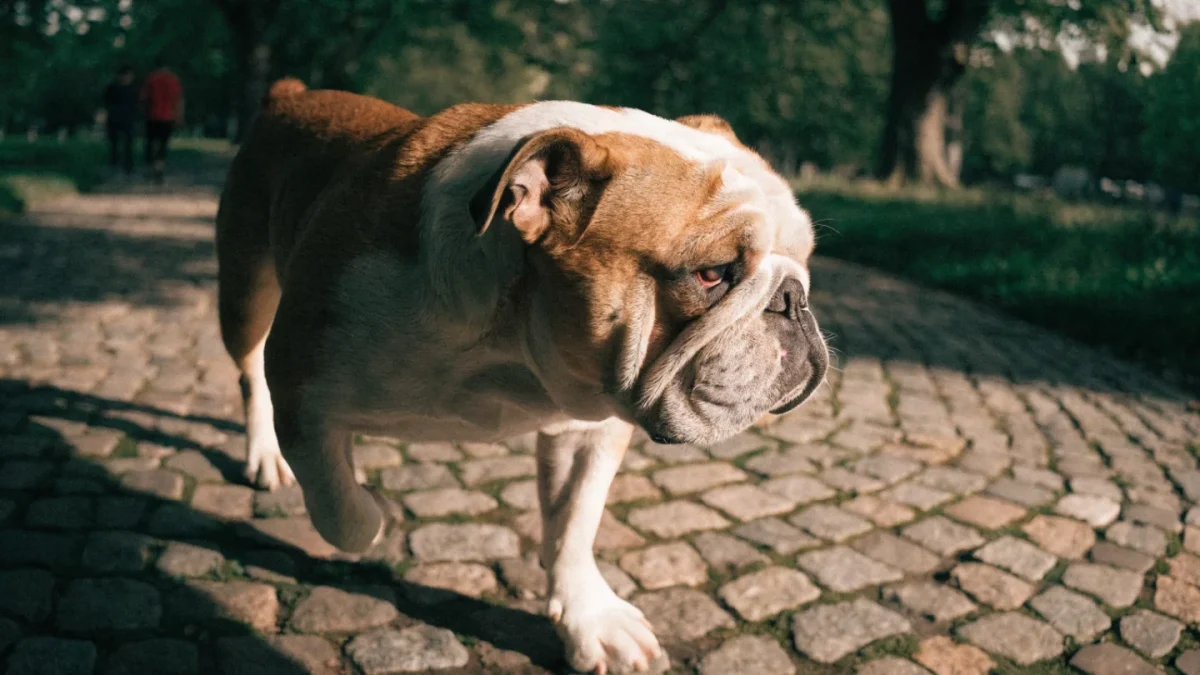
The bulldog was built to fight a bull and win. In 13th-century England, butchers staked bulls in open fields and released dogs to grab the animal's nose and pin its head to the ground — a practice called bull-baiting that persisted legally for over five hundred years. The dogs bred for this work needed a massive jaw, a low center of gravity, and a pushed-in face that let them breathe while clamped onto a thrashing animal. Every physical trait we associate with the modern bulldog traces back to that violent job description.
English bulldogs are compact, muscular companion dogs with a brachycephalic skull, loose facial skin, and a calm disposition shaped by nearly two centuries of selective breeding away from aggression. They're low-energy, stubborn in a way that gets romanticized but requires patience, and they carry a genetic burden of health issues that every prospective owner needs to understand before committing. This english bulldog breed guide covers what actually matters: the real history, the structural health problems nobody should downplay, and an honest assessment of whether this breed fits your life.
That honesty matters here more than with most breeds. Bulldogs inspire fierce loyalty in their owners, and that loyalty sometimes makes people defensive about the breed's well-documented health challenges. I've spent over a decade writing about breeds, and bulldogs are the one where the gap between public perception and medical reality is widest.
A History Written in Blood and Legislation
Bull-baiting wasn't a fringe activity. It was mainstream entertainment across England from at least the 1200s, and many towns required it by law — a butcher who failed to bait his bulls before slaughter could be fined. The logic, bizarre as it sounds now, was that baiting "thinned the blood" and improved the meat's quality.
The dogs bred for this purpose looked different from today's bulldogs. Historical illustrations from the 1700s describe taller, more athletic animals with longer muzzles and fewer wrinkles. They were functional athletes. Their jaws were undershot to maintain grip, and their noses were set back so they could breathe while holding on. But the degree of brachycephaly was nowhere near what we see in the modern breed.
Parliament banned bull-baiting with the Cruelty to Animals Act of 1835. Almost overnight, the bulldog lost its job. The breed nearly went extinct. What saved it was a deliberate reimagining — breeders in the mid-to-late 1800s selectively bred for docility, smaller size, and exaggerated physical features. They transformed a fighting dog into a companion animal within roughly fifty years, and the speed of that transformation created problems that persist today.
The breed standard was first published in 1864, and the Bulldog Club was established in England in 1878. By the early 1900s, the bulldog had become a symbol of tenacity and national character, even as its physical form continued shifting toward more extreme proportions.
Physical Characteristics
Size and Build
Bulldogs are compact and heavy for their size. Males typically weigh between 23 and 25 kg, females between 18 and 23 kg, with both sexes standing roughly 31 to 40 cm at the shoulder. The body is thick, low-slung, and surprisingly dense — first-time owners are often startled by how heavy a bulldog feels when you pick one up.
The chest is broad and deep, the shoulders massive relative to the hindquarters, and the limbs are short and stout. This front-heavy build contributes to the breed's characteristic rolling gait. It also means most bulldogs cannot swim. The weight distribution pulls their front end underwater. This is not a dog you can leave unattended near a pool.
Head and Face
The head is the breed's most distinctive and most controversial feature. The skull is broad and flat between the ears, the forehead is covered in thick folds of skin, and the muzzle is extremely short — pushed back almost flush with the skull in many individuals. The jaw is undershot and broad, with the lower canines visible even when the mouth is closed in some dogs. The nose sits between deep facial wrinkles that form a characteristic "rope" fold above the nostrils.
The eyes are set low and wide apart, round and dark. The ears are small, thin, and folded in the "rose ear" pattern.
Compare a photograph of a bulldog from 1900 with one from today. The muzzle was longer, the body leaner, the wrinkles less pronounced. The modern bulldog is substantially more extreme in every facial dimension than bulldogs from even a century ago. This drift toward exaggeration is directly connected to the breed's health problems.
Coat
The coat is short, smooth, flat, and glossy. It lies close to the body with no fringe, feathering, or curl. Common colors include fawn, red, white, fallow (pale yellowish-tan), and combinations — brindle, piebald, and fawn-and-white are all standard. The coat itself is low-maintenance in terms of brushing, but the skin beneath it is another matter entirely.
Temperament and Personality
If the Labrador is the eager-to-please extrovert and the German Shepherd is the serious employee, the bulldog is the easygoing friend who'll join you on the couch but politely decline the hike. The breed shares much of its temperament architecture with its descendant cousin — see the French Bulldog breed guide for a comparative perspective on how the compact brachycephalic companion type evolved from English Bulldog stock into a distinct breed. Bulldogs have a calm, sometimes phlegmatic disposition that makes them well-suited to apartment living and lower-activity households.
They form strong attachments to their families and tend to be good with children — patient, tolerant of handling, and unlikely to match a child's energy with overwhelming excitement. They're not typically protective in an aggressive sense, but many bulldogs develop a stubborn alertness about their territory and their people.
The Stubbornness Question
Bulldogs are famously stubborn. This gets framed as a charming personality trait, and it can be, but it also has practical consequences. A bulldog that decides it doesn't want to walk anymore will sit down and become an immovable 25-kilogram anchor. Training requires patience, consistency, and an understanding that bulldogs respond to motivation rather than repetition. They're not unintelligent — they simply prioritize their own assessment of whether an activity is worth doing.
This independent streak traces back to the breed's working origins. A bull-baiting dog that could be easily called off wasn't effective. The tenacity that made them good at their original job now manifests as selective hearing during training sessions.
Social Behavior
Most bulldogs get along well with other dogs, though some males display dominance behavior with other males. Early socialization matters, as it does with any breed. They tend to be friendly with strangers once they've assessed the situation — there's usually a moment of reserved observation before the tail starts going.
Bulldogs are not high-energy dogs. A moderate walk once or twice daily satisfies most individuals. Over-exercising a bulldog — particularly in warm weather — can be dangerous due to their compromised respiratory system. They're one of the few breeds where you need to actively limit activity rather than encourage it.
They also struggle with extended time alone. Bred over the last century and a half specifically to be with people, extended isolation can produce destructive behavior — though "destructive" for a bulldog usually means chewing something inappropriate rather than dismantling a room.
Health: The Conversation Nobody Wants to Have
This is the section that matters most in any honest english bulldog breed guide, and it's the one that generates the most pushback. The bulldog has more breed-related health conditions than almost any other recognized breed. This isn't opinion — it's reflected in veterinary literature, insurance data, and lifespan statistics.
Brachycephalic Obstructive Airway Syndrome (BOAS)
The flat face that defines the breed is also its greatest health liability. BOAS is a collection of anatomical abnormalities — stenotic nares (narrowed nostrils), an elongated soft palate, a hypoplastic (underdeveloped) trachea, and everted laryngeal saccules — that restrict airflow. The severity varies between individuals, but a 2017 study in PLOS ONE by researchers at the University of Cambridge found that 51.2% of the 201 bulldogs assessed were clinically BOAS-affected — meaning the majority of the breed shows at least some degree of airway compromise.
Symptoms range from the "normal" snoring and snorting that many owners accept as characteristic to severe respiratory distress, exercise intolerance, cyanosis (blue-tinged gums from oxygen deprivation), and collapse. Surgical correction — widening the nostrils, shortening the soft palate — can improve quality of life significantly, but it doesn't create a normal airway. It makes a compromised airway less compromised.
The practical impact: bulldogs overheat easily because panting is their primary cooling mechanism, and they can't pant efficiently with a restricted airway. A bulldog in a hot car, a bulldog exercised in summer heat, a bulldog left in a sunny yard without shade — these are emergency situations, not inconveniences. A 2020 study in Scientific Reports found that bulldogs face roughly fourteen times the risk of heat-related illness compared to breeds like the Labrador Retriever, and across all breeds, one in seven dogs treated for heat stroke dies from it.
Orthopedic Issues
The bulldog's skeletal structure creates multiple joint and spinal problems. Hip dysplasia rates in the breed are among the highest of any breed — the Orthopedic Foundation for Animals database reports over 72% of evaluated bulldogs as dysplastic, consistently ranking them near the top of all breeds screened. The screw tail — a feature written into the breed standard — is actually a spinal deformity (hemivertebrae) that in some individuals extends beyond the tail into the thoracic and lumbar spine, causing pain, nerve damage, and in severe cases, partial paralysis.
Patellar luxation (kneecap dislocation) and cruciate ligament tears are common. The combination of heavy body weight and short, bowed legs places abnormal stress on joints throughout the dog's life.
Skin Conditions
Those wrinkles need daily attention. The folds trap moisture, warmth, and bacteria — a perfect environment for skin fold dermatitis, yeast infections, and bacterial pyoderma. The facial rope fold above the nose is the worst offender, but folds around the tail pocket, between toes, and around the vulva in females all require regular cleaning and drying.
Allergic dermatitis is also prevalent in the breed, manifesting as itching, redness, ear infections, and paw licking. Many bulldogs spend years cycling through dietary changes and treatments to manage chronic skin conditions.
Reproductive Challenges
Most bulldogs cannot breed naturally due to their physical proportions — the male's body shape makes mounting difficult. Artificial insemination is standard practice. The puppies' large heads relative to the mother's narrow pelvic canal mean that 86% of bulldog litters are delivered by caesarean section, according to a 2010 study in the Journal of Small Animal Practice. This is a breed that, in many cases, cannot reproduce without medical intervention. That fact alone tells you something about how far the breed has drifted from functional anatomy.
Lifespan
Average lifespan is typically reported between 8 and 10 years, which is short even for a breed of this size. A 2022 study published in Scientific Reports by the Royal Veterinary College's VetCompass programme reported a median life expectancy of just 7.39 years for English bulldogs — the second-lowest of the eighteen breeds studied. Some individuals live longer with careful management, but bulldog ownership almost always involves more veterinary visits and higher medical costs than the average breed.
What This Means for Owners
None of this is written to discourage bulldog ownership outright. It's written because pretending these problems don't exist — or dismissing them as "just part of the breed" — does a disservice to the dogs. If you choose a bulldog, choose one from health-tested parents, budget for veterinary care above average, and commit to the daily maintenance routines (wrinkle cleaning, temperature monitoring, weight management) that keep these issues manageable.
Grooming and Daily Maintenance
The bulldog's short coat requires minimal brushing — once or twice a week with a soft bristle brush removes dead hair and distributes skin oils. They shed moderately year-round, with a slight uptick seasonally. Bathing every four to six weeks is typical unless skin conditions demand more frequent washing.
Wrinkle Care
This is the non-negotiable grooming task. Every fold on the dog's face and body needs to be cleaned regularly — daily for the facial folds in most dogs. The process is simple: gently separate each fold, wipe with a damp cloth or unscented wipe, and dry thoroughly. Leaving moisture in the folds is worse than not cleaning them at all, because dampness accelerates bacterial and yeast growth.
The tail pocket — a deep fold beneath the screw tail — is easy to forget and one of the most infection-prone areas. Check it at least every other day.
Ears, Nails, and Teeth
The rose ear shape provides some airflow, but bulldogs are still prone to ear infections. Weekly ear checks and cleaning when needed are standard. Nail trims every two to three weeks matter — bulldogs don't naturally wear their nails down, and overgrown nails worsen joint strain.
Dental care is critical. Brachycephalic breeds often have crowded teeth due to the shortened jaw, creating pockets where food debris collects. Brush several times per week and plan for periodic professional cleanings.
Feeding and Weight Management
Bulldogs gain weight easily and lose it reluctantly. Their low activity level combined with a hearty appetite creates a breed predisposed to obesity, which worsens every structural health problem they already face — breathing gets harder, joints degrade faster, skin folds deepen, and heat intolerance increases.
Portion control is more important than food selection, though a diet appropriate for low-activity, brachycephalic dogs is sensible. Measure meals rather than free-feeding. Many bulldog owners find that two measured meals per day works better than one large meal, which can contribute to flatulence and digestive discomfort.
Treats should constitute no more than ten percent of daily caloric intake. A bulldog at ideal weight should have a visible waist when viewed from above, and you should be able to feel the ribs without pressing hard. If you can't feel ribs, the dog is overweight.
The breed is prone to flatulence regardless of diet — the brachycephalic anatomy causes them to swallow air while eating. Slow-feeder bowls can reduce air intake during meals.
Exercise: Less Than You'd Think, More Important Than You'd Expect
Bulldogs need exercise, but the type and duration differ from most breeds. Two moderate walks per day — fifteen to twenty minutes each — satisfy the physical and mental stimulation needs of most adult bulldogs. Puppies have slightly more energy but even less heat tolerance, so shorter, more frequent outings work best.
The critical rule: monitor the weather. When temperatures rise above roughly 25°C (77°F), shorten walks, choose early morning or late evening, carry water, and watch for signs of overheating — excessive panting, drooling, stumbling, or a glazed expression. A bulldog in respiratory distress from heat needs immediate cooling (lukewarm water, not ice water, on the belly and paw pads) and emergency veterinary attention.
Indoor play, puzzle toys, and short training sessions provide mental stimulation without the respiratory risks of sustained outdoor exercise.
Swimming is not a bulldog exercise option. Their front-heavy build and short legs make them poor swimmers — many will sink rather than float. If you have a pool, treat it as a hazard and ensure the dog cannot access it unsupervised.
Living Arrangements
Bulldogs are one of the best apartment breeds in existence. Low energy, moderate size, minimal barking, and no need for a yard make them genuinely well-suited to smaller living spaces. They do equally well in houses — the space itself matters less than the climate control.
Air conditioning is not a luxury for bulldog owners. It's a medical necessity. A bulldog in a consistently warm environment without cooling is a bulldog at ongoing health risk. If you live in a hot climate and don't have reliable air conditioning, this is not the breed for you. That's not an exaggeration.
Bulldogs are sensitive to both heat and cold extremes. Most are primarily indoor dogs who go outside for bathroom breaks, walks, and brief play sessions.
The Breeding Ethics Conversation
Any thorough breed guide has to address this. The bulldog's health profile has prompted serious ethical debate among veterinarians, animal welfare organizations, and even some kennel clubs. Several countries have moved toward restricting breeding of extreme brachycephalic dogs.
The core argument: when a breed cannot breathe efficiently, cannot reproduce naturally, cannot regulate its own body temperature, and has a significantly shortened lifespan relative to similarly sized breeds, have we bred a dog that suffers by design? That's a legitimate question with no easy answer.
Some breeders are working toward what's often called "retro" or "healthier" bulldogs — selectively breeding for slightly longer muzzles, less extreme wrinkles, and more moderate proportions. These dogs look more like the bulldogs of the early 1900s.
If you're considering a bulldog, seeking out breeders who prioritize health testing — respiratory function grading, hip and knee evaluations, cardiac screening — is the single most impactful decision you can make.
What Most People Get Wrong About Bulldogs
The biggest misconception is that the breed's health problems are normal or acceptable because "that's just how bulldogs are." Snoring isn't charming if it's caused by an airway that can't move enough oxygen. An inability to walk more than ten minutes isn't "low energy" if it's caused by respiratory distress. The normalization of pathology is the bulldog's biggest cultural problem.
The second misconception is that bulldogs are lazy. They're actually not — they're physically limited. Given a functional airway and healthy weight, many bulldogs show considerably more energy and playfulness than their reputation suggests. The "lazy bulldog" stereotype is often a description of a dog whose body won't let it do what its mind wants to.
The third is that bulldogs are unintelligent. They rank low on traditional obedience-based intelligence scales, but those scales measure willingness to comply with repeated commands — not problem-solving ability. Bulldogs are shrewd. They learn quickly what benefits them and ignore what doesn't. That's not stupidity; it's a different kind of intelligence that requires a different training approach.
The Right Owner for This Breed
I'll be direct. A bulldog is the right fit if you meet these criteria:
You genuinely enjoy a calm, affectionate, somewhat stubborn companion who will be your shadow around the house. You have reliable climate control in your home and you live in a moderate climate, or you're willing to manage outdoor time carefully in extreme weather. You have the financial capacity for above-average veterinary expenses — bulldog ownership is not budget-friendly from a health care perspective. You're willing to commit to daily wrinkle care, careful weight monitoring, and the patience that training this breed demands.
A bulldog is the wrong fit if you want a running partner, a hiking companion, or a dog that requires minimal veterinary attention. It's also wrong if you're drawn purely to aesthetics without understanding the maintenance those aesthetics require.
The bulldog rewards its owners with loyalty and personality disproportionate to its size. But that relationship only works when it's built on realistic expectations rather than romanticized ones.
Frequently Asked Questions
Are English bulldogs good with children?
Generally, yes. Bulldogs are patient, tolerant of handling, and their low energy means they're unlikely to knock over small children. That said, all dog-child interactions should be supervised, and children should learn appropriate handling. The bulldog's tolerance has limits, and a dog that feels cornered or in pain may react defensively regardless of breed.
How much do English bulldogs cost to maintain annually?
Bulldogs typically carry higher annual veterinary costs than the average breed due to respiratory, orthopedic, and dermatological predispositions — the PDSA estimates a minimum monthly cost of around GBP 80 before accounting for treatment of the breed's common health conditions. Routine care adds up beyond the baseline for most breeds. Pet insurance is worth investigating, though some policies exclude breed-specific conditions or charge higher premiums for brachycephalic breeds. Budget for the unexpected; with bulldogs, the unexpected happens more often.
Can English bulldogs be left alone during the workday?
Bulldogs tolerate some alone time, but extended daily isolation isn't ideal. Most adults manage four to six hours alone if exercised, fed, and in a temperature-controlled environment. Longer than that regularly, and you'll see behavioral changes — destructive chewing, house-training regression, or lethargy.
Do English bulldogs get along with other pets?
Most bulldogs coexist peacefully with other dogs and cats, especially when introduced properly and socialized from a young age. Some intact males may show assertiveness with other male dogs, but this is manageable with proper socialization and is not unique to the breed. Their low prey drive means they're generally safe around cats and smaller animals, though individual variation always applies.
How long do English bulldogs live?
The average lifespan is commonly cited as 8 to 10 years, though recent veterinary research suggests the median may sit closer to 7 to 8 years — the Royal Veterinary College's VetCompass programme reported 7.39 years in a 2022 Scientific Reports study covering over 30,000 dogs. Individual lifespan depends heavily on genetics, breeding quality, weight management, and proactive health care. Bulldogs from health-tested parents with responsible weight management and regular veterinary care tend to live longer, more comfortable lives than those from untested lines. Some individuals reach 12 years, but they're the exception rather than the rule.