

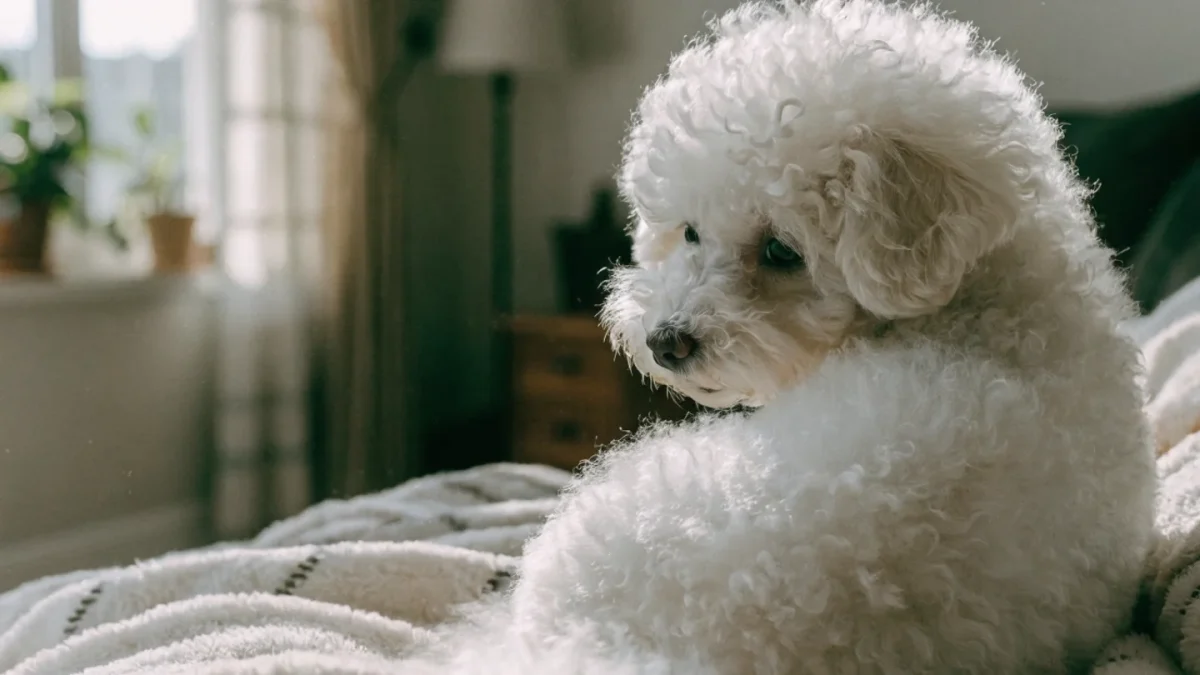
A Bichon Frise puppy at eight weeks is roughly one kilogram of white fluff with dark eyes, a black nose, and a personality that's already forming. Within that small frame are the genetics that will determine the dog's health for the next 12 to 15 years and the socialization foundation that will shape its temperament permanently. The decisions you make now — which program you choose, which screening you verify, which puppy you select — aren't minor. They're the groundwork for over a decade of companionship.
The Bichon Frise is a popular breed, and popularity drives volume. The range of breeding quality spans from meticulous programs that health-screen, socialize intensively, and vet their buyers to high-volume operations focused on output. Knowing the difference is your responsibility.
Health Screening That Matters
Patellar Luxation
The kneecap slipping out of its groove is the most common orthopedic issue in Bichon Frises and one of the most prevalent conditions across all small breeds. Both parents should be evaluated and graded for patellar luxation by a veterinary professional. The condition is graded from I (mild, kneecap can be manually displaced but returns on its own) to IV (severe, kneecap is permanently displaced). Breeding from dogs with Grade I or higher increases the likelihood of affected offspring.
Ask for documentation. A verbal "the knees are fine" is not equivalent to a formal evaluation on file.
Ophthalmologist Examination
Bichon Frises are predisposed to several eye conditions, including cataracts and corneal dystrophy. Both parents should have an ophthalmologist examination completed within the preceding 12 months. Eye conditions in the breed range from cosmetically insignificant to vision-threatening, and screening before breeding is the primary prevention tool.
Hip Evaluation
While less commonly discussed in small breeds than large ones, hip evaluation is included in recommended screening protocols for Bichon Frises. Legg-Calve-Perthes disease — degeneration of the femoral head — occurs in the breed and is recognized as hereditary, with the Bichon Frise Club of America recommending OFA evaluation for this condition before breeding.
Bladder Stone Predisposition
Bichon Frises are known to be predisposed to calcium oxalate and struvite bladder stones. While there is no definitive pre-breeding DNA test for stone formation risk, awareness of the condition in the breeding line is relevant. Ask whether the breeder has seen bladder stone issues in their dogs' histories. A breeder unfamiliar with the condition in Bichons likely isn't tracking health outcomes closely enough.
Visiting the Breeding Program
The Bichon Frise breed guide describes a breed whose temperament is fundamentally shaped by social experience during the first 16 weeks of life. A Bichon Frise raised in isolation — a kennel building, a garage, a backyard setup without regular human interaction — starts at a developmental disadvantage that months of remedial socialization may not fully overcome.
Visit in person. Look for puppies raised in or near the home, exposed to normal household activity: television, kitchen sounds, foot traffic, children, other animals. The environment should be clean, reasonably spacious, and show evidence of enrichment — toys, varied surfaces, objects to explore.
Meet the mother. A Bichon dam should be friendly, bright, and confident. The breed's default disposition is cheerful and social. A mother that is fearful, snappy, or withdrawn around visitors is showing a temperament red flag that has both genetic and environmental implications for her puppies.
The sire may not be present. Ask about his temperament, health clearances, and overall disposition.
Evaluating Individual Puppies
At seven to eight weeks, Bichon Frise puppies should be curious, playful, and willing to engage with an unfamiliar person. They should approach you, investigate your hands and face, and accept gentle handling without panic.
A well-socialized Bichon puppy will be:
- Curious about new stimuli rather than fearful
- Comfortable being picked up and held briefly
- Responsive to gentle sounds and movements without startling severely
- Engaged in reciprocal play with littermates
A puppy that hides, trembles, or refuses to approach after several minutes of quiet observation may be poorly socialized or may carry a more reserved temperament than the breed typically displays. In a breed selected for sociability, persistent fearfulness is a concern worth discussing with the breeder.
Watch the litter's interactions. Healthy social development shows up as balanced play — puppies that take turns, respond to yelps by backing off, and re-engage willingly. Consistent bullying or consistent avoidance by a single puppy is worth noting.
Coat at Puppy Stage
Bichon puppies are born with soft, often slightly wavy coats that may carry cream or apricot shadings. The adult coat — denser, more structured, and typically pure white — develops over the first 12 to 18 months. Puppy coat quality isn't a reliable predictor of adult coat quality, so don't select or reject a puppy based on coat texture at eight weeks.
What you can evaluate is overall skin health. The skin should be clean, without redness, flaking, or signs of irritation. Allergic skin conditions are common in the breed, and while they typically manifest later, severely compromised skin at the puppy stage warrants caution.
Red Flags
Multiple litters available simultaneously, particularly of different breeds. Puppies available before eight weeks. No health screening documentation on parent dogs. A facility where dogs are kept exclusively outdoors or in isolated enclosures. No questions asked about your experience, living situation, or plans for the dog.
One breed-specific concern: programs that advertise "teacup" or "miniature" Bichon Frises. The breed standard describes a dog of 23 to 30 centimeters at the shoulder and approximately 5 to 7 kilograms. There is no recognized miniature or teacup variety. Dogs significantly smaller than the standard are either runts, products of irresponsible downsizing practices, or crossbreeds. The health risks of extreme miniaturization in any breed are well documented.
If you've already decided that a Bichon Frise matches your lifestyle, expect a waitlist from reputable programs. The breed's moderate litter size (typically three to five puppies) means supply from responsible breeders is limited.
The Adoption Alternative
Bichon Frise breed-specific rescues handle a consistent volume of dogs, many surrendered due to grooming demands or separation anxiety that the owner didn't anticipate. Adult Bichons from rescue offer the advantage of known temperaments and often some training. Senior Bichons — frequently overlooked — make exceptional companions for quieter households.
Adoption is a realistic and responsible path to Bichon ownership, deserving the same consideration as purchasing from a breeding program.