

It was a Friday evening in July when my phone lit up. “Cooper ate a whole pack of spearmint gum from my backpack,” the voice on the other end frantically texted. Cooper is a three-year-old Labrador Retriever with a talent for finding trouble, and his owners were five hours away at a remote lake cabin. Because xylitol, a common artificial sweetener in sugar-free gum, is highly toxic to dogs and can cause a severe drop in blood sugar (hypoglycemia) and liver failure, they were justifiably terrified. Luckily, we had prepared for this exact scenario before they left. Instead of wasting precious time searching for an open clinic with spotty cell service, they already had the nearest 24-hour veterinary emergency room mapped and saved in their phone.
We all love bringing our four-legged family members on vacation. Over half of pet owners now travel with their animals, with dogs making up the vast majority of these roaming companions. But hitting the road or flying the friendly skies introduces a whole new set of variables. Building a proactive “medical safety net” before you leave the driveway ensures that a minor hiccup doesn’t turn into a trip-ending disaster.
Pre-Map Your Local Emergency Clinics
When you’re dealing with a medical crisis in an unfamiliar town, you don’t want to be relying on whatever search engine results happen to pop up on your phone. Just as you would scout out the best local hiking trails or dog-friendly restaurants, identifying nearby veterinary emergency rooms should be a non-negotiable part of your travel itinerary.
Before you leave, take ten minutes to search for 24/7 emergency and critical care clinics near your hotel, campsite, or Airbnb. Save their addresses and phone numbers directly in your phone’s map app. If you’re traveling to a very remote area, you might need to identify the closest clinic even if it’s an hour away—knowing exactly where you’re going before you’re in a panic cuts down on critical transit time.
Wearable Tech as a Backup Plan
I’ve also seen a massive shift recently in how we track our traveling pets. If your dog bolts from a campsite or gets spooked by fireworks at a beach rental, a standard ID tag might not be enough. The market for smart collars has rapidly advanced, offering reliable GPS tracking to pinpoint your pet’s location in real time. Many of these devices now also monitor health metrics, alerting you to changes in your dog’s resting heart rate or activity levels. This kind of technology can help you catch a potential medical issue before it blossoms into a full-blown emergency.
The First Line of Defense: Telehealth and Triage
What happens if your dog starts limping on a hike, or you catch them chewing on an unfamiliar plant? Do you cut the trip short and head to the ER, or wait it out? This is where veterinary telehealth and pet tele-triage apps have completely changed the game. Since 2020, the use of tele-triage has skyrocketed, offering immediate access to licensed veterinarians 24/7.
I had a client, Brenda, whose seven-year-old Beagle, Buster, was stung by a bee while they were attending an out-of-state wedding. Unsure if the swelling on his muzzle required an emergency visit, she used a telehealth app to video call a vet. The virtual vet was able to assess his breathing, advise her on what to monitor, and explain exactly what symptoms would necessitate a physical exam. It saved Brenda an unnecessary $300 ER trip and gave her immense peace of mind.
The VCPR Debate: What Telehealth Can and Can’t Do
It is important to understand the limitations of these apps. In veterinary medicine, we operate under something called the Veterinarian-Client-Patient Relationship (VCPR). By law in many jurisdictions, a vet cannot legally diagnose a condition or prescribe medication unless they have physically examined your pet in person within the last 12 months. While several states have relaxed these laws post-pandemic to make tele-practice easier across state lines, travelers should view these apps primarily for triage—assessing the urgency of a situation—rather than expecting a virtual vet to call in heavy-duty prescriptions.
Building a Canine-Specific Travel First-Aid Kit
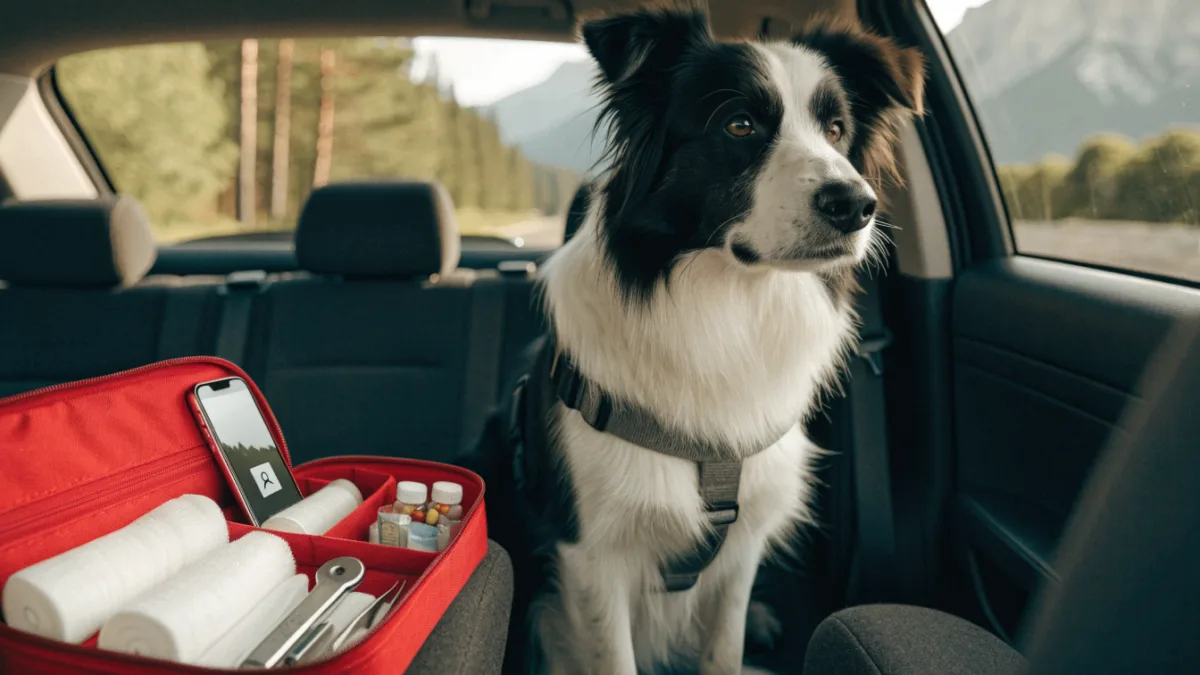
If you open your travel backpack and pull out a standard human first-aid kit, you’re only halfway prepared. Pets have unique medical needs, and building a canine-specific kit is essential. A well-stocked travel kit should include:
- Gauze rolls and non-stick bandages: Useful for wrapping wounds, but also handy for creating a makeshift muzzle. Even the sweetest family dog can bite when they are in severe pain or stressed.
- Digital thermometer: A normal dog temperature sits between 101°F and 102.5°F. Knowing if your dog is running a fever or experiencing heatstroke is crucial data for a triage vet.
- Tweezers: Essential for tick or splinter removal on the trail.
- Styptic powder: If you accidentally trim your dog’s nail too short on vacation, a quick dab of this stops the bleeding instantly.
- A supply of regular medications: Always pack a few extra days’ worths of any daily prescriptions your pet takes.
The Great Hydrogen Peroxide Debate
You might have heard that you should keep hydrogen peroxide on hand to induce vomiting if your dog eats something toxic. I’ll be honest—I’ve changed my mind on this over the years. While peroxide is a classic staple in many pet first-aid kits, veterinary toxicologists increasingly warn against using it without professional guidance. If a dog ingests something sharp, caustic (like a cleaning chemical), or foamy, inducing vomiting can cause fatal damage to the esophagus or lungs. Instead of guessing, always call a vet, poison control hotline, or telehealth service first to get the green light before administering peroxide.
Managing Environmental Stress and Travel Medication
Travel isn’t just physically demanding; it’s mentally exhausting for our pets. Changes in environment, extreme weather, and holiday commotion can all take a toll. Veterinarians see a massive spike in ER visits during the winter holidays and summer months due to the ingestion of toxic foods (like chocolate, grapes, and raisins), foreign body obstructions from decorations, and heatstroke. As the [1] highlights, keeping pets secure and managing their environment is the best prevention.
As Corinne Lawson, a critical care expert at UW Veterinary Care, notes: “Simple proactive steps—like keeping pets leashed in unfamiliar areas, securing holiday trash, and ensuring pets are microchipped with updated tags before a trip—keep pets out of harm’s way.”
If your pet struggles with travel anxiety, creating a designated, quiet resting space away from the commotion is vital. Using white noise machines or fans in unfamiliar hotel rooms can work wonders to calm their nerves.
The Sedation Dilemma
Some owners advocate giving pets mild sedatives, like trazodone or gabapentin, during long car rides or flights. While these can be wonderful tools for travel anxiety, critical care experts sometimes warn against this. If you have a snub-nosed, or brachycephalic breed—like a Pug, Bulldog, or French Bulldog—sedatives can dangerously depress their respiratory systems. These breeds already struggle to breathe efficiently, and adding a respiratory depressant in a pressurized airplane cabin or hot car can be disastrous. Always consult your vet to see if sedation is medically safe for your specific dog’s anatomy before flying.
Creating a Financial “Safety Net”
We don’t like to think about the cost of an emergency, but it’s a reality we have to face. The average cost of an unexpected trip to a veterinary ER ranges from $800 to $1,500, with critical care or surgeries easily exceeding $5,000.
Before you travel, ensure you have a financial plan. Look into pet insurance policies that explicitly cover emergency care across state lines. If insurance isn’t feasible, I highly recommend setting aside a dedicated “pet emergency credit card” that stays tucked away in your wallet, reserved only for veterinary bills. Recently, there has also been a wonderful surge in non-profit programs designed to prevent pet abandonment due to sudden veterinary costs. Many of these safety net programs partner with local clinics to offer temporary financial relief, ensuring that a sudden injury doesn’t cost a family their beloved companion.
Building a medical safety net for your pet before a vacation isn’t about expecting the worst; it’s about ensuring that you can relax and enjoy your time together without the shadow of “what if.” By mapping your route, packing a tailored first-aid kit, and setting up a financial plan, you’re doing more than just preventing disasters. You are actively preserving the deep, life-enhancing bond you share with your pet, keeping them safe, healthy, and by your side where they belong.
Sources
- American Veterinary Medical Association — avma.org