

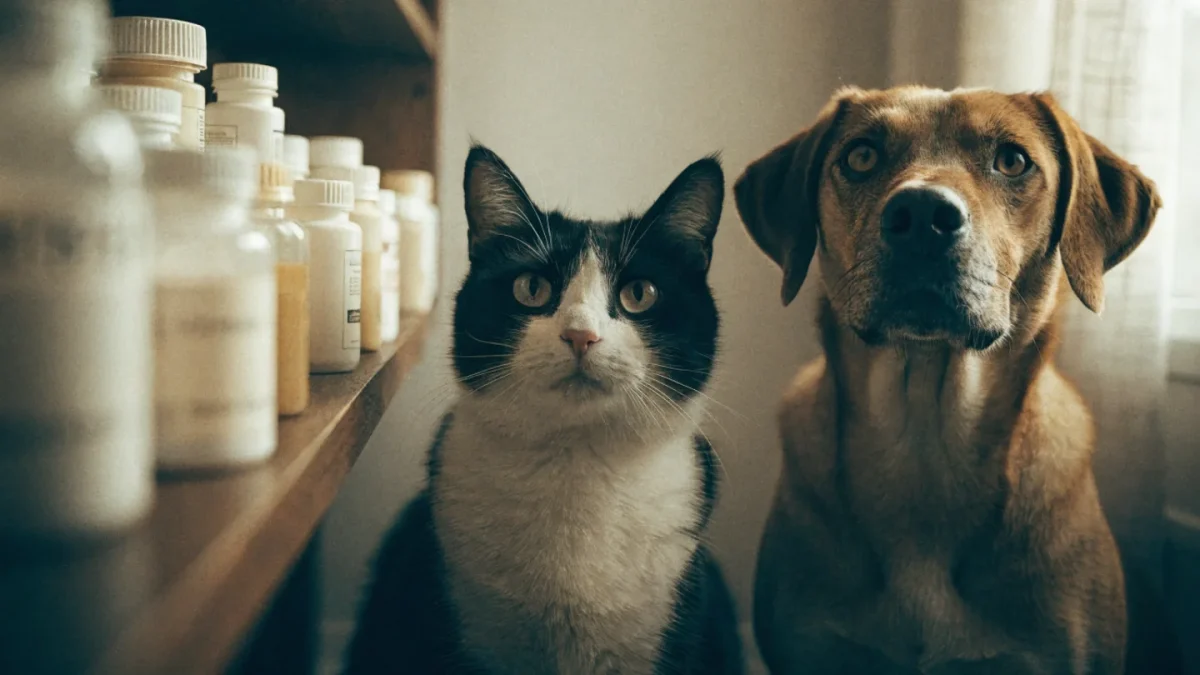
Every week, the ASPCA Animal Poison Control Center receives thousands of calls. Human medications consistently rank in the top two or three categories. Not plants, not cleaning products. Medications — the same ones sitting in bathroom cabinets, nightstands, and purses across virtually every home with a pet in it.
The incidents aren't exotic. A dropped pill. A pill bottle left on the counter that a Labrador manages to open. A well-meaning owner who decides to give their dog "half an ibuprofen" for a limp. A cat that licks a smear of a topical cream from their owner's arm. These are the real stories behind those call statistics, and almost all of them were preventable.
This guide covers the full picture: which medications are dangerous, how to store them, what to do in an emergency, and how to administer medication to your own pet safely.
Why Pets Are Especially Vulnerable
Dogs and cats have different metabolic pathways than humans. Drugs that humans process safely can be toxic to them — not because animals are weak, but because certain enzymes involved in drug metabolism are either absent or present in much lower concentrations.
Cats in particular lack the glucuronidation pathway that processes many common drugs including acetaminophen (Tylenol) and aspirin. A single regular-strength Tylenol tablet can cause fatal liver failure and methemoglobinemia in a cat. This is not an overdose scenario — it's a species incompatibility. The drug that's safe for us is a poison for them.
Dogs have more metabolic flexibility but are still highly sensitive to many human medications, particularly NSAIDs (ibuprofen, naproxen, aspirin), antidepressants, ADHD medications, blood pressure medications, sleep aids, and vitamin supplements containing iron or vitamin D.
And then there's the compound problem: a dog on heart medication, a joint supplement, and a probiotic — interacting with a dropped antidepressant from a family member. Drug interactions in multi-medication pets are underappreciated and worth discussing with your vet.
The Medications Most Commonly Involved in Pet Poisoning
NSAIDs: Ibuprofen, Naproxen, Aspirin
This group causes more pet poisoning calls than almost anything else, largely because the drugs are everywhere and people assume "it's just like Tylenol" — or they know Tylenol is toxic to cats and reach for Advil instead. Ibuprofen is toxic to both dogs and cats.
In dogs, ibuprofen causes GI ulceration and renal failure. The dose required for toxicity is relatively low — a single 200mg tablet can cause significant GI damage in a medium-sized dog. Naproxen (Aleve) is even more potent and has a very narrow margin in dogs.
Aspirin has some veterinary uses (particularly in cats with certain heart conditions, under strict vet supervision), but it is not an over-the-counter safe option for home pain management.
The rule: no human pain relievers for pets without veterinary guidance. Ever.
Acetaminophen (Tylenol)
As noted: extremely toxic to cats. Causes a type of hemoglobin damage that prevents red blood cells from carrying oxygen, and liver damage on top of that. Clinical signs include brown-tinged gums (the hemoglobin change), difficulty breathing, facial swelling, and collapse.
In dogs, acetaminophen is more concerning at higher doses; the toxicity threshold is higher than in cats but still real.
Antidepressants
SSRIs (fluoxetine, sertraline, escitalopram) and SNRIs are commonly prescribed antidepressants that cause serotonin syndrome in pets — a constellation of neurological and physiological symptoms including agitation, tremors, hyperthermia, rapid heart rate, dilated pupils, and seizures. Tricyclic antidepressants (amitriptyline, clomipramine) have additional cardiac effects.
A single capsule of many SSRI antidepressants can cause significant toxicity in a small dog or cat. These medications are frequently left on nightstands, in bedside drawers, or taken at a bathroom counter where they can fall.
ADHD Medications and Stimulants
Methylphenidate (Ritalin, Concerta) and amphetamine-based ADHD medications (Adderall, Vyvanse) cause stimulant toxicity in dogs: elevated heart rate, hypertension, hyperthermia, tremors, and seizures. These are high-dose medications relative to pet body weight, and accidental ingestion is a genuine emergency.
Blood Pressure Medications
Calcium channel blockers (amlodipine, diltiazem) and beta blockers (metoprolol, atenolol) cause dangerous cardiovascular effects in pets — profound low blood pressure, slow heart rate, collapse. This medication category causes rapid serious signs. If your pet eats a blood pressure pill, don't wait for symptoms.
Vitamins and Supplements
- Vitamin D: High-dose vitamin D supplements and rodenticides containing cholecalciferol (vitamin D3) cause hypercalcemia — elevated blood calcium — which leads to kidney failure. Symptoms can be delayed 12–36 hours.
- Iron: Iron supplements cause GI damage and then systemic iron toxicity. Prenatal vitamins, iron supplements, and even some multivitamins contain enough iron to cause serious illness.
- Xylitol in vitamins/gummies: Many vitamin gummies (children's vitamins, some B vitamins and melatonin) contain xylitol — a sugar substitute that causes profound low blood sugar and liver failure in dogs. Read labels.
Topical Medications
Creams, ointments, and patches are a particular cat hazard. Estrogen-containing creams applied to human skin and then transferred to a cat via grooming or lap-sitting have caused estrogen toxicity in cats. Lidocaine patches, testosterone gels, and prescription anti-inflammatory creams are also problematic when cats or dogs contact them and then self-groom.
Flea and Tick Products
Permethrin-containing dog flea and tick products — spot-ons, sprays, shampoos — are highly toxic to cats. A cat that grooms a recently treated dog, or that has a product intended for dogs applied to it, can develop severe neurological signs and die. This is one of the most common and preventable medication deaths in cats.
I've dedicated a separate piece entirely to permethrin toxicity in cats because it deserves focused attention.
Safe Storage: Reducing the Risk
Rule 1: Everything behind a closed door or in a latched container.
Dogs, in particular, are remarkably capable when motivated. Standard pill bottles have "child-resistant" caps — but not dog-resistant. Labradors have opened pill bottles through sheer enthusiasm. Bottles kept in a purse, in a bathroom cup, on a nightstand within reach — all of these are accessible to a determined dog.
The medicine cabinet is an obvious storage location, but purses and bags are consistently underestimated. A purse left on the floor within a dog's reach, containing prescription medications, is a legitimate hazard. Elevated purse hooks and keeping bags in closed closets is worth the habit change.
Rule 2: Never leave loose pills on any surface.
The "I'll take it in a minute" pill left on the counter, the pill that fell and rolled under the refrigerator, the bedside glass of water with tonight's medications sitting beside it — these are the accident setups. Develop a zero-pills-out habit.
Rule 3: Dispose of medications safely.
Drug take-back programs at pharmacies are the correct method. Flushing some medications is acceptable (the FDA publishes guidance on this). Throwing pill bottles in the trash where pets can access them is not. A dog that tips over a garbage can containing an empty prescription bottle still warrants concern if they extracted and chewed it.
Rule 4: Pet medications stored separately from human medications.
This eliminates the (surprisingly common) scenario of a household member grabbing the wrong bottle in poor lighting.
Rule 5: Guests and visitors.
This is an underappreciated hazard. A visiting family member who takes daily medications, leaves them in a guest room or bathroom without considering the pet, and heads to dinner — and comes back to find the dog has found the bag — is a real scenario I've seen. When guests visit, ask about medications and ensure they're stored appropriately.
Giving Your Pet Medication Safely
This deserves its own deep treatment, but the essentials:
- Always confirm dose with your vet. "I gave her the same dose as last time but she's bigger now" is a genuine error source.
- Never split or crush extended-release medications without explicit veterinary guidance, including household hazards. Extended-release formats are designed to deliver medication over time; splitting them delivers a full dose at once.
- Never give a cat a dog medication or vice versa. This seems obvious until you're at the cabin, the cat seems sick, and the dog's medication is right there.
- Watch for drug interaction risk. If your pet is on multiple medications, your vet should know about all of them — including supplements and over-the-counter products.
If an Accident Happens
This is important: do not induce vomiting unless specifically instructed by a veterinarian or animal poison control. Some medications cause faster onset of neurological signs when vomited — if a pet is vomiting during a seizure, aspiration is a serious risk. Some substances (caustic ones, or oil-based medications) are more dangerous coming back up.
Call ASPCA Animal Poison Control (888-426-4435) or your veterinarian with:
- The name of the medication (have the bottle in hand)
- Approximate quantity ingested
- The pet's weight
- The time of ingestion
Bring the medication bottle to the vet. Don't describe it — bring it. The concentration, formulation, and active ingredients all matter.
Time is often critical. Don't try to manage this at home based on internet searches.
For context on other household toxin hazards for pets and pet emergency first aid and poisoning response, those two guides round out the safety picture.
The Bigger Picture
Medication safety is fundamentally about systems — storage habits, disposal habits, administration habits — rather than one-time decisions. The families I see who have never had a medication accident aren't lucky; they've just built habits that close off the usual pathways.
Pills behind doors. Purses elevated. Zero-pill-on-counter rule. Guests asked about medications on arrival. Dose confirmed with the vet before giving anything. These aren't complicated. They just need to become default.
FAQ
Is it ever safe to give human pain medication to my pet in an emergency?
Almost never. The risk of causing harm — GI ulceration, kidney damage, liver failure depending on the drug and species — is high enough that the right answer is almost always "call a vet or go to an emergency clinic." The one historical exception was low-dose aspirin for specific cardiovascular conditions in cats, under strict veterinary supervision and monitoring. This is not a home-use exception.
My dog ate a pill that wasn't dangerous, but I'm not sure which kind it was. What do I do?
Call ASPCA Poison Control or your vet. Bring what you know: the container the pill came from, approximate size and color of the pill, your dog's weight. "I don't know what kind" is still actionable — they can help narrow it down.
How do I know if my pet is having a reaction to their own prescribed medication?
Know your pet's baseline. Lethargy, vomiting, decreased appetite, behavioral changes after starting a new medication are worth a call to your vet. Most pets handle their medications well; unexpected symptoms are worth discussing.
Are veterinary medications safe if accidentally ingested by humans?
Some, yes. Some, no. Flea and tick products, some topical veterinary compounds, and certain veterinary compounded medications are not safe for human use. If a person ingests a veterinary medication, call Poison Control for humans (1-800-222-1222 in the US).
Can I use my dog's leftovers for my cat?
Absolutely not. Dogs and cats have different drug metabolism, different dosing requirements, and some dog medications are directly toxic to cats (permethrin-based flea products being the most dangerous example). Always get species-specific prescriptions.
My elderly mother visits and takes many medications. How do I manage this?
A dedicated, latching travel pill organizer in a closed bag in a closed room is the practical solution. Have a direct conversation: "We love having you here; could you please keep your medications in this bag with the zipper closed, in the guest room?" Most people are completely understanding once they know why.