

Cleo was a two-year-old Shih Tzu who came in on a Tuesday afternoon barely able to stand. Her owner, Janet, had been at work. When she got home, Cleo was vomiting and her gums were pale. Janet had no idea what had happened — the house looked normal.
It took about ten minutes of conversation to find the source: the dishwasher pod dispenser had leaked overnight, and a single pod had ended up on the kitchen floor. Cleo had chewed it. Concentrated alkaline detergent, caustic enough to cause chemical burns to her esophagus. She spent three days in the hospital.
Janet hadn't thought of dishwasher pods as dangerous. Most owners don't. That's what this guide is for — the things inside your home that don't announce themselves as hazards until something goes wrong.
Kitchen
The kitchen is probably the highest-risk room in the house, and that's not just about food.
The food hazards are well-documented. Grapes and raisins top my concern list for dogs — the mechanism isn't fully understood, but kidney failure can occur and the dose-response is unpredictable (some dogs have eaten large amounts without obvious effect; others developed acute renal failure from a small amount). Xylitol — an artificial sweetener in sugar-free gum, peanut butter, baked goods, and some vitamins — causes rapid insulin release and hypoglycemia in dogs, and potentially liver damage. Onions, garlic, leeks, and chives (in all forms — raw, cooked, powdered) cause hemolytic anemia. Chocolate contains theobromine and caffeine, both cardiac stimulants that are dangerous in sufficient amounts. Macadamia nuts cause a distinctive syndrome of weakness, vomiting, and tremors. The most dangerous foods for dogs and cats covers these in full.
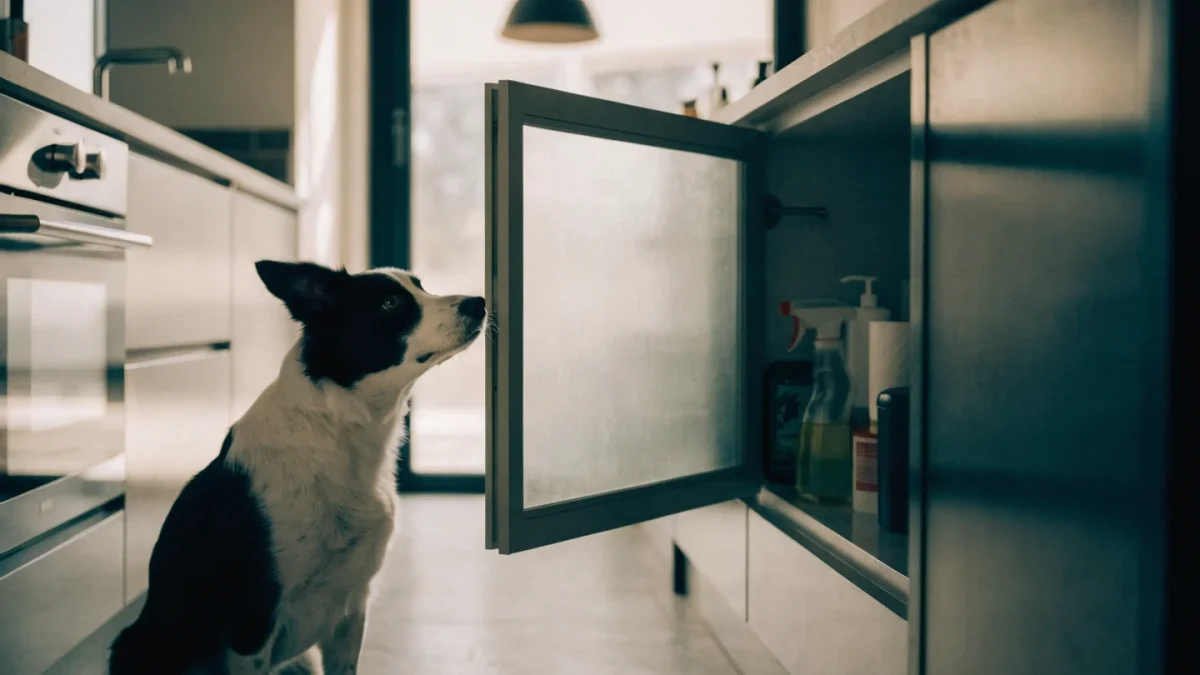
Under the sink is a cabinet I think about often. Cleaning products — dish soap, drain cleaners, oven cleaners, bleach — live there. Most dogs who ingest small amounts of dish soap get GI upset and recover. But drain cleaners and oven cleaners are highly alkaline or acidic; even small ingestions cause severe chemical burns to the mouth, throat, and esophagus. Keep these in a locked or child-proofed cabinet at minimum.
Trash cans are basically an all-you-can-eat bar for dogs. Spoiled food, bones, coffee grounds (caffeine), moldy food (mycotoxins from mold can cause tremors and seizures), and discarded packaging with food residue. A locking trash can is genuinely worth the investment.
Counter surfing introduces access to medications, vitamins, and supplements left out casually. Ibuprofen, acetaminophen, and many other human medications are toxic to pets. I'll cover this more in the medications section.
Bathroom
Medications are the bathroom's primary hazard. Prescription and over-the-counter medications left on counters, dropped on the floor, stored in easily-opened bags — all accessible to a determined pet.
Antidepressants, sleep medications, stimulants (ADHD medications), blood pressure medications, and NSAIDs like ibuprofen are among the most dangerous to pets. A single ibuprofen tablet can cause stomach ulcers and kidney damage in dogs. Cats are even more sensitive to acetaminophen — a single regular-strength tablet can be fatal.
Nail polish remover (acetone), mouthwash (which may contain xylitol or alcohol), hair dye, and certain skin and hair products may also be hazardous.
Lock medications away. Don't leave them in a bag on the bathroom counter.
Living Room
Small objects are a major concern here — coins (zinc toxicity from pennies containing zinc core), batteries (acid burns from button batteries are particularly nasty), rubber bands, hair ties, toy pieces, sewing supplies, foam ear plugs. These don't typically cause chemical toxicity, but GI obstruction from swallowing them can be life-threatening. Small dogs and cats, and puppies and kittens especially, tend to mouth and swallow things that adult large-breed dogs ignore.
Plants deserve their own conversation — see toxic plants for dogs and cats for the full picture. The living room often hosts the most decorative houseplants in the home. Pothos, philodendron, peace lily (mildly toxic), and certain ferns and palms can all pose varying levels of risk.
Electrical cords are a chewing hazard particularly for puppies and young cats — electrical burns to the mouth, and potential for electrocution.
Essential oil diffusers deserve mention. Certain essential oils — particularly tea tree, eucalyptus, clove, pine, and citrus oils — are toxic to cats especially. Cats lack the liver enzymes needed to metabolize many phenolic compounds. Diffusers aerosolize these compounds into the air; even passive exposure can cause respiratory irritation and, with certain oils, systemic toxicity.
Laundry Room
Laundry pods (concentrated detergent in dissolvable pouches) are bright, colorful, and squishy — exactly the kind of thing a dog or cat would want to investigate. They're much more concentrated than liquid or powder detergent and cause more severe chemical burns to the mouth and GI tract. Severe cases involve respiratory distress, CNS effects, and chemical burns extending into the esophagus and stomach.
Dryer sheets contain cationic detergents that are toxic. Fabric softeners, stain removers, and bleach-based products should all be stored out of pet reach.
The other laundry room hazard: the machines themselves. Cats seek warm, enclosed spaces, and a front-loading dryer is an attractive nap spot. Always check before starting the dryer.
Garage
Honestly, if I had to name the single most dangerous room in the house for pets, it would be the garage. The concentration of genuinely lethal chemicals per square foot is impressive.
Antifreeze (ethylene glycol) is sweet-tasting and extremely attractive to dogs and cats. It causes rapid, often irreversible acute kidney failure. Even very small amounts are lethal to cats. Within hours of ingestion, the ethylene glycol is metabolized into compounds that crystallize in the kidney tubules, destroying kidney function. Treatment with fomepizole (in dogs) or ethanol exists, but the window for effective treatment is narrow — hours, not days. Propylene glycol-based antifreeze formulations are much less toxic; if you have pets, this is worth considering when you next purchase antifreeze.
Motor oil, brake fluid, windshield washer fluid — all contain compounds toxic to pets in varying degrees.
Rodenticides (rat and mouse bait) are designed to be attractive to rodents — which means they're often attractive to dogs too. Different types of rodenticide cause different toxidromes: anticoagulant rodenticides (the most common type) cause bleeding disorders that may not appear for several days after ingestion; bromethalin causes neurological signs; cholecalciferol (vitamin D3 based) causes hypercalcemia and organ failure; zinc phosphide generates phosphine gas in the stomach. All are serious.
Fertilizers, pesticides, and herbicides — many are toxic; cocoa mulch particularly so (contains theobromine).
Tools and sharp objects stored at pet height can cause lacerations.
The simplest garage solution: pets don't come in the garage. If that's not practical, store all chemicals in locked cabinets and don't leave anything on the floor or at pet height.
Garden Shed and Outdoor Areas
Slug and snail bait containing metaldehyde is one of the most acutely dangerous outdoor hazards for dogs — it causes severe tremors, hyperthermia, and can be rapidly fatal. Pellet form is particularly inviting to dogs.
Pool chemicals, herbicides applied to the lawn, and fertilizers all carry risk. Most lawn herbicides are low-toxicity when dry, but wet applications should keep pets off treated areas for the recommended period.
The Most Preventable Emergencies
Looking at 20 years of cases, most household pet poisonings come down to one of three situations:
- Storage failure — the product was in a low cabinet, on the counter, or in a bag rather than a locked space
- Unawareness — the owner didn't know the item was dangerous to pets
- Access creep — the pet found access to an area normally off-limits (garage door left ajar, bathroom left open overnight)
You don't need to childproof every inch of your home for a well-behaved adult dog. But puppies, kittens, and any pet with a tendency to investigate or chew deserve a more thorough audit of what they have access to.
Frequently Asked Questions
My pet seems fine after getting into something potentially toxic. Do I still need to call the vet?
Yes — many toxic exposures have a delay before symptoms appear. Antifreeze poisoning, certain plant toxins, and rodenticides may not cause obvious symptoms until serious organ damage has occurred. Call your vet or animal poison control and describe exactly what was ingested.
What information should I have ready when I call poison control?
The name of the product or substance, the approximate amount ingested, your pet's weight and species, and the time of exposure. If it's a packaged product, have the label available — active ingredients matter.
Is it true that hydrogen peroxide can be used to make a dog vomit at home?
Yes, hydrogen peroxide (3% concentration — the standard drug store version) can be used to induce vomiting in dogs, but only when explicitly directed by a vet or poison control professional. Incorrect use — wrong dose, wrong timing, wrong situation — can cause more harm than help. Never induce vomiting without professional guidance. And never use hydrogen peroxide in cats — it causes hemorrhagic gastroenteritis in felines.
My cat got into bleach-based bathroom cleaner. The amount seemed small — should I still be worried?
Yes. Bleach and bleach-based cleaners are corrosive. Even small amounts can cause burns to the mouth, throat, and esophagus. The severity depends on concentration, but I'd call your vet immediately rather than waiting to see if symptoms develop.
What's the most important thing I can do to pet-proof my home?
Get down to your pet's eye level and walk through your home from their perspective. What's accessible? What would a curious dog or cat investigate, mouth, or chew? Then work through storage changes methodically — starting with the kitchen and bathroom, then the laundry room and garage. The changes that matter most are the ones that address your specific pet's behaviors and your home's specific layout.