

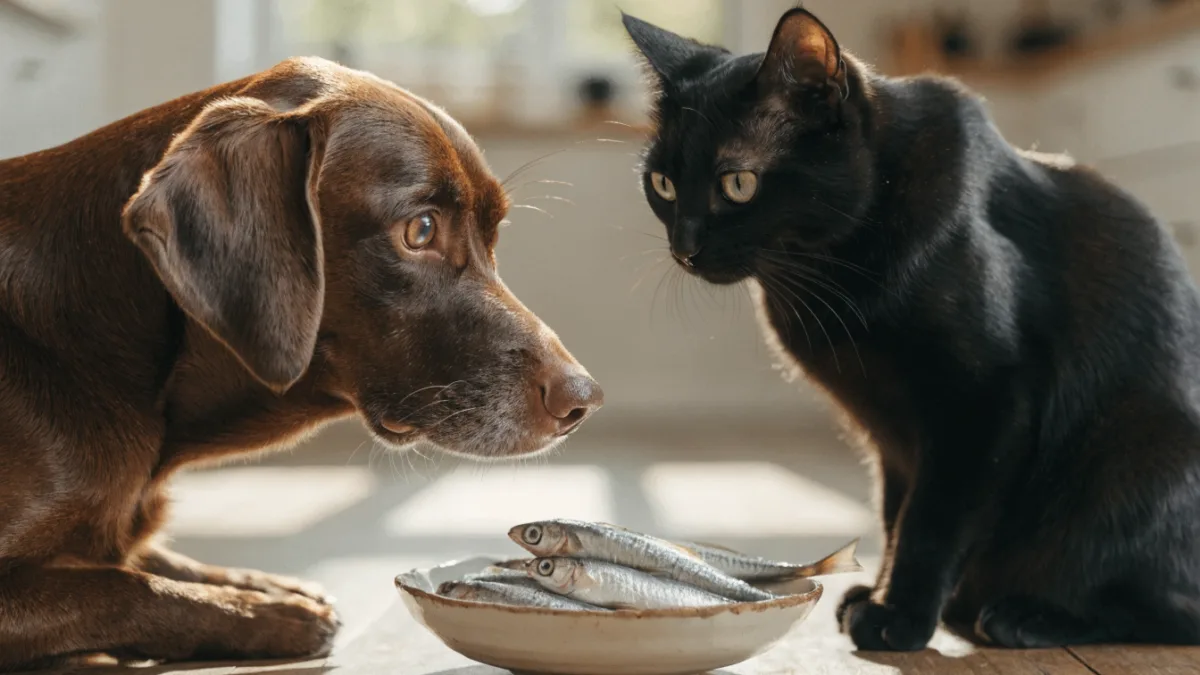
Last spring, a woman named Karen brought her 11-year-old Labrador retriever, Cooper, into my clinic. Cooper had been struggling with stiffness in his hind legs for months — classic osteoarthritis, the kind I see almost every day in senior dogs. Karen was doing everything right: joint supplements, weight management, gentle exercise. But she was also giving Cooper a daily NSAID (non-steroidal anti-inflammatory drug, the same class of medication as ibuprofen but specifically formulated for dogs), and she was worried about the long-term effects on his stomach and kidneys. She asked me if there was anything natural she could add to his routine. I told her to try sardines. Three months later, Cooper was bounding up the stairs again, and his coat — which had gone dull and flaky — was so glossy that Karen’s groomer asked what product she was using. The answer wasn’t a product at all. It was a tiny fish.
Why Sardines Are a Nutritional Powerhouse for Pets
I’ve recommended sardines to hundreds of pet owners over the years, and I’ll admit — I used to be more cautious about it. Early in my career, I worried about mercury, bones, and the mess. But the research has only gotten stronger, and now sardines are one of my go-to recommendations for dogs and cats of almost any age.
Here’s what makes them special. Sardines are packed with high-quality protein and two specific Omega-3 fatty acids: EPA (eicosapentaenoic acid) and DHA (docosahexaenoic acid). These aren’t the generic “fish oil” Omegas you see advertised everywhere — they’re the highly bioavailable forms that your pet’s body can actually use immediately, without conversion. They’re also rich in Coenzyme Q10, or CoQ10, which is a powerful antioxidant that supports heart health and helps cells produce energy. For senior pets, this combination is genuinely remarkable.
And here’s the part that always surprises my clients: sardines are one of the safest fish you can feed. Because they’re small and sit low on the food chain, they live short lives. That means they don’t have time to accumulate the heavy metals and toxins that larger fish like tuna or swordfish collect over years. When you feed your pet a sardine, you’re giving them all the benefits of fish with almost none of the contamination risk.
Interestingly, one of the world’s largest nutrition studies recently found that women who regularly ate small fish like sardines experienced significant longevity benefits. While that study focused on humans, the cross-species implications are hard to ignore. Small fish are increasingly being recognized as what some researchers call a “longevity food” — and our companion animals can benefit just as much as we do.
The Real Health Benefits: What Sardines Actually Do
Joints and Inflammation
This is where I see the most dramatic results in practice. The EPA and DHA in sardines are scientifically proven to reduce systemic inflammation — the low-grade, chronic kind that drives arthritis, allergies, and even some skin conditions. When I started recommending sardines as a complementary approach for arthritic patients like Cooper, I noticed something consistent: owners reported their pets moved more easily, seemed less stiff in the mornings, and often needed lower doses of pain medication. That matters, especially now.
With recent FDA warnings about the potential side effects of long-term NSAID use in aging pets — including gastrointestinal ulcers and kidney strain — many veterinarians are shifting toward natural, whole-food anti-inflammatories as a first-line or complementary strategy. Sardines aren’t a replacement for prescribed medication, but they can be a meaningful part of a multimodal pain management plan.
Skin and Coat
If you’ve ever had a dog with a dull, flaky coat or a cat that sheds excessively, Omega-3s can be transformative. I had a feline patient named Mochi — a three-year-old domestic shorthair — whose owner brought her in because her fur looked “tired.” Bloodwork was normal. We added two small sardines to Mochi’s diet each week, and within six weeks her coat was transformed. Omega-3s nourish the skin from within, reducing inflammation in the hair follicles and supporting the natural oils that give fur its shine. No special shampoo required.
Heart, Eyes, and Immune Function
That CoQ10 I mentioned? It’s one of the most important antioxidants for cardiovascular health. It helps heart muscle cells generate energy efficiently, which matters for breeds predisposed to heart disease — Cavalier King Charles Spaniels, Dobermans, Maine Coon cats. Meanwhile, DHA plays a critical role in eye health and cognitive function, particularly in developing kittens and puppies, and in senior pets experiencing cognitive decline.
How to Prepare Sardines Safely: The Dos and Don’ts
This is the part where I see the most mistakes. Sardines are incredibly healthy, but how they’re packaged matters enormously. Let me break it down.
The Dos
- Choose sardines packed in water with no added salt. This is non-negotiable. Read the label carefully — some “plain” sardines still contain significant sodium.
- Check that there are no spices, flavorings, or sauces. No tomato sauce, no mustard, no oil, no smoked varieties. Plain and simple.
- Canned is generally better than fresh for most pets. The canning process softens the bones, making them safe and digestible. Those soft bones are an excellent calcium source — a benefit you lose if you debone the fish.
- Mash them up for small pets. For cats and small dogs, I recommend mashing the sardine into their regular food to make eating easier and prevent any choking concern.
The Don’ts
- Never feed sardines packed in oil. This is the most common mistake I see in practice. Oil-packed sardines can cause severe gastrointestinal upset, pancreatitis (a painful and potentially dangerous inflammation of the pancreas), and rapid weight gain. I once treated a Jack Russell Terrier named Pepper whose owner had been giving him oil-packed sardines as a “treat.” Pepper came in with vomiting, abdominal pain, and elevated pancreatic enzymes. He recovered, but it was an expensive and stressful lesson.
- Avoid excess sodium. High-sodium sardines can lead to sodium ion poisoning, which causes excessive thirst, vomiting, and in severe cases, neurological symptoms. Pets are far more sensitive to salt than humans.
- Don’t feed raw sardines with rigid spines to small pets. More on this in the next section, but the choking and obstruction risk is real if they don’t chew properly.
Raw vs. Canned vs. Supplements: Sorting Through the Debate
The raw feeding community has strong opinions about sardines, and I understand the appeal of feeding food in its most natural state. But I have to be honest about what the evidence shows. Raw fish carries a risk of pathogens like Salmonella and Listeria — not just for your pet, but for every human in your household who handles the food bowl. More concerningly, raw fish contains an enzyme called thiaminase, which destroys thiamine (Vitamin B1). Thiamine is essential for nerve function, and a deficiency can lead to serious neurological problems. Cooking or canning neutralizes thiaminase completely, which is why I strongly prefer canned or cooked sardines.
Then there’s the supplement debate. Fish oil pills have been the standard Omega-3 recommendation for years, and I’ve prescribed plenty of them. But recent research has revealed a problem: many commercial pet-grade fish oil supplements are significantly oxidized — essentially rancid — by the time they reach your pet’s bowl. Oxidized fish oil doesn’t just fail to reduce inflammation; it can actually cause inflammation. That’s the opposite of what you want.
Whole sardines solve this problem beautifully. You’re getting Omega-3s in their natural, unoxidized state, packaged alongside protein, calcium, CoQ10, and moisture. It’s the complete nutritional profile, not just an isolated extract. I still recommend fish oil supplements in certain clinical situations, but for general wellness, whole sardines are my preferred source.
Serving Sizes: How Much and How Often
Sardines should be treated as a supplement, topper, or treat — not a primary diet. The general veterinary guideline is that all treats and extras should make up no more than 10% of your pet’s daily caloric intake. Here’s what that looks like in practice, though I always recommend checking with your own veterinarian before making dietary changes:
- Small dogs and cats (under 20 lbs): One small sardine, two to three times per week.
- Medium dogs (20–50 lbs): One to two small sardines, two to three times per week.
- Large dogs (50+ lbs): Two to three small sardines, or one larger sardine, two to three times per week.
Start slowly. Any new food can cause mild digestive upset, and I always tell clients to introduce sardines over the course of a week or two, watching for any changes in stool quality or appetite. If your pet has a history of pancreatitis, food allergies, or is on a specialized prescription diet, talk to your vet first — sardines may still be appropriate, but the context matters.
One more note: you may notice a stronger odor in your pet’s breath or even their skin after they start eating sardines regularly. This is normal and harmless. If it bothers you, feeding sardines in the morning rather than at bedtime can help.
A Choice That’s Good for Your Pet and the Planet
One of the things I love most about recommending sardines is that they’re genuinely sustainable. Sardines are wild-caught, reproduce quickly, and are classified as a “Best Choice” by seafood sustainability organizations like the Monterey Bay Aquarium Seafood Watch. Compared to overfished species or the resource-heavy production of conventional livestock meats, sardines are one of the most environmentally responsible protein options available — for you and your pet.
That matters more than we often acknowledge. The pet food industry has a significant environmental footprint, and every small choice adds up. When you choose sardines, you’re not just giving your dog or cat a nutrient-dense, anti-inflammatory, coat-enhancing superfood. You’re making a choice that supports healthier oceans and a more sustainable food system. Cooper the Labrador is thriving at nearly twelve now, chasing tennis balls with an enthusiasm his owner thought was long gone. Mochi’s coat gleams. And the planet is a little better off for it. That’s what I call a win-win-win.