

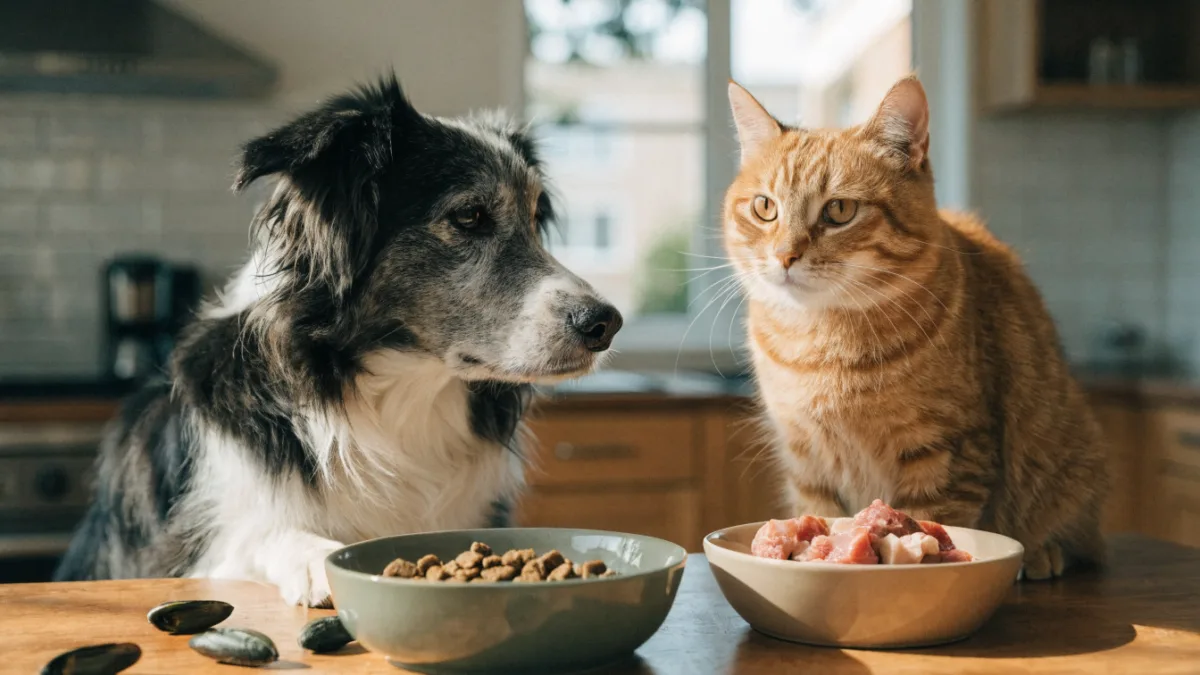
Picture Milo, a 12-year-old Labrador mix, hobbling into a clinic last spring, his owner Karen exhausted and heartbroken. “He used to chase tennis balls for hours,” she said, close to tears. “Now he groans just getting off his bed.” Around the same time, a 14-year-old tabby named Whiskers came in whose owner had proudly switched her to a “senior formula” kibble six months earlier — only to watch her visibly lose muscle along her spine and hips, becoming frail and oddly picky about food. These two cases sit at opposite ends of a nutritional mistake that turns up constantly: assuming that “senior pet” means one universal dietary approach. It doesn’t. Aging dogs and aging cats have fundamentally different nutritional shifts, and getting it wrong can quietly steal years of quality life from both.
The Myth I Used to Believe About Senior Pet Food
I’ll be honest — for a long stretch, I repeated the conventional wisdom that aging pets needed less protein and less fat. The thinking was that protein stressed aging kidneys and fat contributed to weight gain, so commercial senior formulas dutifully cut both. It made logical sense at the time, and I passed those recommendations along without a second thought.
I’ve changed my mind on this, and the research has backed me into that change completely..[1] shows that traditional senior pet foods — the ones that slash protein and fat based on decades-old assumptions — may actually harm aging animals. When you reduce protein in a senior diet, you deprive the body of the exact building blocks it needs to maintain muscle mass, support organ function, and keep the immune system running. Aging pets don’t need fewer nutrients. They need smarter, more bioavailable nutrients targeted at the systems actually failing them.
The shift in veterinary nutrition is now moving away from a one-size-fits-all approach. Researchers are looking at how specific dietary interventions — like precise fiber blends for aging dogs or tracking how cats process fats differently over time — can actively improve health outcomes rather than just preventing weight gain.
Why Aging Cats Need More Protein, Not Less
The Fat Digestibility Problem Nobody Warns You About
Here’s something that surprised me when the data came in: cats experience a measurable decline in fat digestibility as they age. This isn’t a minor dip — it’s a direct, age-related change in how efficiently their gastrointestinal tract processes dietary fats. What this means practically is that a 14-year-old cat eating the same food she thrived on at age eight is now absorbing significantly fewer calories and fewer essential fatty acids from that same bowl.
Whiskers, the tabby I mentioned, was losing muscle not because her senior food lacked protein on paper — it had adequate amounts. The problem was that the protein sources were highly processed and difficult for her aging digestive system to extract. [2] is significantly more bioavailable than plant-based proteins or rendered meat meals. For an older cat whose digestive efficiency is already declining, that difference compounds quickly.
What Aging Cats Actually Need
Cats are obligate carnivores at every life stage, but their senior years make this biological fact non-negotiable. They need:
- Highly digestible animal protein — real meat as the primary ingredient, not fillers or by-product meals, to maintain lean muscle mass and support kidney and liver function
- Easily absorbed fat sources — because their ability to process fats declines with age, the quality of fat matters more than ever
- Adequate calories — many senior cats actually struggle to maintain weight, not lose it
After I moved Whiskers to a diet built around easily digestible, real-meat protein sources, her owner texted me three weeks later: “She’s grooming again and actually finished her whole breakfast.” That simple change — prioritizing protein bioavailability over the “less is more” senior philosophy — made a visible difference in weeks.
Why Aging Dogs Need Joint Support First
The Mobility Shift
Dogs age differently. While cats quietly lose digestive efficiency, dogs face a more visible enemy: joint deterioration. The cartilage that cushions their hips, knees, and spine gradually thins. The synovial fluid that keeps joints gliding smoothly decreases. This is why Milo was groaning off his bed — not because he was being dramatic, but because his joints were genuinely stiff and painful.
For aging dogs, the nutritional focus needs to shift heavily toward [3] Look for diets or supplements that include glucosamine and chondroitin — compounds that support cartilage health — alongside omega-3 fatty acids from marine sources, which help manage the inflammation that makes arthritic joints swell and hurt.
The Fiber Discovery That Changed My Approach
Here’s where I was wrong again, and I’m glad the research caught up. I used to assume older dogs had fragile, sensitive stomachs that needed bland, low-fiber food. Turns out, dogs between six and twelve years old actually showed improved digestibility of crude protein, calcium, phosphorus, and total dietary fiber when fed a diet containing around 6% total dietary fiber.
That number matters. It means the right fiber blend doesn’t just “move things along” — it actively helps aging dogs absorb more nutrients from their food. The key is the blend: a mix of soluble and insoluble fiber sources that feed beneficial gut bacteria while supporting healthy stool formation. For Milo, adding targeted fiber alongside joint-supporting nutrients made a noticeable difference in both his digestion and his energy levels within a month.
Muscle Maintenance: The Shared Battle Against Frailty
Despite their different nutritional priorities, aging dogs and cats share one critical need: maintaining lean muscle mass. Sarcopenia — the age-related loss of muscle tissue — affects both species and is one of the biggest drivers of frailty in senior pets. A frail animal can’t jump, can’t climb stairs, can’t maintain balance on slippery floors, and recovers more slowly from illness or injury.
This is why high-quality, real-meat protein is non-negotiable for seniors of both species. Not “adequate protein” in the form of processed meal. Not plant-based protein boosted to hit a percentage on the label. Actual, recognizable animal protein that the aging digestive tract can efficiently break down and put to work preserving muscle.
I tell owners to think about it this way: if you wouldn’t feel good eating it yourself, your 12-year-old pet — whose digestive system is working harder than it did a decade ago — probably shouldn’t be eating it either.
Multi-System Support: Beyond Calories
The most important shift in how I talk to owners about senior nutrition is this: baseline nutrition isn’t enough anymore. A senior pet’s food needs to actively target multiple systems simultaneously:
- Joints — glucosamine, chondroitin, omega-3s (especially critical for dogs)
- Kidneys — high-quality, easily digestible protein that doesn’t overwork renal function (especially critical for cats)
- Liver — adequate antioxidants and easily processed nutrients
- Heart — taurine, omega-3 fatty acids, and appropriate sodium levels
- Immune system — vitamins E and C, selenium, and zinc from bioavailable sources
This is a lot to ask of one bag of food, which is why I often work with owners to build a layered approach: a strong base diet plus targeted support where their individual pet needs it most. Every senior is different. Milo needed joint support above all. Whiskers needed digestible protein. Your pet’s ideal senior nutrition plan depends on their breed, their current health status, and what their bloodwork shows at their wellness exam.
If there’s one thing I want every pet owner to take away from this, it’s that “senior” is not a dietary demotion. Aging animals deserve nutrition that rises to meet their changing bodies — more targeted, more bioavailable, and more intentional than what worked when they were young. Talk to your veterinarian about what specific shifts your dog or cat needs as they enter their golden years, and don’t settle for a food that simply reduces everything. They deserve better than less. They need different — and that difference can add years of comfortable, active life to the animals who’ve already given us their best ones.
Sources
- Recent nutritional science — pmc.ncbi.nlm.nih.gov
- Protein sourced from real meat — palmettoanimal.com
- joint support and mobility preservation — royalveterinarycenter.com