

Last week, I found myself laughing at a message from one of my clients, Sarah. She had sent me a video of her four-year-old Vizsla, Barnaby, actually volunteering to get into the car. For the past two years, Barnaby had treated car rides like a trip to the executioner—panting, pacing, and drooling so heavily that Sarah had to lay down towels. Even worse, every time they arrived at their destination, Barnaby would inevitably suffer from a bout of stress-induced diarrhea.
Then there is Cleo, an eight-month-old Siamese cat belonging to another client, David. Cleo is a sweetheart, but she treats David’s apartment like a 24-hour gymnastics facility. David looked exhausted during our consultation. “She treats my face like a springboard at 3 AM,” he told me. “I love her, but I need to sleep.”
Sarah and David both ended up in my exam room on the same Tuesday, looking for solutions. They didn’t want to put their pets on heavy pharmaceuticals—and frankly, for these specific, mild behavioral issues, they didn’t need to. We needed something gentle. We needed chamomile.
How Chamomile Works: The Science of Serenity
Chamomile is consistently cited as one of the most widely used herbal remedies in the world, and for good reason. But when I suggest it, clients often look at me like I’m prescribing a bedtime story. I’ve actually changed my mind on this over the years. Early in my practice, I was quick to dismiss herbal remedies as folklore and reach for prescription medications the moment an owner mentioned anxiety. But as research evolved, I realized the science behind this little flower is incredibly solid.
The secret lies in natural flavonoids. These are plant compounds that actively alter neurotransmitter levels in the brain. Think of neurotransmitters as the text messages your pet’s brain cells send to each other. When a dog like Barnaby is anxious, those messages are frantic—alarms going off everywhere. Chamomile essentially steps in, binds to specific receptors (specifically GABA receptors, which act as the brain’s “brake pedal”), and promotes a calming message instead.
What I love most is that it provides this relaxation without heavily sedating the animal. It doesn’t drug them; it just turns the volume of their anxiety down from a ten to a manageable four. They are still alert, still themselves, just without the vibrating tension.
The Gut-Brain Connection: Why Chamomile is a Dog’s Best Friend
For dogs like Barnaby, chamomile offers a brilliant dual benefit. It’s particularly effective when anxiety is accompanied by digestive upset.
There’s an old wives’ tale about having a “nervous stomach,” but the gut-brain axis is a very real medical phenomenon. When a dog panics, their gastrointestinal tract often reacts right alongside them due to the gut’s extensive network of nerves. Chamomile acts as a gentle antispasmodic, meaning it helps relax the smooth muscles of the intestines. While the flavonoids are busy soothing the brain, other active compounds are actively reducing inflammation and cramping in the gut.
For Barnaby, a mild chamomile extract before a car ride didn’t just stop his pacing; it stopped the stress-induced diarrhea entirely. By addressing both the mind and the stomach simultaneously, chamomile breaks the cycle of anxiety leading to physical distress, which in turn leads to more anxiety.
From Midnight Zoomies to Zen: Chamomile for Hyperactive Cats
Cats are a completely different ballgame. Where dogs often display outward anxiety, cats—especially young, indoor cats—often channel their nervous energy into sheer, relentless hyperactivity.
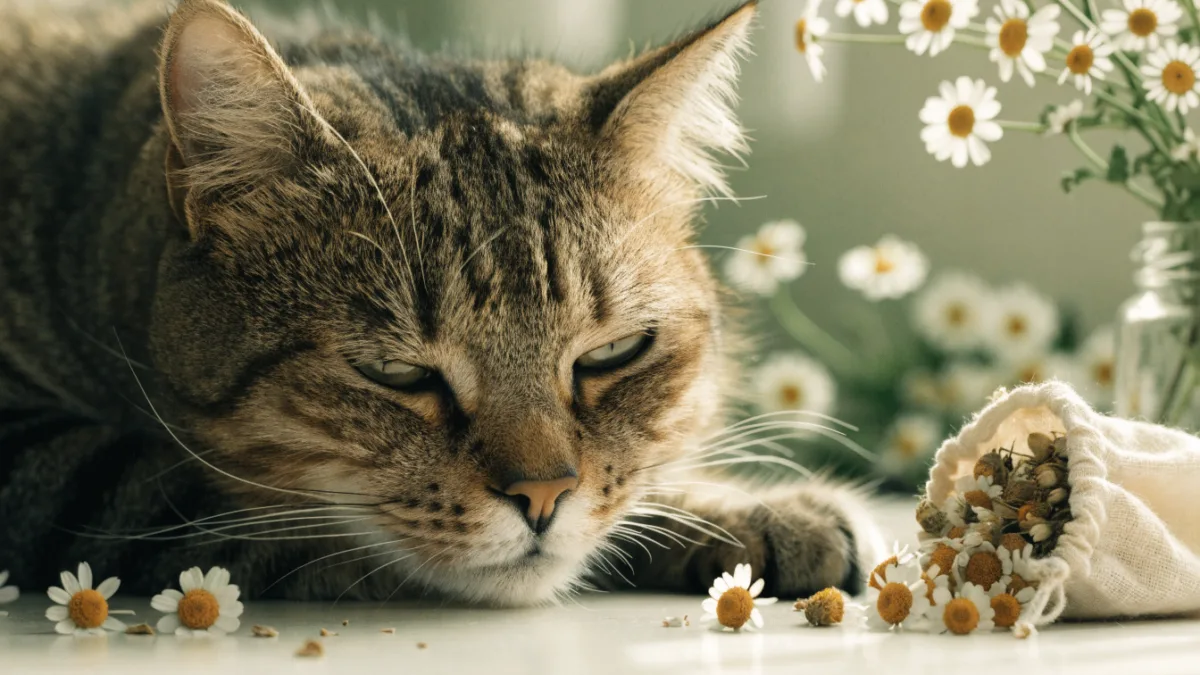
While chamomile eases nervous tension in dogs, it’s primarily used in cats to take the edge off that intense, boundless energy. By promoting general restfulness and improving overall sleep quality, it helps cats transition naturally into their rest cycles instead of treating your toes like prey at three in the morning.
However, I must add a significant word of caution here. Cats have incredibly different metabolic systems and livers than dogs. Where a dog might efficiently process an herb, a cat’s liver lacks certain enzymes to break down many compounds, making them highly sensitive. While chamomile is listed as generally safe for cats,.[1] in the veterinary community regarding proper dosing. You must use vet-approved, feline-specific dosing to avoid potential toxicity. Never just pour your own tea into your cat’s water bowl and hope for the best.
Delivery Methods: Tea Time vs. Modern Supplements
So, how do we actually get this into our pets? There are two main avenues: brewing a tea or using formulated natural supplements.
The Tea Method
If you’re brewing tea, use high-quality, pure chamomile (German chamomile is the standard). Let it steep until it is robust, then cool it completely. For dogs, you can drizzle a small amount over their regular food or freeze it into ice cube tray treats for a crunchy, calming snack.
The Supplement Route
Honestly, I usually recommend looking for formulated natural calming supplements. The pet care industry has seen a massive surge in functional, holistic products, and the science of blending ingredients has gotten remarkably good. Modern research shows that chamomile is increasingly being formulated alongside other natural calming ingredients—like L-theanine (an amino acid from green tea), L-tryptophan, or hemp seed powder—to create a synergistic, broad-spectrum approach to pet anxiety.
When you’re looking for a product, don’t just grab the first bottle you see. You want to ensure you’re giving your pet a high-quality formulation:
- Look for products that have been independently tested by third-party laboratories.
- Check the label for national or international pet supplement certifications (like the NASC seal in the US, or equivalent regulatory approvals in your country).
- Ensure the chamomile is listed alongside its active milligram amount.
- Avoid “proprietary blends” that hide the actual dose of the active ingredients.
Knowing the Limits: Mild vs. Severe Anxiety
It’s important to acknowledge the ongoing debate between relying on holistic remedies versus pharmaceutical drugs. Chamomile is a wonderful tool, but it is not a cure-all. Dr. Ruth Roberts, a prominent voice in holistic pet care, correctly notes that herbs like chamomile are best suited for [2]
Chamomile is fantastic for a dog who hates car rides or a cat who won’t sleep through the night. But it is not a substitute for behavior modification or medication in pets with severe separation anxiety, PTSD, or intense phobias.
If your dog destroys drywall when you leave for work, or your cat engages in severe self-mutilation when stressed, chamomile simply won’t be powerful enough to bridge that gap. In those cases, we need to look at pharmaceutical interventions to keep them safe, and there is absolutely no shame in using modern medicine when it is warranted. Always consult with your vet before starting any new supplement, especially to discuss correct dosing for your pet’s specific weight and health history.
Protecting the Source: A Conservation Takeaway
Nature has a remarkable way of providing exactly what we need, but only if we protect the source. Chamomile is a widely cultivated, abundant agricultural plant with no current conservation concerns. However, the booming demand for natural, holistic alternatives means we must support sustainable farming practices. When companies harvest herbs responsibly, it ensures that the soil and local ecosystems remain healthy.
Whether you’re brewing a cup of tea for yourself to wind down, or looking for a gentle way to help your anxious dog or hyperactive cat finally relax, it’s a beautiful reminder of how deeply connected we are to the plant world. Protecting our agricultural ecosystems means preserving these natural, gentle remedies for generations of pets—and people—to come.
Sources
- herbal supplementation in felines is heavily debated — petmd.com
- very mild, short-term nervousness — drruthroberts.com