

I spent years watching dogs get restrained for nail trims and ear checks. The dog would struggle, the handler would grip harder, the dog would thrash, somebody would get hurt, and then the dog would come into the next vet visit already anticipating the fight.
Cooperative care isn't about making a dog "tolerate" handling. It's about giving the dog agency in the process — a way to signal comfort, a way to pause, and a training history where handling means nothing bad happens.
Dogs trained in cooperative care are easier to handle, safer to work with, and genuinely less stressed.
The Core Concept: The Start Button
Traditional restraint relies on holding the dog still against their will. Cooperative care replaces that with a voluntary behavior — the dog initiates and maintains position, signaling they're ready to continue.
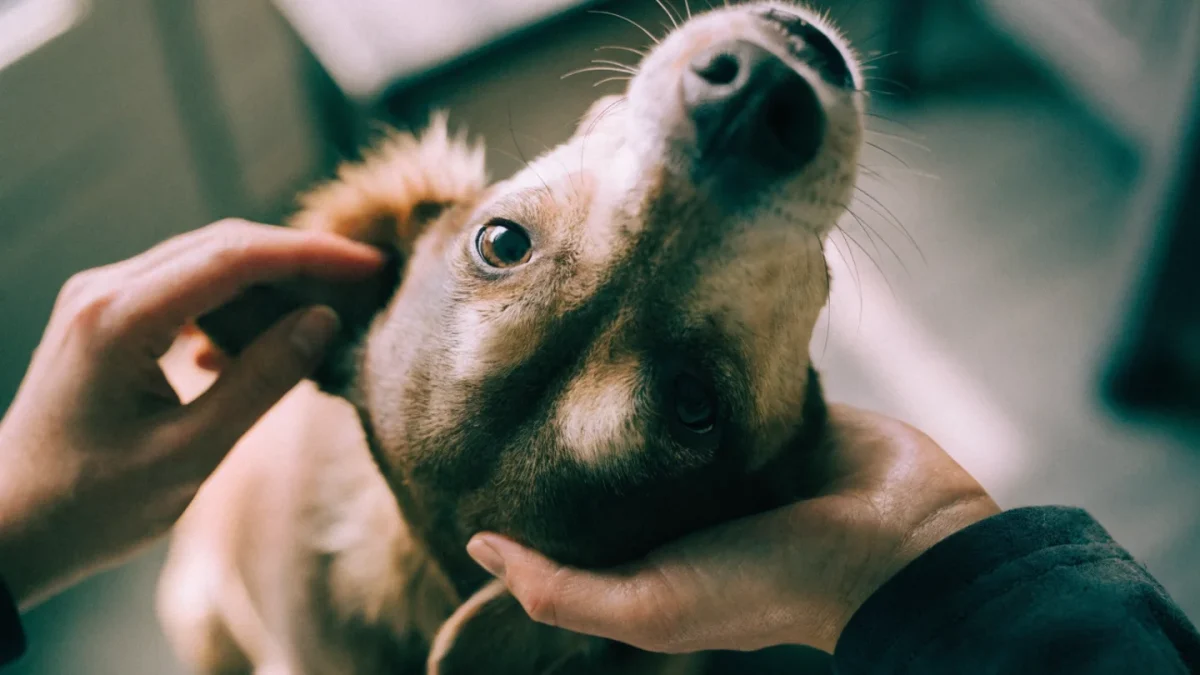
The most common start-button behavior is the chin rest: the dog places their chin in your palm (or on a surface) and holds it there. This is an active, voluntary behavior — the dog can lift their chin and walk away at any time. When they choose to hold the chin rest, that's consent to continue.
Training the chin rest starts with target training foundation — the dog already knows how to touch things on cue, and the chin rest is just a specific variation.
Teaching the chin rest:
- Hold your palm flat and low, fingers pointing toward the dog
- Wait for the dog to lower their head into your palm
- Click and treat the moment chin contacts palm
- Build duration — only treat if they hold it for 1 second, then 2, then 5
Once the chin rest is solid, it becomes the gateway to everything else.
Building Body Handling Tolerance
Work from less sensitive areas to more sensitive areas. Most dogs have a gradient:
Less sensitive: Back, sides, top of head
Moderately sensitive: Neck, base of tail
More sensitive: Ears, paws, muzzle, belly
Highly sensitive (varies by dog): Between toes, inside ears, gums/teeth
Start touching less sensitive areas while the dog holds the chin rest. If they lift their chin (withdraw consent), stop touching. Wait. Let them re-offer the chin rest. Continue.
This creates a genuine two-way communication: you touch, dog can opt out, dog can re-engage.
Paw Handling and Nail Trims
Paw sensitivity is one of the most common handling challenges. Build it in steps:
- Touch the top of the paw briefly while dog holds chin rest. Click and treat.
- Cup the paw without lifting. Click and treat.
- Lift the paw slightly. Click and treat.
- Hold the paw for 1 second. Click and treat.
- Extend duration holding the paw.
- Introduce nail tools at distance first (dog sees/smells them, nothing happens, reward).
- Touch tools to paw without trimming. Click and treat.
- Touch each toe with the tool. Click and treat.
- First cut on one nail — stop, reward big.
Work up to a full nail trim over multiple sessions. Never push through stress — a dog that pulls away is giving you important information about the pace.
Ear Checks
Fear-free vet visits are partly built on exactly this — dogs that have been conditioned to accept ear touching without fear.
- Touch the outer ear flap while dog holds chin rest. Click and treat.
- Gently fold the ear back slightly. Click and treat.
- Look into the ear briefly. Click and treat.
- Eventually: introduce cotton swabs near the ear, then touching the ear, building toward cleaning.
Go slowly. The ear canal is sensitive, and a dog that's been painful there before will have learned associations that need careful countercondition. If your dog has ear issues causing pain, handle veterinary treatment before cooperative care training — training a dog in pain is not fair.
Teeth and Mouth Handling
- Touch the outside of the muzzle. Click and treat.
- Gently touch the outside of the lips. Click and treat.
- Lift the lip briefly to see the teeth. Click and treat.
- Open the mouth briefly. Click and treat.
- Eventually: introduce a toothbrush at distance, touch teeth briefly with the brush.
This also builds the foundation for dental care, which significantly affects long-term health and is notoriously difficult with dogs not conditioned to mouth handling.
The Payoff
A dog trained in cooperative care doesn't just have easier grooming — they have a different relationship with human handling overall. They've learned that people touching their body doesn't mean restriction or pain, that they have agency, and that being still and offering contact earns good things.
The clinic staff notice. The groomer notices. And you notice every time a nail trim becomes a non-event instead of a rodeo.
Start with the chin rest. Everything else grows from there.