

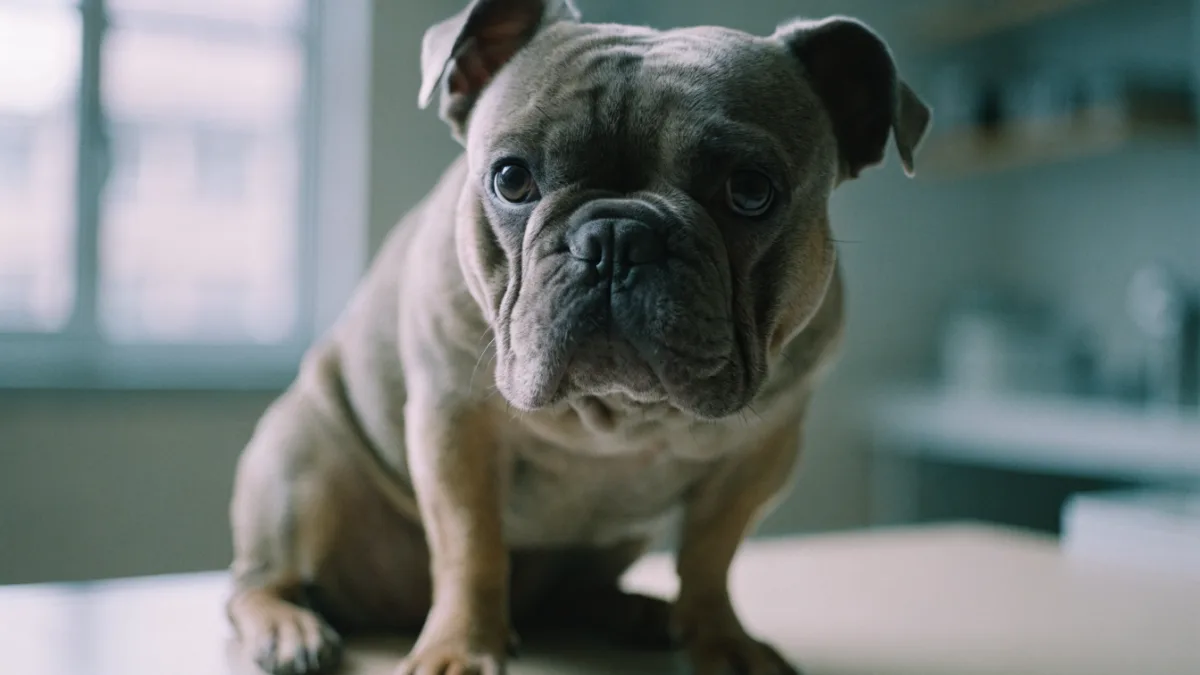
Picture a new patient arriving at a clinic. His name was Buster, a two-year-old French Bulldog with a coat like velvet and eyes that could melt even the most stoic of hearts. His owner, Emily, sat on the floor beside him, scratching behind his enormous, bat-like ears. “He’s usually so playful,” she said, her brow furrowed with worry, “but lately, he just sounds like a freight train when he breathes, and he passes out after five minutes of fetch.”
To an untrained eye, Buster looks like the peak of canine cuteness. His flat face, wide-set eyes, and wrinkled forehead give him an almost human-like, babyish expression. But to a veterinarian, Buster represents a growing crisis in our exam rooms. Those endearing snores, the clumsy waddling, and the tendency to sleep constantly aren’t just quirky personality traits. They are visible symptoms of distress, respiratory struggle, and skeletal pain.
We are currently facing a veterinary crisis driven by extreme pedigree features. As a society, our demand for animals selectively bred to look a certain way has skyrocketed, fueled by social media and a deeply ingrained biological response to “cuteness.” But the hidden cost of these aesthetic trends is a lifetime of health problems for the animals we love.
The “Baby Schema” and the Illusion of Design
Why are we so obsessed with flat faces and squat bodies? It comes down to a biological concept called the “baby schema” (or Kindchenschema in German). Humans are hardwired to respond to specific juvenile features: large heads, big eyes, and flattened faces. When we see these traits, our brains release a rush of dopamine and oxytocin, compelling us to nurture and protect.
The modern pet industry knows this well. Over the decades, breeders have selectively manipulated dogs and cats to enhance these juvenile features, creating animals with almost comically flat faces (brachycephaly), sloped backs, and shortened limbs. We are essentially treating living, breathing animals as commodities to be “designed” for aesthetic trends rather than biological viability.
A highly cited 2024 scientific paper published by E. Morel in the National Library of Medicine formally recognizes this severe impact. The research notes that when we prioritize physical appearance and temperament over an animal’s structural health and longevity, the welfare and quality of life of these purebred animals are “seriously compromised.” We’ve designed them for our eyes, but we’ve completely forgotten about their lungs, hearts, and joints.
When “Cute” Means “Can’t Breathe”
Let’s look at brachycephaly, which simply means “shortened head.” In breeds like English Bulldogs, Pugs, and Persian cats, the skull is dramatically compressed. While the outside of the face gets flatter and flatter, the soft tissue inside—like the soft palate and tonsils—doesn’t shrink to match. It gets crammed into a smaller space.
One of the most heart-wrenching cases I’ve managed was a four-year-old Pug named Daisy. Her owner brought her in because Daisy’s tongue was turning blue. Daisy was suffering from Brachycephalic Obstructive Airway Syndrome (BOAS). Her nostrils were pinched so tightly she couldn’t draw a full breath, and her elongated soft palate was blocking her windpipe.
We had to perform elective surgery to widen her nostrils and shorten her soft palate simply so she could breathe like a normal dog. This raises a fierce ethical debate within the veterinary community. It feels incredibly wrong to have to perform reconstructive surgery just to correct what humans have artificially caused through selective breeding. Many of my colleagues now use much firmer language to describe this practice. It isn’t just a “trait”; it’s being called the “dark side of beauty” and even “genetic abuse.”
The Genetic Bottleneck and Structural Failures
It’s not just the respiratory system that suffers. Achieving these extreme looks requires heavy inbreeding, which creates a severe genetic bottleneck. When you heavily restrict a gene pool to keep a “pure” bloodline, you don’t just lock in the coat color or the flat face—you inadvertently concentrate hereditary diseases.
Pedigree animals are highly susceptible to a specific set of costly inherited conditions. Alongside their breathing issues, we routinely see:
- Hip Dysplasia: A malformation of the hip joint that leads to severe arthritis. We see this constantly in German Shepherds bred with deeply sloped backs.
- Spinal and Back Problems: Breeds like the Dachshund and Corgi are bred for elongated backs and short legs. This disproportionate weight distribution puts immense pressure on their spinal discs, frequently leading to agonizing ruptures and paralysis.
- Severe Allergies and Skin Infections: The deep skin folds we find so endearing on Bulldogs trap moisture and bacteria, leading to chronic, painful skin infections.
The Lifelong Financial and Emotional Toll
I’ve seen incredibly well-meaning owners spend exorbitant amounts of money to acquire these pets—sometimes thousands of dollars for a “designer” puppy—only to be completely blindsided by the resulting financial and emotional toll. Managing a dog with hip dysplasia or a cat with chronic respiratory issues requires lifelong management, expensive medications, and sometimes multiple corrective surgeries. It is a horrendous financial burden, but more importantly, it is a daily welfare issue for the animal.
Shifting Standards and the Blame Game
So, who is responsible for this crisis? The debate is ongoing and heated.
“What we perceive as ‘cute’ is very often a visible symptom of distress. A snorting pug isn’t a happy dog; it is an animal struggling to get enough oxygen.” — A sentiment echoed across modern veterinary training.
Some point the finger at unethical breeders who prioritize profit over health. Others blame a lack of strict government regulation. But we also have to look at consumer demand. As long as buyers continue to purchase extremely flat-faced dogs or cats with shortened legs, the market will supply them.
The continued rise of these pets on platforms like TikTok and Instagram is actively driving the veterinary crisis. When an influencer’s wrinkly, snoring puppy goes viral, thousands of people want that same aesthetic, rarely considering the veterinary bills waiting down the road.
A Global Wake-Up Call
Fortunately, the tide is slowly turning. The academic consensus has shifted firmly, and the veterinary community is taking a zero-tolerance stance, moving away from polite warnings. Organizations like Battersea Dogs & Cats Home have launched campaigns highlighting the hidden costs of extreme characteristics.
Legislators are finally stepping in, too. In recent years, countries like Norway and the Netherlands have made global news by strictly banning the breeding of certain extreme dogs, like the English Bulldog and the Cavalier King Charles Spaniel, citing animal cruelty violations. Traditional kennel clubs and breed enthusiasts often fight these changes, arguing for the preservation of historic breed standards. However, I’ve changed my mind on this over the years—the historical standard simply cannot outweigh an animal’s right to breathe without pain.
If you are considering bringing a new pet into your life, I urge you to look past the trendy aesthetics. Choose a breeder who prioritizes health testing, or consider adopting from a shelter. When we stop demanding extreme physical features, the genetic abuse will end. True cuteness is a healthy, happy animal playing freely in the sunshine—not one fighting for its next breath. (And of course, if you already have a pet showing signs of these issues, please consult your veterinarian—we can work together to vastly improve their quality of life, even if we can’t change their genetics).