

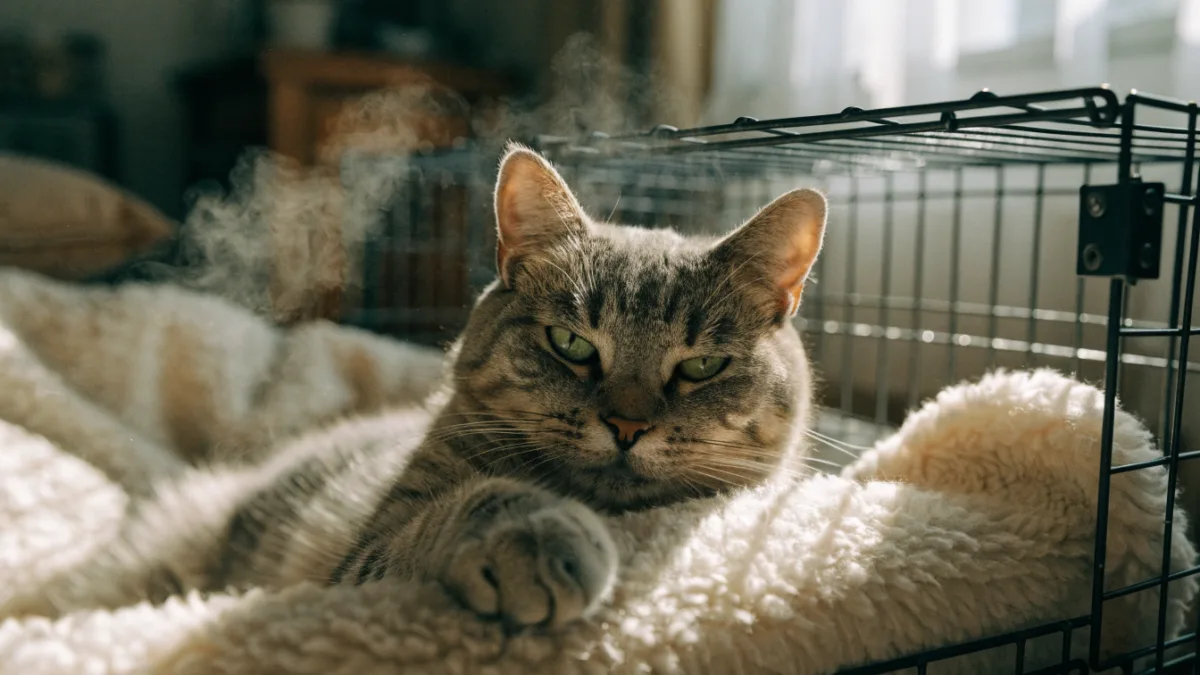
People buy a plastic or wire box, shove a panicked animal inside, and expect them to magically love it. That never works. Whether you’re dealing with a puppy who chews your baseboards or a cat who needs to recover from surgery, confinement is often a necessary part of sharing your life with an animal. But how you set up that space, and how your pet perceives it, makes all the difference. Dogs and cats process confinement completely differently. If you want your pet to actually treat a crate as a safe space, you have to look at how you’re using it, what you put inside it, and how you manage the time they spend there.
The Dog Dilemma: Den or Prison?
Let’s clear something up right away. A crate is not a magical cure-all, and it is certainly not a place to park your dog for twelve hours a day. But when you introduce it correctly, a crate stops being a cage and turns into a.[1] Dogs have a natural instinct to seek out small, secure spaces to rest. A properly set-up crate taps right into that instinct.
I used to tell clients to just toss a blanket over the crate, let the dog cry it out, and eventually, they’d give up. I was wrong. Normalizing the struggle for owners is important here: crate training is genuinely hard, and a lot of dogs panic when you shut the door. The fastest and most effective way to build a positive association isn’t through tough love. It’s through food. Start feeding your dog their regular meals right inside the crate. Leave the door open at first. Once they realize good things happen in there, they’ll start walking in on their own.
But we also have to be honest about what a crate is. Even when a dog voluntarily retreats to their crate, confinement isn’t fully relaxing. It serves as a safe haven, but locking a door takes away their autonomy. There is still some underlying stress when a dog realizes they can’t leave if they want to. That’s exactly why your dog’s crate must never be a place of isolation or punishment. If you yell at your dog and toss them in the crate, you are teaching them that the crate is a consequence, not a bedroom.
Rethinking the Box: Open Confinement
There is a massive debate happening right now about the necessity of closed-door crating.,[2] are actively pushing back against the idea that all dogs need to be locked up while we go to work. Keeping a dog crated all day is highly detrimental to their physical and mental well-being. They can’t stretch, they can’t drink water comfortably, and they certainly can’t get their energy out.
Traditional crate training isn’t the only way to keep a dog safe. If you work long hours, or if your dog absolutely loses their mind when the crate door latches, it’s time to look at alternatives.
Using Pens and Dog-Proofed Rooms
The current shift in pet care is moving toward “open confinement.” This is exactly what it sounds like. Instead of locking a dog in a tiny box, you set up a larger management space. You might use a dog-proofed room, like a laundry room or a kitchen, blocked off by a secure gate. Or, you can set up a metal exercise pen and put an open crate right in the middle of it.
Here’s what happens next: your dog gets the security of the den-like crate, but they keep their autonomy. They can walk outside the crate to drink water, stretch their legs, play with a safe chew toy on the floor, and then walk back inside to sleep. You’re giving them the safety of confinement without the restriction of locked doors.
Feline Rules: Size Dictates Purpose
If you try to crate-train a cat exactly like a dog, you’re going to have a bad time. Cats aren’t den animals in the same way canines are. They don’t usually want to be tucked away in a dark, small space just to nap. With cats, the crate serves a very specific, practical purpose. And according to [3] the size of the enclosure completely dictates how you should use it.
Small Carriers for High-Impact Travel
For travel, a small crate is statistically safer and much more secure. This trips up a lot of owners. You might think buying a giant, luxurious carrier is doing your cat a favor, but too much space is actually dangerous. If you have to slam on the brakes in your car, a cat in a large carrier gets thrown around the inside of the box, which can lead to severe injury. A small, snug carrier keeps them firmly in place and offers better protection during sudden stops.
Large Enclosures for Stationary Comfort
On the flip side, if you are dealing with longer-term or stationary confinement, bigger is definitely better. If you have a kitten that needs to be contained while you’re at work, or an adult cat recovering from surgery, a small travel carrier is cruel. They need a large wire dog crate or a specialized confinement setup. A large space allows you to include a comfy bed, a separate litter box, and food and water bowls. When cats are recovering from an injury, a large crate keeps them from jumping or running while still letting them move around naturally.
Building the Space: What to Look For
Whether you are setting up a space for a dog or a cat, the equipment you choose matters. Don’t just grab the cheapest wire box off the shelf. Look for sturdy, heavy-duty wire that won’t bend if a large dog leans against it. If you have a cat, look for a carrier that has a top-loading option as well as a front door. Trying to shove a panicked cat through a small front door at the vet’s office is a nightmare. Top-loading carriers let you gently lower them in, which drastically reduces stress.
For bedding, skip the expensive, fluffy beds until you know how your pet behaves. A dog might chew a plush bed into a thousand pieces, and a cat might ignore it entirely. Start with simple, easy-to-wash blankets. You can easily toss them in the washing machine if there’s an accident. If your dog is a heavy chewer, keep the crate bare until you trust them not to swallow fabric.
Finally, make sure the crate is in the right location. Don’t shove it in a cold, damp garage or right next to a loud washing machine. Put it in a quiet corner of your living room or bedroom where they can still be near the family but have their own designated quiet time.
Confinement doesn’t have to be a dirty word. When done right, it’s about setting boundaries and managing safety. When we look at wildlife conservation, the ultimate goal is always to preserve natural habitats and respect the innate behaviors of a species. We have to apply that exact same philosophy to the animals living in our homes. By giving our dogs options to retreat to a den, and giving our cats appropriately sized spaces based on their specific needs, we aren’t just locking them away. We’re respecting their natural instincts, giving them autonomy where we can, and building a space where they actually feel secure.
Sources
- den rather than a prison — instagram.com
- Modern, progressive training communities — facebook.com
- veterinary experts — vcahospitals.com