

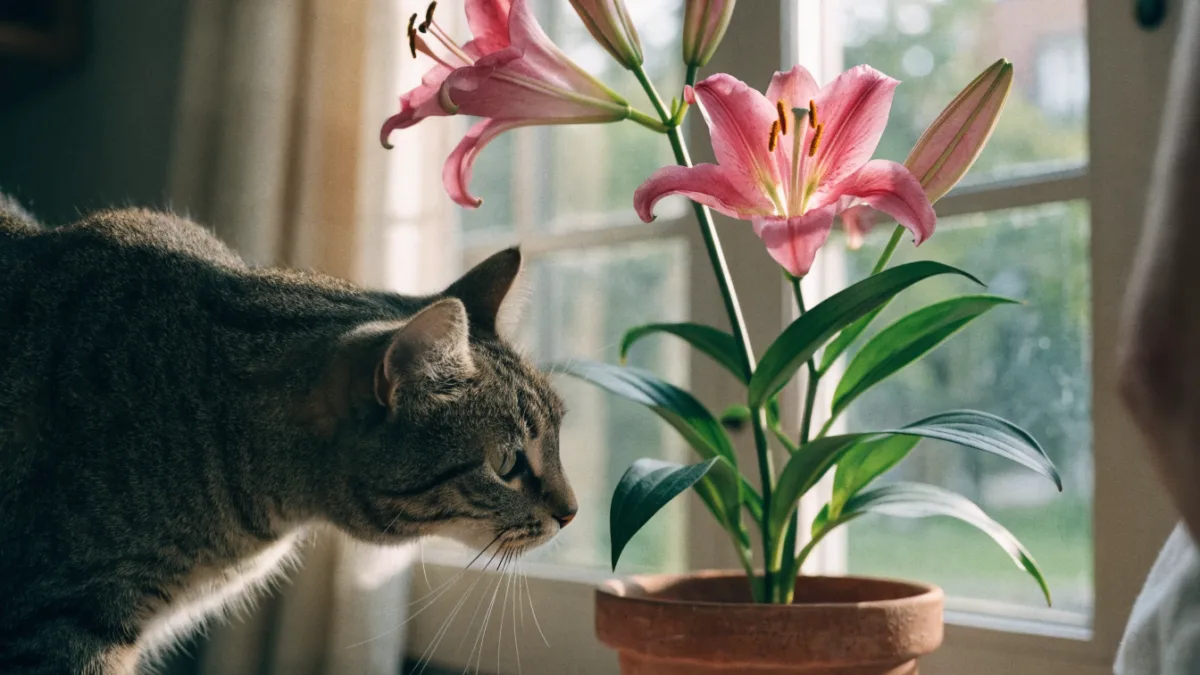
Just last spring, a wonderful client named Maria brought her three-year-old indoor cat, Barnaby, into the clinic. Barnaby had always been a strictly indoor cat, perfectly safe from the dangers of the outside world. But Maria had recently treated herself to a beautiful bouquet of fresh flowers for her dining room table. Within twelve hours of that bouquet arriving, Barnaby was violently ill, lethargic, and refusing to eat. The culprit was a gorgeous stem of Asiatic lily. We managed to save Barnaby, but it required three days of intensive intravenous fluids.
This scenario is becoming incredibly common. Over the last few years, the massive surge in indoor gardening—especially among younger generations—has inadvertently led to a notable spike in pet poisoning cases. We love our jungles, and we love our pets, but the two don’t always mix. Understanding which toxic houseplants for cats and poisonous plants for dogs are hiding in plain sight is the first step in creating a safe, harmonious home.
The “True” Lily: A Feline’s Worst Enemy
If you share your home with a cat, there is one plant family you must simply ban from your property entirely: the true lily. Plants belonging to the Lilium and Hemerocallis species (which includes Asiatic, Oriental, Daylilies, and Tiger lilies) are incredibly lethal to felines.
What makes these flowers so terrifying is the minute amount of exposure required to cause catastrophic damage. A cat doesn’t even need to eat the plant. Simply biting a leaf, brushing against the pollen and grooming it off their fur later, or even drinking the water from the vase is enough to trigger sudden, severe kidney failure. The exact toxin is still somewhat of a mystery to science, but the damage it does to a cat’s renal tubules is swift and irreversible without immediate treatment.
There is a frequent and dangerous debate in the plant community regarding the misidentification of “lilies.” Many people assume all plants with “lily” in the name are equally deadly. While Peace Lilies and Calla Lilies are toxic, they do not cause kidney failure. Instead, they contain insoluble calcium oxalates—microscopic, needle-like crystals hidden inside the plant’s cells that cause immediate, intense oral pain and swelling when chewed. While incredibly unpleasant, this is survivable and entirely different from the silent, deadly kidney failure induced by true lilies.
A Room-by-Room Tour of Hidden Dangers
To really understand the risks, let’s take a walk through a typical home. You might be surprised by where the danger lurks.
The Living Room: Foliage that Fights Back
Your living room is likely full of resilient, leafy greens. Unfortunately, many of these contain those painful calcium oxalate crystals we just mentioned. Philodendron, Pothos, and Dieffenbachia (Dumb Cane) are notorious culprits. When a curious dog or cat takes a nip, these microscopic needles instantly pierce the soft tissues of the mouth, tongue, and throat. This leads to severe gastrointestinal distress, excessive drooling, and difficulty swallowing.
Another common living room resident is the Corn Plant (Dracaena fragrans). While they might look harmless swaying in the corner, they contain saponins—chemical compounds that foam when mixed with water. When ingested by our pets, particularly dogs, these compounds cause moderate toxicity. You can expect to see vomiting, depression, and a sudden loss of appetite.
Sunrooms and Entryways: Beautiful but Deadly
Larger statement plants often end up in bright sunrooms or entryways. Two plants frequently brought into these spaces are highly dangerous. The first is the Sago Palm. Despite looking like a harmless mini palm tree, it is highly lethal to dogs. Every part of the Sago Palm is toxic, but the seeds or “nuts” contain the highest concentration of a toxin called cycasin. Ingestion causes severe liver failure, and unfortunately, the survival rate is low without aggressive, immediate veterinary intervention.
The second is Oleander (Nerium oleander). This plant is classified under “Major Toxicity” because it contains cardiac glycosides, compounds that directly affect the heart. Chewing on even a few leaves can cause severe heart arrhythmias, and worse still—it can cause severe dermatitis (skin irritation) just from physical contact. If your dog brushes up against a potted Oleander, they might develop a painful, itchy rash even if they never take a bite.
The Kitchen Island: Spring Bouquets
We already discussed the dangers of true lilies in floral arrangements, but they aren’t the only cut flowers posing a risk. Tulips are incredibly popular, especially in the spring. The real danger of the tulip lies in the bulb, which contains the highest concentration of toxins. However, if a dog decides to chew on the stem or leaves of a kitchen island bouquet, they can still suffer from intense vomiting, drooling, and severe gastrointestinal distress.
The “High Shelf” Debate: Out of Reach vs. Out of the House
A debate I hear constantly in the clinic involves placement. Dog owners often argue that a toxic plant is perfectly safe if placed on a high shelf or in a hanging basket. And to be fair, if you have an older, low-energy Golden Retriever who doesn’t jump onto counters, elevation works beautifully.
But if you own a cat, elevation is a myth. Cats are vertical explorers by nature. I used to advise clients to simply hang their Pothos plants, but I’ve changed my mind on this entirely. I’ve treated too many cats who decided to risk the digestive upset just to bat at a dangling vine. For cats, “out of reach” truly means “out of the house.”
Furthermore, toxicity isn’t just about ingestion. As we discussed with Oleander, some plants can cause severe skin irritation simply by brushing against them. If a plant’s sap causes dermatitis, a high shelf won’t protect your cat if they rub their face against the leaves during one of their midnight climbing expeditions.
Creating a Pet-Safe Indoor Jungle
Please don’t despair! You absolutely do not have to choose between a lush, green home and the safety of your pets. There are countless gorgeous, pet-safe plants that will thrive indoors.
When you are at the nursery, look for resilient and non-toxic varieties. Spider Plants (Chlorophytum comosum) are incredibly hardy, safe for both cats and dogs, and produce little offshoots that you can easily propagate. Boston Ferns add a beautiful, cascading greenery to shaded corners and are completely harmless if nibbled. If you love the dramatic foliage of a Calathea or the compact, sculptural leaves of a Peperomia, you are in luck—both genera are excellent pet-safe plants.
If you are ever unsure about a plant you want to bring home, take a quick moment to verify its scientific name. Common names can be wildly misleading, so always research the plant’s Latin name to ensure you are making a safe choice.
Fortunately, a growing movement is making this process even easier. There is a massive consumer demand right now for nurseries and plant shops to clearly label their inventory. More and more retailers are beginning to add “Pet-Toxic” or “Pet-Safe” tags directly on the soil or retail shelves, removing the guesswork at the checkout counter.
Ultimately, sharing your home with plants and pets is a wonderful, enriching experience. By familiarizing yourself with the risks and choosing your greenery wisely, you can cultivate an indoor sanctuary where both your foliage and your furry friends can flourish safely. If you ever suspect your pet has ingested a toxic plant, don’t wait for symptoms to appear. Call your clinic or an animal poison control center immediately—the faster we intervene, the better the outcome for your companion.