

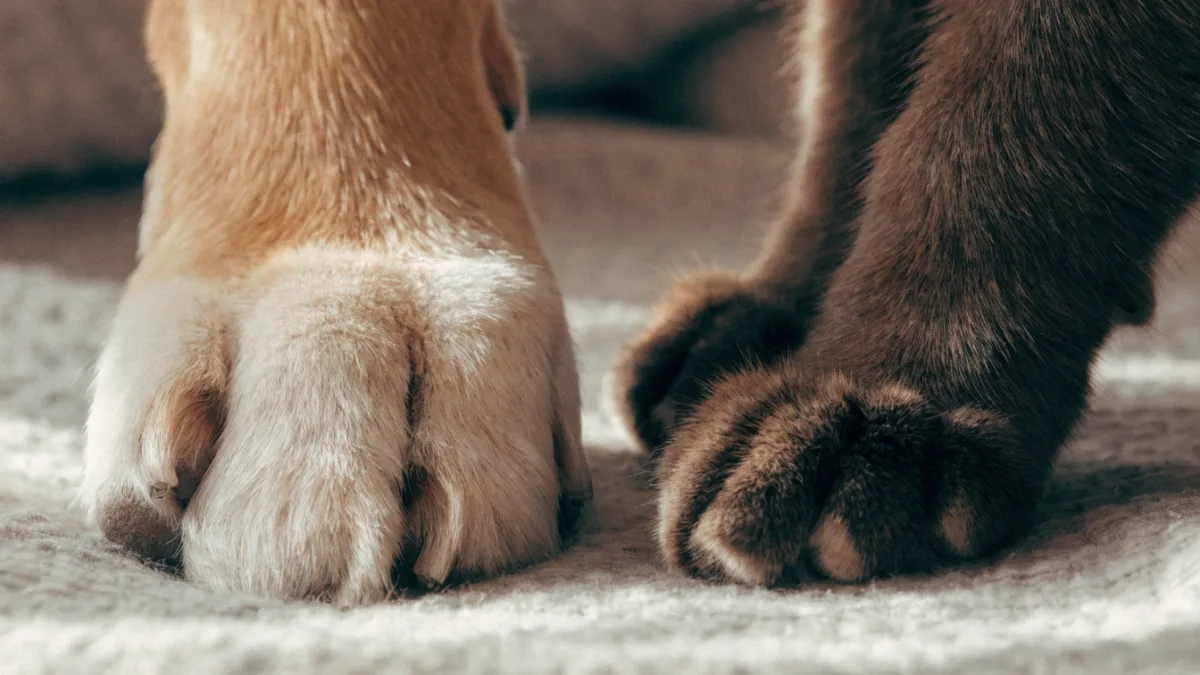
Not long ago, a wonderful couple brought their six-month-old orange tabby, Barnaby, into the clinic. Barnaby was a perfectly healthy, rambunctious kitten, but he happened to be a polydactyl—he had a few extra toes, giving him massive, pigeon-toed front paws that looked like baseball mitts. His owners were mesmerized by his thumbs, but they also had a lot of questions. They had heard that extra toes meant extra problems and wondered if we should remove the surplus digits to keep him safe. That same week, I had a consultation with a first-time dog owner who had just brought home a Great Pyrenees puppy. She was frantic because the breeder hadn’t removed the puppy’s rear double dewclaws, and she was terrified the dog would eventually catch them on a carpet and tear them off.
Both of these scenarios highlight a fascinating and frequently misunderstood area of veterinary medicine. Whether we are talking about a dog’s dewclaws or a cat’s extra toes, the central question is the same: just because we can surgically alter an animal’s natural anatomy, does it mean we should? The conversation around removing these digits has shifted dramatically over the years, and honestly, it’s a shift I wholeheartedly welcome.
Understanding the Canine Dewclaw
Let’s start with dogs. If you look at the inside of your dog’s front paws, up a little higher than the main footpad, you’ll likely find a nail that doesn’t touch the ground. That’s the dewclaw. Most dogs have them on the front legs, and some breeds—like the Great Pyrenees, Briard, and Anatolian Shepherd—also have them on the rear, or even have “double” dewclaws with two nails in the same spot.
For a long time, the prevailing wisdom was that dewclaws were useless evolutionary leftovers, akin to an appendix, and that they should be chopped off to prevent them from snagging on things. But the more we study canine biomechanics, the more we realize how incredibly functional these toes actually are.
The Biomechanics of the “Thumb”
When a dog runs at high speeds or makes sharp turns—think of a Border Collie cutting after a frisbee, or a Greyhound racing around a track—their front dewclaws dig into the ground, providing crucial stability. They prevent the leg from twisting, technically known as torque. They are also essential for everyday tasks: dogs use them to grip toys, hold bones steady while chewing, and scratch their own faces.
I remember treating a gorgeous Labrador named Koda a few years back. He was a massive, goofy boy who loved to catch tennis balls. He had his front dewclaws removed as a newborn puppy, which was standard practice for his breeder. By the time Koda was six, he was suffering from severe, chronic arthritis in his carpus (the equivalent of our wrist). There’s no way to definitively prove the early amputation caused the instability in his joints, but seeing him struggle to hold a tennis ball without those extra digits was heartbreaking. Biomechanical experts, including Dr. Chris Zink, have heavily researched how the tendons attached to the dewclaw stabilize the foot. Removing them alters the way the entire leg absorbs shock.
When Is Dewclaw Removal Actually Necessary?
Let’s be clear: there is a difference between front and rear dewclaws. Front dewclaws are firmly attached by bone and connective tissue. Rear dewclaws, however, are often “floppy,” attached only by a flap of skin. Because they flop around, they are genuinely at a much higher risk of getting caught and tearing. If a dog is born with floppy rear dewclaws, surgical removal is a completely reasonable and medically sound choice to prevent future injury.
Adult dogs do turn up at emergency clinics having caught a well-attached dewclaw on a wire fence or aggressive underbrush, resulting in a bloody, painful tear. Injuries do happen. However, these acute injuries appear to be relatively rare compared to the chronic, silent joint stress caused by removing functional front dewclaws.
The Shifting Stance on Routine Removal
I’ll be honest—I’ve changed my mind on this over the years. Early in my career, I didn’t bat an eye at routine neonatal dewclaw removal. But as research evolves, our medical practices need to evolve with it. Today, major veterinary organizations strongly advise against procedures done purely for cosmetic reasons or owner convenience.
The Australian Veterinary Association (AVA), for example, has a very clear,[1] stating that procedures that alter natural functions for human convenience should not be performed unless there is a genuine medical necessity. The American Veterinary Medical Association (AVMA) echoes this, specifically opposing the cosmetic amputation of dewclaws.
Timing Is Everything (and Age Matters)
If removal is going to happen—say, for a floppy rear dewclaw—timing makes a massive difference. Breeders who opt for removal usually do it when the puppies are just three to five days old. At that neonatal stage, the bones are incredibly soft, and the nervous system isn’t fully developed, so it’s a relatively quick procedure with minimal trauma.
But if you adopt an older puppy or an adult dog with problematic dewclaws, it’s no longer a simple “snip.” It becomes a full orthopedic surgery. The dog has to go under general anesthesia, the vet has to cut through skin, ligaments, and potentially bone, and then suture the wound closed. Recovery takes weeks, and there’s a risk of infection and phantom pain. For an adult dog, keeping the nail properly trimmed is almost always preferable to amputation. If you’re navigating this with a new puppy, you’ll find,[2] but the standing advice is to leave the front ones alone unless they are structurally unsound.
Feline Polydactyly: The Magic of Extra Toes
Now, let’s talk about cats like Barnaby. Polydactyly (from the Greek words for “many” and “digits”) is a genetic mutation that results in extra toes. It’s particularly common in cat populations along the Eastern coast of the United States and Canada. Legend has it that the famous author Ernest Hemingway was given a polydactyl cat, and today, dozens of descendants of that original cat still roam the Hemingway Home in Key West, Florida.
While a normal cat has five toes on the front and four on the back, a polydactyl cat can have six, seven, or even more. These extra toes are usually fully functional, complete with their own bones, joints, and claws. They give these cats an incredibly endearing “thumbs up” look and actually provide them with superior balance and gripping abilities.
Do We Ever Remove Extra Cat Toes?
The short answer is: rarely. Because these extra toes are functional parts of the cat’s anatomy, removing them is essentially the same as amputating several human fingers. It’s an extensive, painful surgery. I absolutely never recommend removing healthy, well-formed extra toes on a cat.
The only time we consider surgical intervention for polydactyl cats is if the extra toe is causing a functional problem. For example, sometimes an extra toe will grow at a bizarre angle, causing the claw to curve right back down into the paw pad. If the claw cannot be managed with routine trimming, we might remove just that specific problematic toe. But otherwise, polydactyly is a delightful quirk, not a defect to be corrected.
One important note for owners of these special kitties: you do have to be vigilant about nail care. Because some of those extra claws don’t touch the ground, they don’t experience the natural wear and tear that keeps them filed down. If you have a polydactyl cat, you’ll need to invest in a good pair of nail clippers (look for sharp, stainless steel blades in a size appropriate for your cat) and make nail trimming a regular part of your routine to prevent those extra claws from growing into the skin.
Trusting the Biology
If there’s a takeaway from all of this, it’s that biology is rarely accidental. The dewclaws on your dog and the extra toes on your cat evolved for a reason, serving specific biomechanical purposes. When we look at,[3] we see a growing recognition of this fact. More and more working dog handlers are choosing to leave dewclaws intact, finding that these digits prevent injuries in the field rather than cause them.
I’m thrilled to see kennel clubs around the world updating their breed standards to allow natural dewclaws, and I’m equally thrilled when owners embrace their pets’ natural state. The next time you look at your dog’s “thumbs” or marvel at a cat with oversized paws, take a moment to appreciate the incredible engineering at work. Nature usually knows exactly what it’s doing, and our job is simply to help keep those wonderful, natural parts healthy, trimmed, and cared for.
Sources
- policy on the surgical alteration of companion animals — ava.com.au
- plenty of passionate debates online — reddit.com
- breeders debating dewclaw removal in working dog communities — facebook.com