

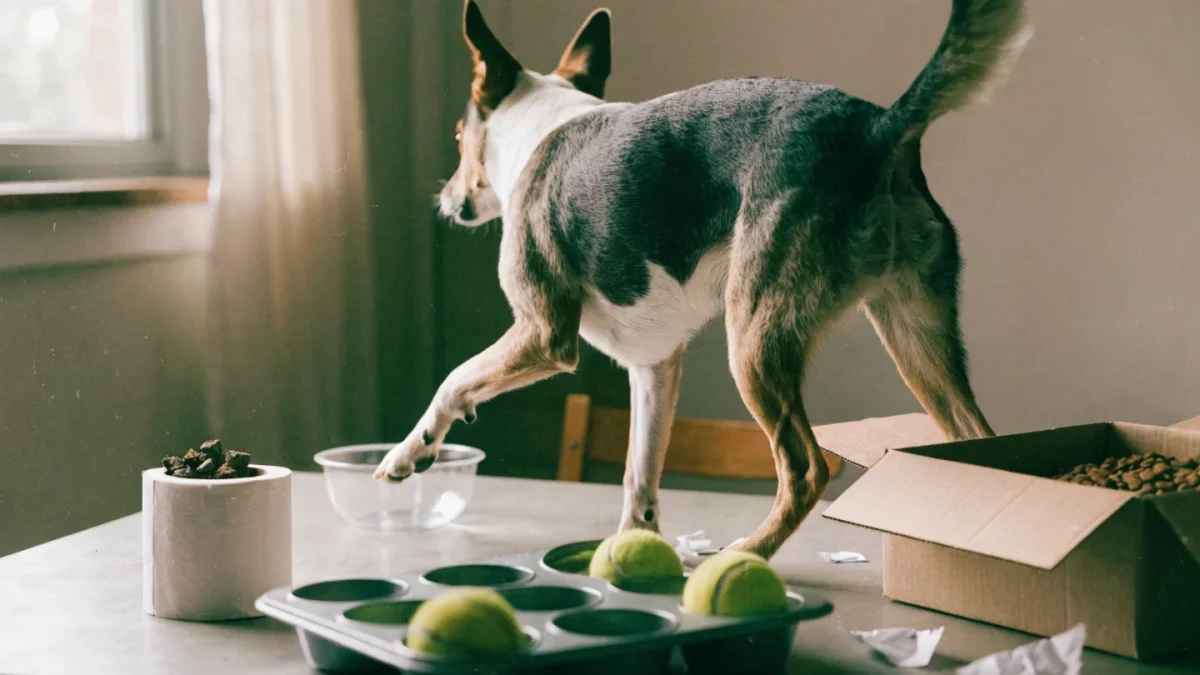
Enrichment toys don't have to be expensive. I know people who spend hundreds on puzzle systems their dog ignores in two sessions. And I know dogs that have been working a cardboard box and muffin tin rotation for years with full engagement.
The mechanism isn't the price. It's the novelty and the work required to access the food.
What Makes a Good Enrichment Toy
Any enrichment device does three things:
- Holds food in a non-obvious way
- Requires the dog to interact with it to access the food
- Takes longer than eating from a bowl
That's it. A toilet paper roll with kibble inside and the ends twisted shut checks all three boxes. Here are twelve variations you can build today.
Paper-Based Toys
1. Toilet Paper Roll Bundle
Fill a cardboard tube with kibble. Fold in both ends or twist them shut. The dog noses it, paws it, and eventually unfolds or tears it open. Completely free, disposable, takes 5-10 minutes.
2. Newspaper Parcel
Spread a sheet of newspaper flat. Put a small handful of treats in the center. Fold the sides in and roll it loosely. A dog has to unwrap it — the crinkling sound adds interest.
3. Cardboard Box Tower
Put a small box inside a medium box inside a large box, with treats layered between. The dog has to open and dismantle each layer. 20+ minutes for an enthusiastic dog.
4. Paper Bag Shuffle
Put the same amount of kibble in three paper bags. Fold them all shut. Only one actually has treats — the others are empty. Dog sniffs to find the right one. Easy version: all have treats.
Kitchen Item Toys
5. Muffin Tin Game
Distribute kibble in the cups of a muffin tin. Cover each cup with a tennis ball or crumpled paper. Dog noses out the covers to access food. You can make it harder by covering some cups and leaving others empty, or putting the same treat under only one ball.
6. Ice Cube Feast
Freeze kibble or small treats inside ice cubes or larger ice blocks. The dog licks and chews the ice to access the food inside. Good for hot days. Messy indoors — use a waterproof mat.
7. Egg Carton Puzzle
Put a treat in each cup of an egg carton. Close the lid. The dog figures out how to open it. For more challenge: tape the lid shut.
8. Plastic Bottle Roller
Wash out a plastic bottle. Remove the cap. Put dry kibble inside. The dog bats and rolls the bottle until kibble falls out the opening. Drill a second hole in the side if kibble isn't coming out easily. Supervise — some dogs will chew the plastic once the kibble is out.
Textile and Fabric Toys
9. Fleece Snuffle Mat
Cut fleece into strips (about 1×8 inches). Thread them through the holes of a rubber sink mat with holes, tying knots to secure. Scatter kibble through the fleece. Dog sniffs and noses through the fabric to find food. Requires some basic craft work but lasts months.
10. T-Shirt Treat Pouch
Tie off the bottom of an old T-shirt or cut fabric into a pouch shape. Tie the top loosely. Put kibble inside. Dog needs to untie or nose open the knot to access food. Adjust knot tightness to your dog's skill level.
11. Knotted Rope Bundle
Take a rope toy or strip of fleece. Tie multiple loose knots throughout the length, with small treats tucked inside each knot. Dog works each knot to access the treat.
Other Materials
12. Cardboard City (Extended Version)
Spread 10-15 boxes and containers of different sizes and shapes across a room. Put treats in only some of them. Vary which ones have food each session. For dogs that have learned this game, add small items inside boxes (wrapped in paper) to create a nesting puzzle effect.
Safety Notes
Supervise the first time with any new toy to confirm your dog engages with it appropriately. Some dogs chew plastic aggressively — avoid plastic-based toys for heavy chewers. Cardboard is safer for these dogs.
Match difficulty to your dog's experience level. A dog new to enrichment gets frustrated easily — make things easy at first and build complexity over weeks.
Commercial puzzle feeders offer more durability and varied mechanisms if you want to invest. But the toys above keep most dogs genuinely busy and cost almost nothing. Commercial puzzle feeders and brain games are worth exploring if you want to expand the rotation.
Rotate frequently. A toy used every day stops being interesting in a week. A toy used once a week stays novel for months.