

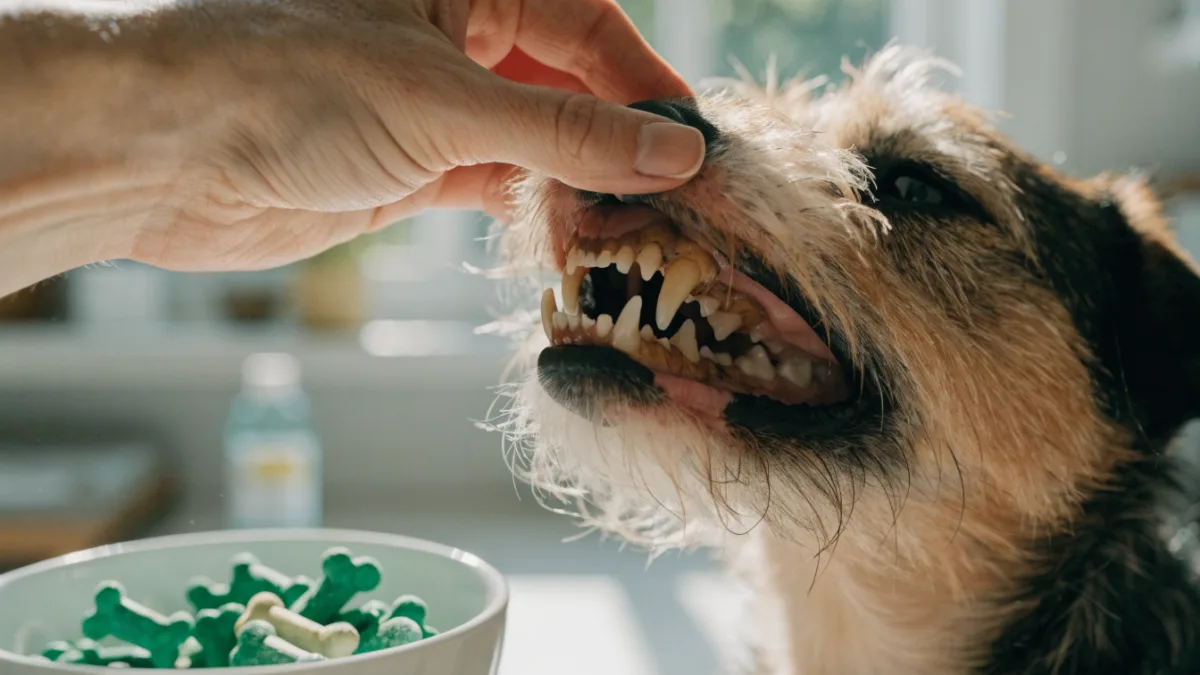
Picture meeting Buster: a five-year-old Golden Retriever with a magnificent, wagging tail and some of the most terrible breath ever encountered in an exam room. His owner, Mark, was visibly embarrassed. “I don’t understand it,” he said, gesturing to a box of expensive dental treats sitting on the counter. “I give him one of those green chewies every single day. Shouldn’t his teeth be perfect?”
When I lifted Buster’s lip, the reality was stark. Instead of pearly whites, I was looking at thick, yellow-brown buildup along the gumline and bright red, inflamed gingiva (the fancy medical term for gums). Mark had fallen into a trap that catches almost every loving pet owner: the belief that a daily dental treat is a magic bullet.
The pet care aisle is overflowing with products promising to clean your dog’s teeth—everything from long-lasting chews to powders you sprinkle on their food and liquids you squirt into their water bowl. But when we look past the clever marketing, what does the science actually say? Let’s peel back the label and look at how dental chews and water additives really work, and how you can use them effectively.
The “Magic Bullet” Illusion: Mechanical vs. Chemical Action
To understand why Buster’s teeth weren’t sparkling, we have to look at how these products are designed to work. Dental homecare relies on two distinct types of action: mechanical and chemical.
The Mechanical Scrape
Think of mechanical action like a sponge wiping down a plate. When a dog chews on a properly designed dental treat, the physical texture of the chew is supposed to rub against the surface of the teeth, scraping away soft plaque before it hardens. Many of these treats are designed with a porous, almost wood-like consistency that forces the dog’s teeth to sink into them.
However, the effectiveness of this scraping is incredibly limited. A chew might do a decent job cleaning the pointed fangs (canines) or the back molars, but it does absolutely nothing for the tiny teeth in the front or the crucial teeth right along the gumline where periodontal disease takes hold. Relying solely on a chew is like chewing a piece of gum and expecting it to clean between your teeth. You’re only getting a fraction of the picture.
The Chemical Coat
Chemical action is where things get interesting, and where the industry has seen massive advancements. Recognized at global veterinary conferences like WSAVA, pet product manufacturers have started incorporating chemical anti-tartar agents—often compounds like polyphosphates or zinc—directly onto the surface of diets, treats, and into water additives.
Instead of physically scraping the teeth, these chemicals work by binding to the minerals in a dog’s saliva. By altering the oral environment and the oral pH, they actually prevent the soft, sticky plaque from calcifying into hard, concrete-like tartar (also known as calculus).
The Systemic Reach of Water Additives
One of the biggest frustrations with physical chews is that they only affect the teeth the dog uses to chew. This brings us to the hidden value of water additives and dental powders.
I used to be highly skeptical of water additives. Early on, many were just heavily flavored breath fresheners that did nothing for actual dental health. I’ve changed my mind on this as the science evolved. Modern, evidence-based water additives offer systemic reach. Because your dog is swishing the treated water around their mouth and swallowing it all day, that active chemical ingredient reaches every nook and cranny of the oral cavity. It washes over the non-chewing teeth, the roof of the mouth, and deep into the cheek pouches where physical treats simply can’t reach.
A fascinating [1] validated this multi-modal approach beautifully. Researchers found that brushing a dog’s teeth just once a week, combined with a daily water additive, measurably improved the dogs’ oral pH and significantly reduced the overall extent of dental deposits. It proved that we don’t have to be perfect; we just have to be consistent and combine our methods.
The Hard Truth: Prevention vs. Removal
Here is the most important thing you need to know about treats and water additives: they prevent disease, they do not cure it.
I recently treated a nine-year-old Pomeranian named Daisy. Her owner had been adding a dental powder to her food for a month, hoping to clear up the heavy brown tartar on her teeth. When I explained that the tartar wasn’t going away without professional help, her owner was confused.
I explained it like this: plaque is a soft, sticky biofilm that forms on teeth within hours of eating. If not brushed away, it mixes with minerals in the saliva and hardens into tartar within a few days. Once plaque turns into tartar, it is as hard as cement. No amount of chewing, and no chemical water additive, can dissolve or remove established tartar. It has to be scaled away using specialized ultrasonic equipment.
The golden rule of veterinary dentistry is this: Homecare products are for maintenance and prevention. They are not a substitute for professional veterinary scaling and cleanings under anesthesia.
When pet parents rely too heavily on treats as a complete substitute for brushing or professional cleanings, they get a false sense of security. Hidden beneath the gumline, bacteria continue to multiply, quietly eating away at the bone that holds the teeth in place. By the time the dog shows obvious signs of pain—like dropping food or pawing at the mouth—the disease is often advanced and painful.
Building a Realistic Dental Routine
So, where do treats and water additives fit into a healthy routine? They are excellent supportive tools. The gold standard for dental care will always be daily brushing with a soft-bristled toothbrush and enzymatic pet toothpaste. But I live in the real world, and I know that many dogs look at a toothbrush like it’s a weapon.
If brushing is a battle in your home, here is how to build a realistic, multi-modal protocol for your dog:
- Look for the Seal of Acceptance: When shopping for chews or water additives, don’t just grab the flashiest packaging. Look for products that have earned the Veterinary Oral Health Council (VOHC) Seal of Acceptance. This seal means the product has undergone rigorous, peer-reviewed clinical trials to prove it actually reduces plaque and tartar.
- Match the Chew to the Chewer: Always pick a chew that is appropriate for your dog’s size and chewing style. A chew that is too small is a choking hazard, while a chew that is too hard (like some animal bones or nylon toys) can fracture a tooth. A good rule of thumb is that the chew should be soft enough that you can leave an indent in it with your thumbnail.
- Use Chemicals to Your Advantage: If your dog won’t tolerate brushing, add a VOHC-accepted water additive or a dental powder to their daily routine. While it won’t replace the mechanical scrubbing of a toothbrush, it will help alter the oral pH and prevent plaque from calcifying on those hard-to-reach teeth.
- Schedule Professional Cleanings: Just like you visit the dentist for a hygienist to scale off the tartar your toothbrush misses, your dog needs this too. Regular professional dental assessments and cleanings under anesthesia are the only way to safely remove existing tartar and assess the health of the teeth below the gumline.
Always talk to your veterinarian before adding a new dental product to your pet’s routine. While these products are generally very safe, some dogs with sensitive stomachs might not tolerate certain water additives or powders, and your vet can help you determine the safest option based on your dog’s specific medical history.
We got Buster on a better routine. Mark still gives him his favorite dental treat in the evenings, but he now adds a water additive to Buster’s bowl, and they come in for an anesthetic cleaning once a year to strip away the heavy buildup. Buster’s breath is vastly improved, and more importantly, his gums are healthy and pain-free.
While we focus on the oral health of our domestic companions, it’s fascinating to remember that dental care is entirely a human construct. Wild canids, like wolves and coyotes, keep their teeth clean through a natural, whole-prey diet—crushing raw bone, tearing tough cartilage, and shearing fibrous connective tissue that naturally wipes their teeth clean. As we protect wild habitats and ensure these apex predators have the space and prey they need to thrive, they continue to maintain their brilliant, healthy smiles entirely on their own, without a single trip to the vet!
Sources
- 2024 clinical study — pmc.ncbi.nlm.nih.gov