

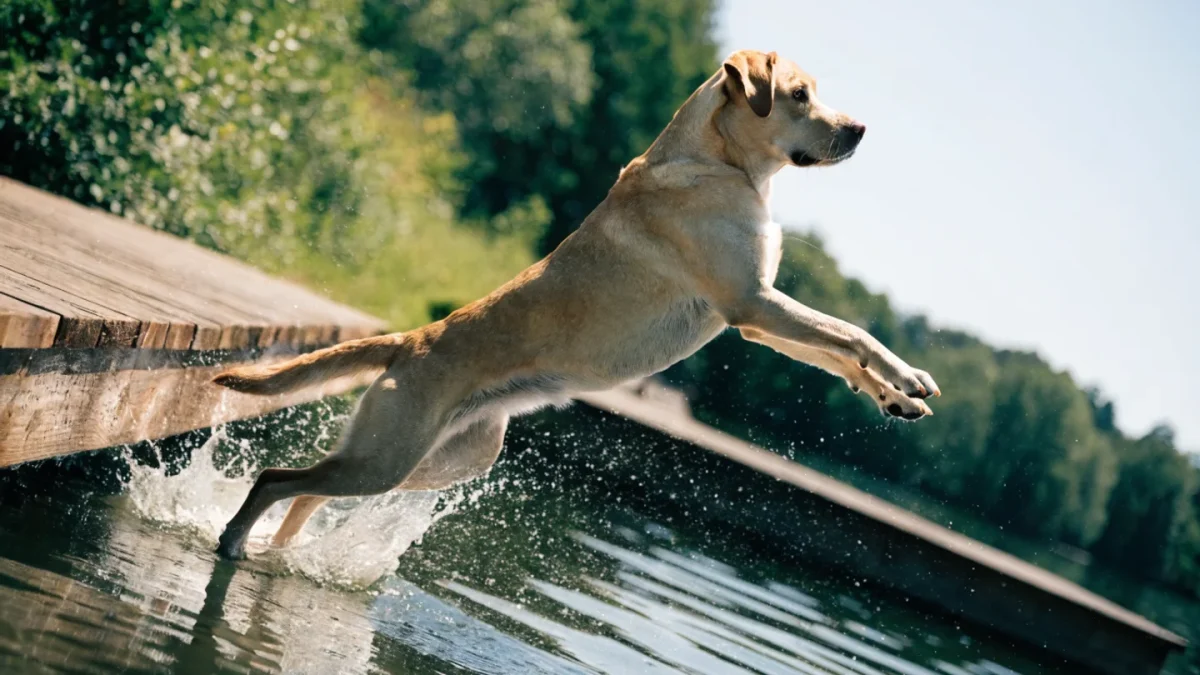
I don't train a lot of dock diving personally — it's a specialized sport with dedicated facilities. But I've sent a fair number of clients to dock diving clubs and watched what happens when you put a water-loving retriever at the end of a dock with a toy at the far end.
Most of them launch themselves without hesitation on the second approach.
What Dock Diving Is
Dock diving competitions feature dogs running down a dock (typically 40 feet long) and jumping into a body of water, competing in different disciplines:
Big Air (Distance): The classic event. Dog runs the dock, jumps as far as possible into the pool. Distance is measured from the dock's end to where the dog's tail base enters the water.
Extreme Vertical: Dog jumps upward to grab a bumper suspended at varying heights over the edge of the pool.
Speed Retrieve: Dog runs the dock and swims to retrieve a floating bumper as fast as possible. Timed event.
All three require a dog that's enthusiastic about water, comfortable running on the dock surface, and driven to chase or retrieve.
Who's Built for This
Natural candidates:
- Retrievers (Labs, Goldens, Chessies) — purpose-built for this
- Spaniels — natural water hunters
- Belgian Malinois and similar working breeds with high drive
- Many mixed breeds with good chase drive and no water fear
Less ideal but can still participate:
- Dogs with water hesitation who can be built up slowly
- Short-muzzled breeds — can participate but have breathing limits for extended swimming
- Giant breeds — can jump, but joint stress on water entry is worth monitoring
Any dog that loves fetch and already knows how to swim has the raw ingredients. Building retrieve drive covers the fetch side if your dog's retrieve needs work.
How Training Works
Step 1: Water introduction (if needed)
If your dog isn't already a confident swimmer, build that first. Shallow water wading, then retrieving in shallow areas, then increasing depth. Never force a dog into water — it creates lasting aversion.
Step 2: Dock comfort
Dogs that have never been on a floating or slightly springy dock can be hesitant about the surface. Walk them on the dock while it's out of the water, reward confidence, then repeat on the real thing at pool's edge.
Step 3: Entry jump with a toy
Stand near the end of the dock and toss a toy a few feet out from the dock's edge. Dog drives for the toy and enters the water. Reward the swim and retrieve. Keep tosses short and close until the dog is launching with confidence.
Step 4: Build distance gradually
Move the toss point farther out. Let the dog figure out that a longer stride and stronger launch reaches the toy. Competitive dock diving dogs develop a running start pattern and a launch point that maximizes distance.
Getting Involved
Getting started in dog sports generally requires finding a club with facilities. For dock diving specifically, you need a dedicated dock pool. Most dock diving clubs offer open training sessions or "splash days" where anyone can bring their dog to try it before committing to competition.
Look for events at outdoor recreation facilities, sporting dog clubs, or breed-specific groups.
What the Competition Environment Is Like
Dock diving events are casual and encouraging. Dogs compete individually, there's no direct head-to-head, and the atmosphere at events is usually festive — loud crowd support, music, lots of wet dogs.
First-timers typically just need their dog to get off the dock into the water to qualify for an entry jump. Distance records come later.
If your dog loves water and retrieve games, it's one of the easiest sports to get a tail wag out of on the first session.