

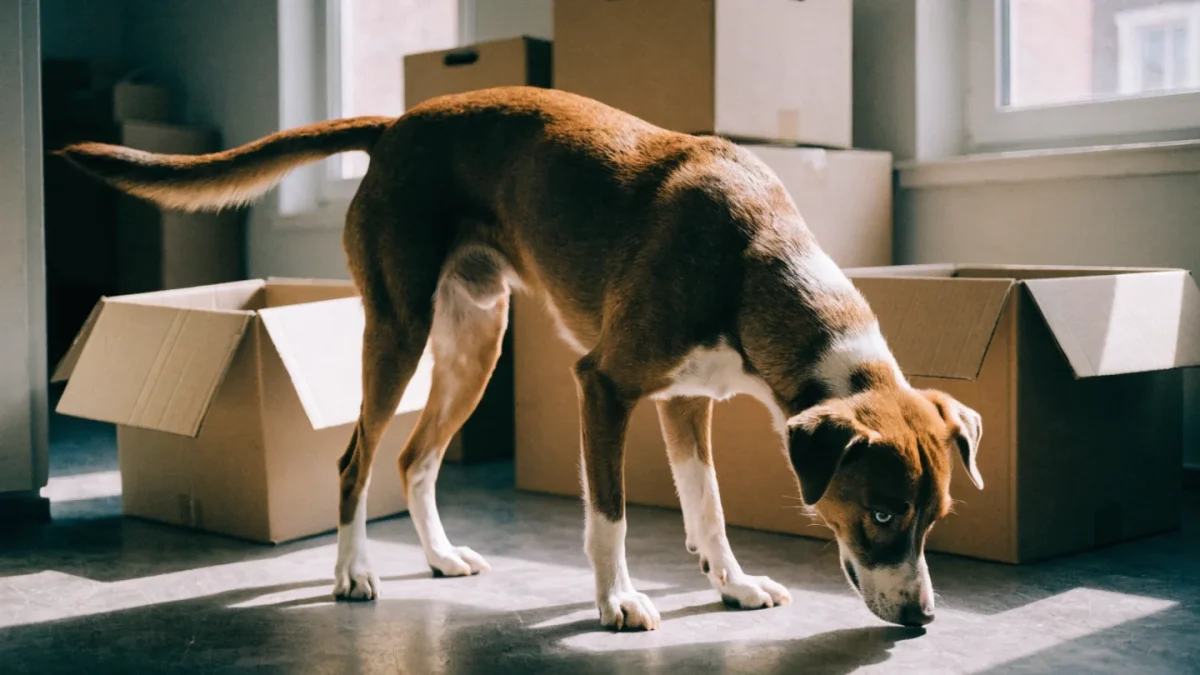
Moving is stressful for humans. It's stressful for dogs too, and they don't get the benefit of understanding why everything suddenly changed.
Their smells disappeared. Their familiar walks are gone. The sounds at night are different. Their routines disrupted for days or weeks of packing. Everything that gave their environment predictability has shifted.
Most dogs adapt well — within a few weeks they've mapped the new space and settled. But anxious dogs, or dogs that are particularly sensitive to change, need more deliberate support.
Before the Move
Keep routine as normal as possible. During the chaos of packing, maintain the dog's feeding schedule, walk times, and bedtime routine. Routine is an anchor for anxious dogs. Change the environment; keep the schedule.
Let the dog observe packing gradually. Don't remove the dog during all packing and then have them arrive in a completely different space. If they can see the boxes appearing over days, the change is more gradual.
Maintain access to their familiar items. The dog's bed, their familiar toys, their food and water bowls — move these on moving day but keep them as a constant.
Moving Day
Keep the dog out of the main chaos if possible. Moving day is high stress and high foot traffic. A quiet room at the current place with familiar bedding, or a friend's house if that's lower stress for the dog, keeps them out of the most chaotic part.
Don't arrive at the new house last. Get the dog's space set up first — safe room, their bed, their water bowl — before they arrive. They walk into a space that already has familiar scents from their things.
The First Weeks in the New Home
Start with one room, not the whole house. Let the dog have one settled space initially. Gradual expansion of territory is less overwhelming than the whole house at once. Their safe space from the old home translates to the new one.
Maintain the routine. Same feeding time, same walk times. New smells, same schedule. The schedule provides the continuity.
Walk the new neighborhood gradually. New routes are stimulating. Start with shorter walks on quieter streets while the dog maps the new olfactory environment. Gradually extend range.
Watch for stress signals. Reduced appetite for a few days: common and normal. Loose stools for a day or two: common transition response. Pacing, not sleeping well, hiding: monitor, give them time. Regression in house training: not uncommon in a new space; treat as you would housetraining a new dog in the new environment.
Give them time. Most dogs are visibly more settled within two to four weeks. Don't rush integration into new social situations (dog parks, training classes) during the first week or two. Let the new home become familiar first.
See creating a safe space for anxious dogs for the safe-space setup, which translates directly to the new home.