
Dog-on-dog aggression is one of the more nuanced behavioral presentations I work with because it spans everything from leash frustration (not truly aggression) to genuine predatory behavior toward small dogs. Getting the type right is essential for the approach.
Types of Dog-on-Dog Aggression
Leash frustration/reactivity. Dog wants to greet other dogs, the leash prevents it, frustration produces the barking and lunging display. Not genuine inter-dog aggression — these dogs are typically fine with other dogs off-leash or after a proper introduction. By far the most common presentation.
Fear-based inter-dog aggression. Dog is threatened or overwhelmed by other dogs and has learned that displays (or biting) make them go away. Often a history of trauma, poor socialization, or being attacked themselves. The dog's emotional state when seeing other dogs is anxiety, not predation.
Same-sex aggression. More common in intact animals, though not exclusively. Some dogs have strong same-sex conflict drives, particularly males with males or females with females. Can be reduced in intact animals by spaying/neutering but doesn't always fully resolve.
Predatory behavior toward small dogs. High-prey-drive dogs sometimes respond to small, fast-moving dogs as prey rather than conspecifics. This is distinct from social aggression and carries higher risk. Requires serious management.
Redirected aggression. Dog is frustrated (by leash, by barrier) and bites the nearest available target — sometimes the other dog in the household.
The Core Protocol
For leash frustration and fear-based inter-dog aggression (the two most common types), the approach is the same:
1. Establish threshold distance. How far away must another dog be before yours can eat treats and respond to you? That's your working distance.
2. Counterconditioning. Dog sees another dog at threshold distance → high-value treats appear. Dog loses sight of the other dog → treats stop. Repeat many times. The dog's brain begins associating "other dog visible" with "excellent food appears."
3. Systematic decrease. Over multiple sessions, decrease the distance only when the dog is showing consistent neutral or positive response at the current distance. Never rush this.
4. Alternate behaviors. Teach a hand target, watch-me, or u-turn to give you an interruption and redirect tool when a dog appears.
Managing the Multidog Walk
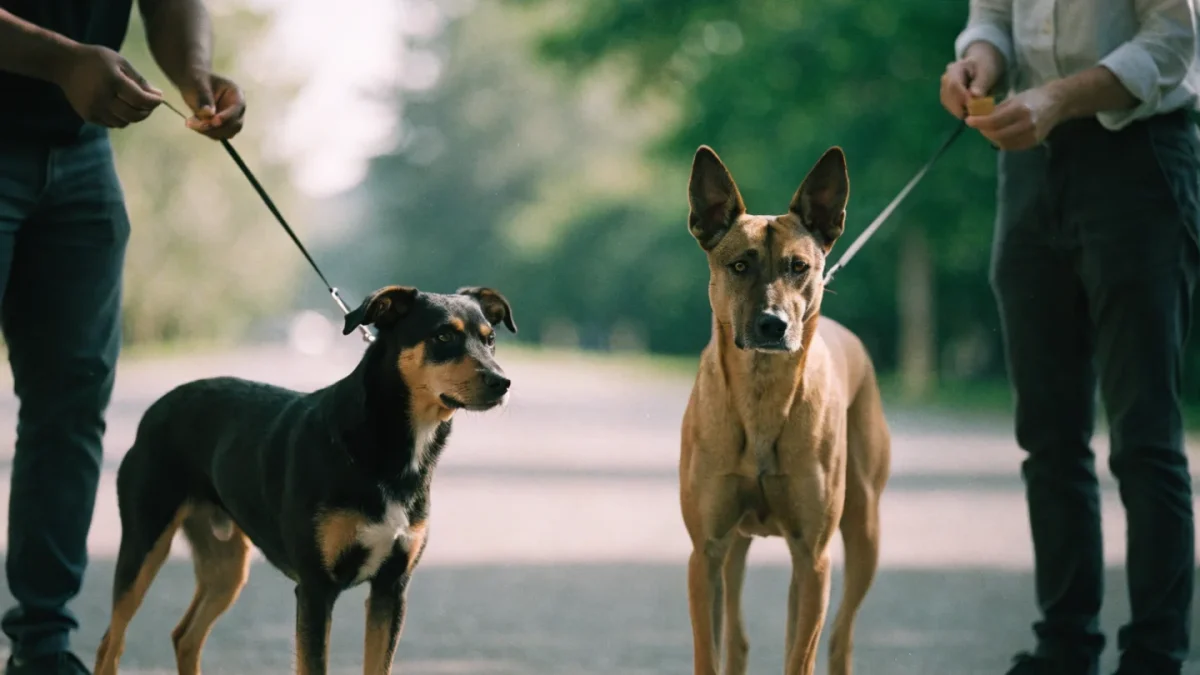
For dog-on-dog reactive dogs being walked in public:
- Know your dog's threshold distance and plan walks accordingly
- Carry high-value treats on every walk
- Practice cross-street or turn-away protocols when dogs appear unexpectedly
- Walk at off-peak times if possible to reduce encounters during training
See handling a dog-aggressive dog in public for specific public management strategies.
When Professional Help Is Needed
Dog-on-dog aggression that has resulted in injuries to other dogs, that is escalating despite appropriate management and training, or that involves the predatory presentation (stalking, silent fixation) should be assessed by a qualified professional before continuing training work independently.
FAQ
My dog is fine with familiar dogs but attacks strangers. Is this solvable?
Very common presentation. The dog's social repertoire with familiar dogs is intact, but they don't generalize well to unfamiliar ones. The counterconditioning and desensitization protocol works here — you're building familiarity one dog at a time, gradually, and the dog's repertoire of "dogs I'm okay with" expands.
My two household dogs recently started fighting. What do I do?
Sudden onset inter-dog conflict in a previously stable household is common during adolescence (second dog hitting social maturity, often 18-24 months), after a stressful event, or if one dog is ill. Separate the dogs immediately and get a professional assessment before reintroducing. Don't allow repeated fights — repeated fights create escalating behavioral patterns.
Can a dog-aggressive dog ever safely live in a multi-dog household?
Depends on the severity and the specific type. Many dog-selective dogs (fine with specific individuals, not with unknown dogs) can live successfully with a carefully chosen housemate. Dogs with severe same-sex aggression or predatory behavior toward smaller dogs carry more risk in multi-dog households and require expert guidance.
Improvement is possible in the vast majority of dog-on-dog aggression cases. It requires patience, consistent management, and the right protocol — but most dogs make real progress.