

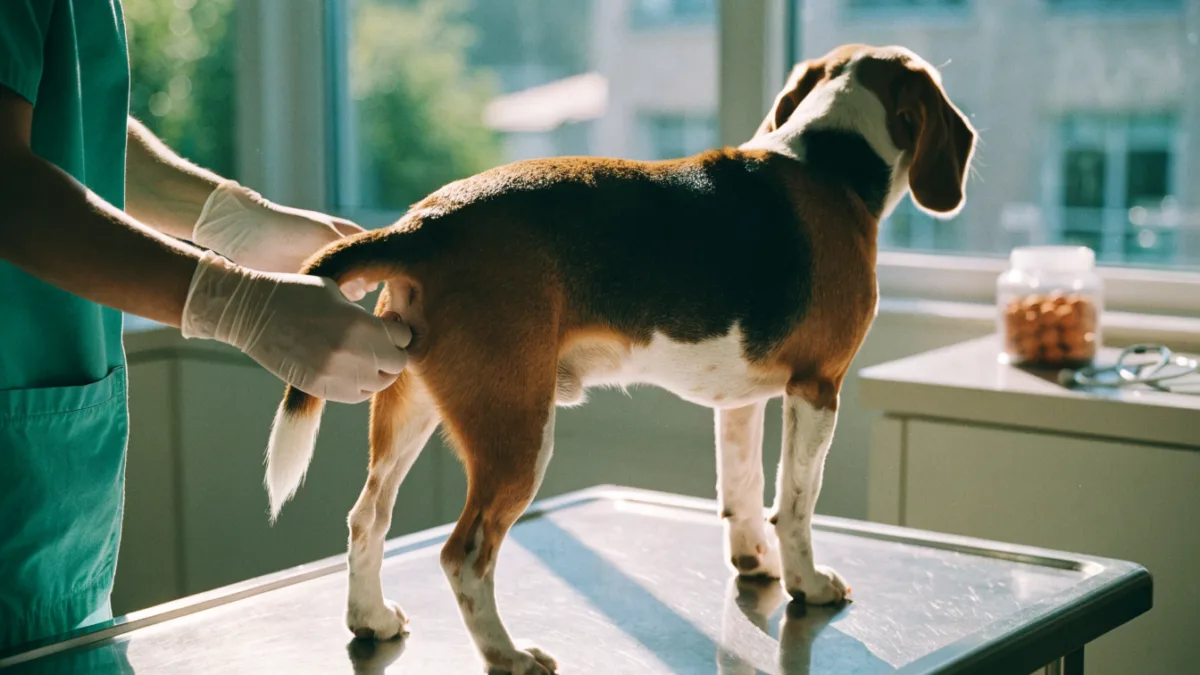
Whenever neighbors come over for dinner, I can always count on someone eventually pulling me aside to ask a whispered question about their pet. Last week, it was my friend Sarah. Over a plate of pasta, she quietly asked why her Beagle, Barnaby, had recently taken to dragging his backside across her new living room rug in front of guests. She was mortified. Around the same time, another friend texted me a frantic message about her Siamese cat, Cleo, who had suddenly started aggressively grooming her nether regions to the point of creating a bald patch.
Both of my friends were embarrassed to bring it up, but there is absolutely no shame in pet bodily functions. In fact, there is a wildly entertaining corner of the internet where owners share videos of their cat,[1] until he gives her a thorough bath. While interspecies grooming like that is mostly a quirky, behavioral quirk, when your pet starts obsessively dragging or licking their own backside, it is usually their way of waving a red flag.
Let’s talk about what that “scoot of shame” and obsessive licking really mean, and when it is time to call your vet.
The Great Anal Gland Mystery
When a dog drags their bottom across the floor, most owners immediately assume the worst: worms. It is the most common misconception I see in the exam room. While [2] nine times out of ten, the real culprit is an anal gland issue.
Dogs and cats have two small sacs located just inside the rectum, sitting at roughly the eight o’clock and four o’clock positions. These are called anal glands, and they naturally fill with a pungent, fishy-smelling liquid. Every time your pet has a bowel movement, the pressure of a normal, firm stool naturally expresses these glands, leaving a unique scent marker behind. It is essentially your pet’s biological business card.
Problems arise when the stool is too soft, or if the animal’s anatomy just doesn’t allow for natural emptying. The glands become over-filled, blocked, and incredibly uncomfortable. Imagine having two small water balloons filling up with fluid right inside your backside, with no way to pop them yourself. That is exactly why they drop their chest to the floor and drag their hind legs across your favorite rug.
The DIY Debate: To Express or Not to Express?
I get asked about home remedies and DIY treatments all the time. There is a lively debate among pet owners about whether you should express your dog’s anal glands at home or leave it to the professionals. Early in my career, I used to teach willing owners how to do it externally. I’ve completely changed my mind on this. Today, I strongly advise against the DIY approach.
Doing it improperly—especially attempting an internal expression without medical training—can cause severe pain, bruising, and even rupture the glands, which requires immediate surgery. Expressing anal glands is a procedure best left to your veterinary technician or veterinarian.
Diet vs. Anatomy
Pet forums often debate whether recurring anal gland issues are purely anatomical or if they can be fixed with diet. The truth is, it is a bit of both. Some pets simply have narrow ducts or naturally thick glandular secretions. However, diet plays a massive role in prevention. If your pet has chronic issues, the culprit is often chronically soft stool. Adding dietary fiber helps create bulkier, firmer stools, which in turn naturally squeezes those glands during bathroom breaks. You can look for high-fiber commercial diets or ask your vet about adding pure, unsweetened pumpkin puree to their meals. Always consult your vet before making dosage changes, as too much fiber can cause gastrointestinal upset.
When Licking Points North: UTIs and Infections
While anal glands are usually the prime suspect when a dog is licking their hindquarters, we also have to look slightly further north. If your dog or cat is,[3] it is rarely a grooming choice. It is a major red flag for physical discomfort.
Take my patient, Leo, a four-year-old Goldendoodle with a notoriously fluffy coat. His owner brought him in because he was waking her up at 3:00 AM, aggressively licking his groin. She initially thought he had fleas. Upon examination, we found he had a raging urinary tract infection (UTI).
A UTI occurs when bacteria travel up the urethra and multiply in the bladder. The resulting inflammation causes a persistent burning sensation. Pets lick the area trying to soothe the irritation, much like a human might shift uncomfortably when experiencing urinary pain. In female pets, excessive licking of the private parts can also indicate a reproductive tract infection, such as vaginitis. These conditions will not resolve on their own and require a veterinary diagnosis and prescription antibiotics.
Cats Do It Differently
Dogs might be loud and proud about their scooting, but cats are usually much more subtle. You will rarely catch a cat dragging their bottom across the carpet. Instead, cats internalize their discomfort through excessive grooming.
Cats are fastidious groomers by nature, so how do you tell the difference between a normal bath and a medical problem? Normal grooming happens after using the litter box and lasts maybe a minute or two. Abnormal grooming is obsessive. You will notice your cat going back to the same spot repeatedly, often pulling out tufts of fur until the skin underneath becomes raw and inflamed.
In cats, this over-grooming of the hindquarters is frequently linked to bladder inflammation or, in the case of male cats, a life-threatening urinary blockage. If a male cat is obsessively licking his genitals, yowling in the litter box, or straining to urinate, it is an absolute medical emergency. The licking is their desperate attempt to relieve the pressure of a blocked urethra.
Knowing When to Call the Clinic
It can be hard to know when a behavior is just a passing quirk and when it requires a trip to the clinic. To help you decide, here is a checklist of warning signs that indicate your pet needs to be seen by a professional:
- Persistent scooting: If the dragging lasts more than a day or two, the glands are likely impacted and need manual relief.
- Foul, fishy odor: If your dog suddenly smells like rotting fish, an anal gland has likely ruptured or leaked onto the furniture.
- Blood in the urine or stool: This is an immediate red flag for severe UTIs, bladder stones, or gastrointestinal disease.
- Swelling near the anus: If you notice a bulge on either side of the rectum, an abscess may be forming. Do not wait—these can rupture through the skin.
- Sudden behavioral changes: If your normally docile pet suddenly growls, snaps, or cries when you touch their lower back or hindquarters, they are in pain.
- Bald patches or raw skin: Often seen in cats, this indicates the licking has crossed the line from hygiene into obsessive pain relief.
The veterinary field has also seen a shift in recent years regarding routine maintenance. We used to routinely express healthy anal glands during grooming or vet visits. We now know that over-manipulating healthy glands causes unnecessary inflammation. Leave the healthy ones alone, and only intervene when they become symptomatic.
It is easy to laugh off the “scoot of shame” or dismiss obsessive grooming as a strange pet quirk, but these behaviors are a window into your animal’s physical comfort. Being a responsible pet parent means paying attention to the less glamorous parts of their health. When we listen to what their bodies are telling us—no matter how awkward the symptom—we ensure our companions live comfortable, pain-free lives. If you are noticing the drag, the lick, or the chew, do not wait for it to pass. Call your vet, schedule the check-up, and give your pet the relief they are desperately asking for.
Sources
- literally yelling at the family dog — reddit.com
- parasites can occasionally cause an itchy rear end — facebook.com
- obsessively licking their genital area — facebook.com