

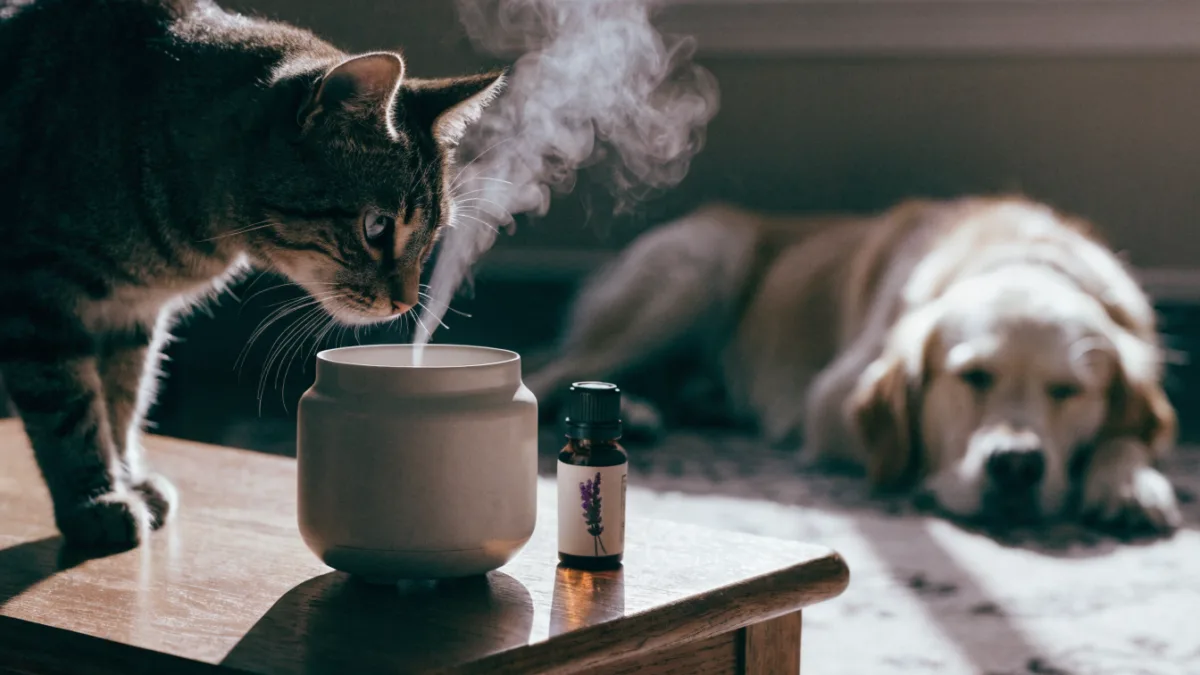
Just last spring, a woman named Catherine brought her three-year-old Persian cat, Mochi, into my clinic. Mochi was lethargic, unsteady on her feet, and drooling excessively. Catherine was baffled — Mochi hadn’t gotten into anything unusual, as far as she knew. But when I asked about changes in the household, she mentioned she’d recently started using an essential oil diffuser in her living room. “It’s just lavender and eucalyptus,” she told me, her voice tightening. “I thought it was safe because it’s all natural.” That assumption, while completely understandable, nearly cost Mochi her life. Mochi’s story isn’t rare, and it highlights a conversation I find myself having with pet owners more and more frequently.
Why Cats Process Essential Oils So Differently
To understand why essential oils can be so dangerous to cats, we need to talk about what happens inside a cat’s body when those compounds are inhaled, ingested, or absorbed through the skin. Cats have a unique gap in their liver’s chemical processing system. They’re missing an important enzyme called glucuronyl transferase — or more accurately, they have it, but it operates at a fraction of the capacity found in humans, dogs, and most other mammals.
This enzyme’s job is essentially molecular recycling. It takes complex chemical compounds — the kind found in many medications, plant toxins, and essential oils — and breaks them down into water-soluble forms that the body can flush out through urine. When that system doesn’t work properly, those compounds accumulate. The liver becomes overwhelmed, and liver cells begin to die. Without aggressive treatment, liver failure follows, and that failure is ultimately fatal.
When I explain this to cat owners, I often compare it to a sink with a partially blocked drain. A small trickle of water might drain slowly enough that the sink never overflows. But if you turn the faucet on full blast — which is essentially what happens when a cat is exposed to concentrated essential oils — that sink is going to flood, and quickly.
The Oils That Cause the Most Harm
While cats are broadly vulnerable to essential oil toxicity because of their liver enzyme deficiency, certain oils are especially dangerous. These include:
- Oil of wintergreen — contains methyl salicylate, which is related to aspirin and highly toxic to cats
- Oil of sweet birch — also contains methyl salicylate and poses similar risks
- Citrus oil (d-limonene) — frequently found in cleaning products and air fresheners, not just diffusers
- Pine oils — common in household cleaners and some natural flea treatments
- Ylang ylang oil — popular in aromatherapy blends and often marketed for relaxation
- Tea tree oil — one of the most common culprits in toxicity cases I see, often used topically by owners who don’t realize the danger
- Eucalyptus oil — a frequent ingredient in respiratory blends and chest rubs
I want to be clear, though, that this list isn’t exhaustive. Different oils carry different levels of risk, and concentration matters enormously. A highly concentrated, therapeutic-grade oil poses a much greater threat than a highly diluted trace amount. That said, given how sensitive cats are, I generally advise my clients to treat all essential oils with extreme caution in households with cats.
The Hidden Dangers in Your Diffuser
Here’s where the conversation gets tricky, and where I see the most confusion from loving, attentive pet owners. Many people view essential oil diffusers as a safe, natural alternative to synthetic air fresheners. And I completely understand that impulse — nobody wants to spray chemicals around their home when a plant-derived alternative seems gentler and cleaner.
But diffusers work by breaking essential oils into microscopic particles and dispersing them into the air. Those particles don’t just disappear. They settle on surfaces throughout your home — including your cat’s fur. Cats are meticulous groomers, and when they lick their coats to clean themselves, they’re ingesting whatever has landed there. So even if your cat never directly contacts the diffuser, never knocks it over, never laps up the oil from the reservoir, they’re still being exposed.
Inhalation alone is also a concern. When cats breathe in diffused oils, those compounds enter their bloodstream through the highly vascular tissue in their lungs. For a cat who already struggles to metabolize these substances, that respiratory exposure can be enough to trigger toxicity symptoms.
I treated a gorgeous Bengal named Tango last year whose owner had been running a diffuser with a citrus blend in her bedroom each night. Tango slept at the foot of the bed. Within two weeks, he’d stopped eating, was vomiting intermittently, and had developed a noticeable tremor in his hind legs. His liver values were alarmingly elevated when we ran bloodwork. It took nearly a week of hospitalization, IV fluids, and supportive care before Tango was stable enough to go home.
Cats vs. Dogs: Understanding the Risk Gap
Now, you might be wondering — what about dogs? If you have both cats and dogs in your home, do you need to be equally worried about all of them?
The short answer is: dogs are far less vulnerable than cats, but they’re not immune. Dogs produce glucuronyl transferase at functional levels, which means their livers can process many of the compounds that would overwhelm a cat’s system. This doesn’t make essential oils safe for dogs, but it does mean the window of toxicity is narrower and typically requires higher exposure levels.
That said, I’ve absolutely seen essential oil poisoning in dogs. Last autumn, a couple brought in their golden retriever, Biscuit, who had gotten into a bottle of tea tree oil that had been left on a low bathroom shelf. They estimated he’d ingested perhaps a tablespoon before they discovered him. Within hours, Biscuit was weak, uncoordinated, and unable to stand. His body temperature had dropped dangerously low. It was a terrifying experience for his owners and a sobering reminder that dogs can absolutely suffer serious consequences from essential oil exposure, particularly from direct ingestion.
Symptoms to Watch For
The signs of essential oil toxicity can vary depending on the type of oil, the amount of exposure, and the species involved. In cats, symptoms often include drooling, vomiting, tremors, wobbleness or ataxia (that’s the medical term for uncoordinated movement), respiratory distress, and lethargy. You might also notice a strong fragrance coming from your cat’s fur or breath.
In dogs, the symptoms can look similar but may also include depression, weakness, low body temperature, and in severe cases, collapse. With certain oils like wintergreen and birch, you might see signs that mimic aspirin toxicity, including gastrointestinal bleeding and changes in breathing patterns.
If you suspect your pet has been exposed to essential oils, don’t wait for symptoms to worsen. Call your veterinarian or a pet poison helpline immediately. And whatever you do, don’t try to induce vomiting without professional guidance — with some oils, bringing the substance back up can cause additional damage to the esophagus and throat.
The “Natural Equals Safe” Myth
I want to address something that comes up in nearly every essential oil toxicity case I see: the deeply held belief that because something is natural, it must be gentle and harmless. I understand where this belief comes from. We’ve been conditioned to associate synthetic chemicals with danger and plant-derived substances with safety. And there’s some truth to that general instinct — many conventional household products do contain harsh compounds that we’d be wise to avoid.
But “natural” and “safe” are not synonyms. Cyanide is natural. Arsenic is natural. The compounds in essential oils are powerful chemical substances that plants produce for their own defense — to repel insects, fight fungal infections, and discourage herbivores from eating them. When we concentrate those compounds into potent oils and disperse them through our homes, we’re releasing biologically active chemicals into an environment where our pets have no evolutionary defense against them.
I’ve actually changed my thinking on this topic over the years. Early in my practice, I was somewhat dismissive of essential oil concerns — I think I lumped them in with other wellness trends that seemed overblown. But the clinical evidence became impossible to ignore. As essential oil diffusers became more popular, particularly in recent years with more people spending extended time at home, I started seeing more toxicity cases. The pattern was undeniable.
This doesn’t mean you can never use essential oils in a home with pets. But it does mean you need to approach them with the same caution you’d apply to any potent substance in your household. Keep oils securely stored out of your pet’s reach. Avoid using diffusers in rooms where your cat spends significant time, especially sleeping areas. Never apply essential oils directly to your pet’s skin or fur — a dangerous practice I still see recommended in some online communities. And if you’re using oils for cleaning or other household purposes, ensure the area is well-ventilated and that your pets are kept away until surfaces are completely dry.
Every pet owner I’ve ever met wants to create a home environment that’s safe, comfortable, and nurturing for the animals they love. Sometimes that means reassessing products and practices we’ve assumed were harmless. The essential oil conversation isn’t about fear-mongering or demonizing aromatherapy — it’s about making informed choices that account for the unique biology of the animals who share our homes. Mochi, by the way, made a full recovery. Catherine packed up her diffuser that same evening and hasn’t looked back. Sometimes the most loving thing we can do for our pets is simply paying attention to the invisible things they can’t tell us are hurting them.