

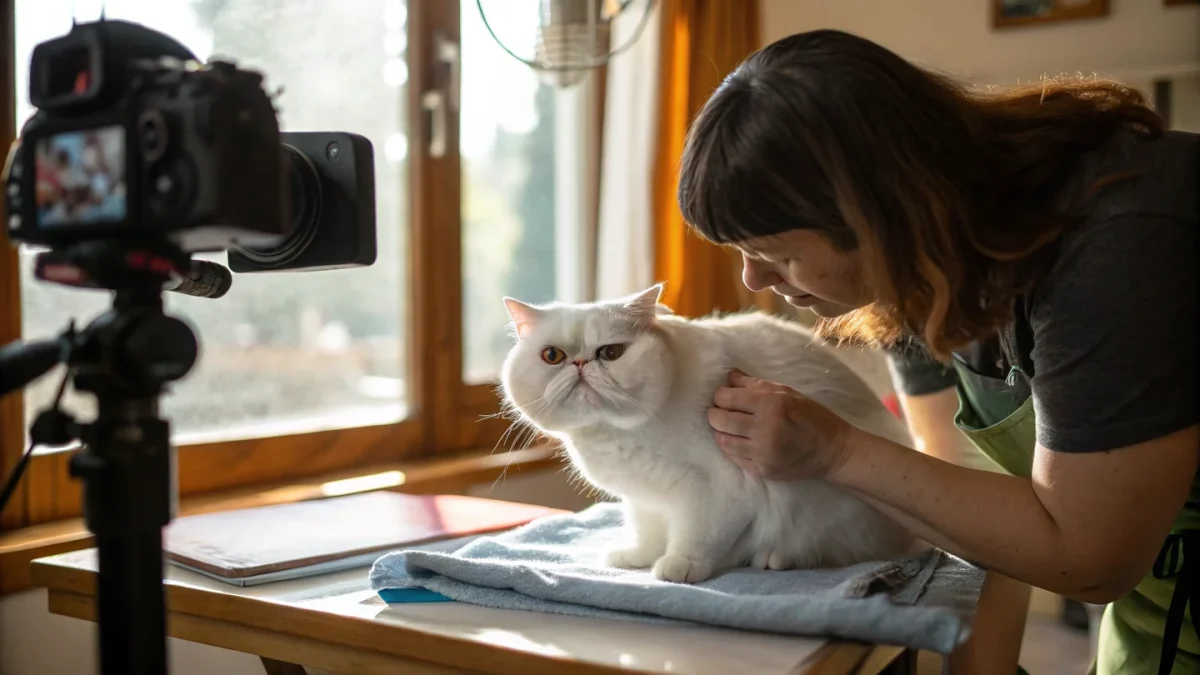
The Exotic Shorthair's reputation as a "low-maintenance Persian" is earned but should come with a specific clarification: the coat maintenance is genuinely lower. The facial maintenance is not. For the full context on the Exotic Shorthair's brachycephalic anatomy and what it means, Exotic Shorthair breed background and brachycephalic health covers it thoroughly.
The practical result: you're trading the Persian's daily coat grooming for the Exotic Shorthair's daily eye area care. Neither is onerous. But "low maintenance" without that qualification creates false expectations.
The Coat: Twice Weekly Is Sufficient
The Exotic Shorthair's plush, dense coat requires brushing two to three times per week under normal circumstances, and daily brushing during the spring shedding season when the dense undercoat releases.
Best tools: A slicker brush or a medium-tooth metal comb reaches through the plush outer coat to address the dense undercoat. The coat has enough body to benefit from thorough combing rather than surface brushing. Work in sections — parting the coat and combing from skin outward — especially along the back, sides, and belly where the undercoat is thickest.
Spring shedding: The Exotic Shorthair's seasonal shedding can be substantial. Increase sessions to daily for the four to six weeks of peak shedding. A deshedding comb specifically designed for double-coated cats removes loose undercoat efficiently and dramatically reduces the fur ending up on your furniture and clothing.
The coat doesn't mat in the way a Persian's does, but neglected undercoat can compact in high-friction areas like behind the ears, under the arms, and in the groin. Addressing these areas during weekly brushing prevents minor tangles from developing.
Eye Care: The Daily Non-Negotiable
This is the central grooming commitment for Exotic Shorthair owners. The flat facial structure compresses the nasolacrimal duct — the drainage channel that moves tears from the eye to the nasal cavity. When this channel is compressed, tears accumulate in the inner corner of the eye and on the face below.
The result: brown or reddish tear staining on the fur beneath the eyes, skin irritation in the moist area, and accumulated debris that creates an environment for bacterial or yeast infection if not managed.
The daily routine: Use a soft cloth or cotton pad dampened with clean water or a gentle eye cleaner appropriate for cats. Gently wipe from the inner corner of the eye outward, removing accumulated discharge and tear staining. Dry the area afterward — moisture left on the skin fold promotes irritation.
Do this every day. Once-weekly eye wiping is not sufficient for most Exotic Shorthairs. The anatomy produces tearing continuously, and the debris accumulates faster than a weekly session can address.
If the discharge is clear or slightly tan and the surrounding skin looks normal (no redness, no irritation, no odor), this is normal tear drainage management. If the discharge is yellow or green, if the eye itself looks cloudy or the surrounding skin is red and irritated, that's a veterinary concern rather than a grooming issue.
Nose and Facial Folds
The Exotic Shorthair's compressed muzzle often creates skin folds around the nose. These folds accumulate debris — food remnants, discharge, dust — and the folds' warmth and moisture create ideal conditions for skin irritation and yeast infection if neglected.
Check the nose folds every few days and wipe with a soft, slightly damp cloth when you see accumulation. Keep the area dry after cleaning. Persistent redness or an unusual smell from the fold area warrants veterinary attention — skin fold dermatitis is a manageable condition, but it needs appropriate treatment when it develops.
Ears
Monthly ear inspection is standard for most Exotic Shorthairs without specific ear problems. Wipe the visible ear surfaces with a cotton ball moistened with a gentle ear cleaner. The broad, low-set head means the ear canals are accessible but accumulate wax at normal rates.
If you notice increased scratching at the ears, head-shaking, dark discharge, or an unusual odor, have the cat assessed by a vet. These signs can indicate ear mites, yeast infection, or bacterial infection — all manageable with proper diagnosis.
Dental Hygiene
The Exotic Shorthair's compressed jaw creates dental crowding, which accelerates tartar buildup compared to long-muzzled breeds. Introduce tooth brushing early in kittenhood using cat-appropriate toothpaste — it's dramatically easier to establish as a routine with a young cat than to introduce to an adult.
If daily brushing isn't realistic, dental treats and water additives formulated for cats provide supplementary support. Professional dental cleanings at your veterinarian's recommendation become more important for this breed than for many others.
Nails
Every two to three weeks. The Exotic Shorthair is not particularly destructive with nails, but routine trimming prevents snags and overgrowth.
Making the Routine Work
The Exotic Shorthair's grooming routine is most sustainable when it's built into a daily habit rather than approached as occasional intensive sessions. Five minutes of eye care daily, combined with fifteen minutes of thorough coat brushing twice a week, maintains an Exotic Shorthair in excellent condition with manageable time investment.
The cats that develop grooming-related problems — severe tear staining, skin fold infections, compacted undercoat — are almost always those whose owners treated the eye care as optional. It isn't.