

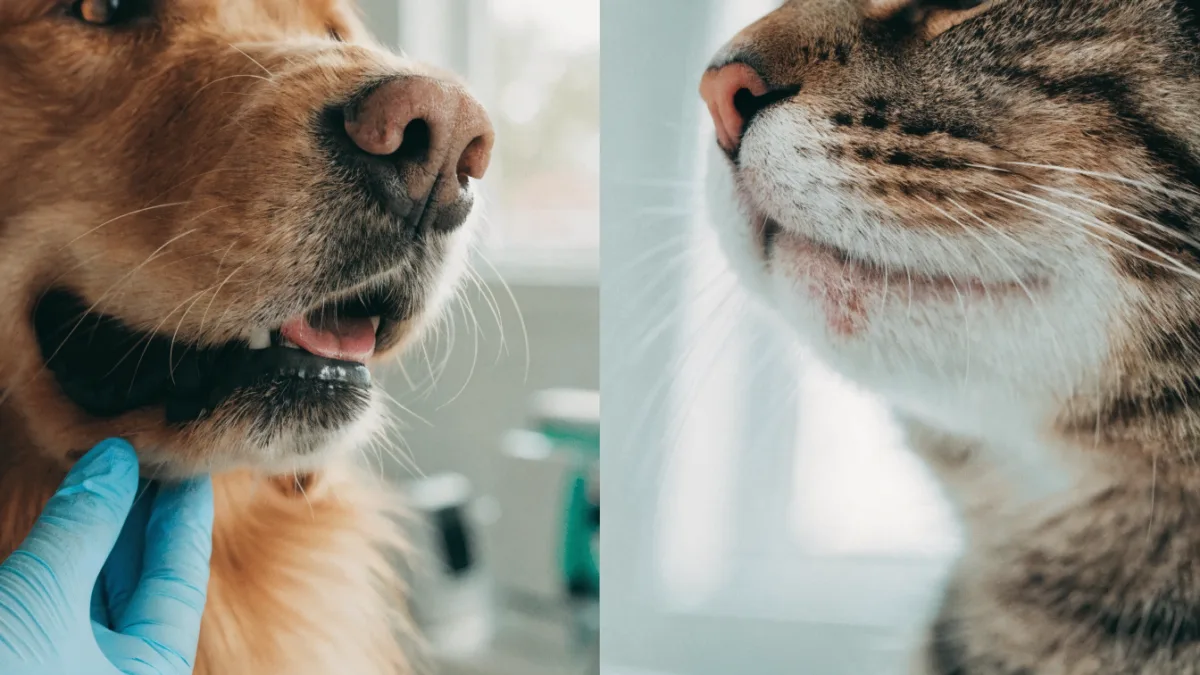
Last spring, a client named Karen brought in her two pets on the same Tuesday morning. First came Benny, her four-year-old Golden Retriever, who’d been nibbling at his belly for weeks. His skin looked like a topographic map of red bumps and scaly patches. Forty minutes later, she was back with Miso, her seven-year-old tabby cat, who had developed what Karen described as “a chin full of blackheads.” Both pets had bumpy, irritated skin. Both had folliculitis. But the underlying causes, the visual symptoms, and eventually the treatment plans couldn’t have been more different. If you have both dogs and cats under one roof, understanding how this condition differs between species can save you a lot of worry — and potentially a lot of vet visits.
What Exactly Is Folliculitis?
Folliculitis is the inflammation and infection of hair follicles. In veterinary medicine, we often call the superficial bacterial form “superficial pyoderma” — which literally translates to “pus on the skin,” though I promise it sounds worse in Greek than it looks on your pet.
Here’s what’s happening under the microscope: bacteria that normally live harmlessly on the skin surface (primarily Staphylococcus species) find their way into a hair follicle, set up shop, and trigger an inflammatory response. The result is those telltale small, raised bumps — often with a hair poking through the center. When they rupture, they leave behind circular, crusty sores called epidermal collarettes. It looks a bit like a tiny bullseye.
The important thing to understand is that folliculitis is almost always a secondary condition. Something else compromised the skin’s natural defenses first. Think of it like a house with a broken lock — the bacteria are just the opportunistic intruders who walked through the open door. In dogs, that broken lock is most commonly allergies. In cats, it tends to be stress, over-grooming, or flea sensitivity. Until you fix the lock, the intruders keep coming back.
Spotting the Difference: Dogs Versus Cats
The Canine Presentation
Dogs with folliculitis are pretty hard to miss. Benny’s case was textbook: red papules scattered across his sparsely-haired abdomen, armpits, and groin. The skin underneath was flaky and inflamed, and he’d started losing fur in patches along his chest.
In dogs, this condition is heavily correlated with atopic dermatitis — the canine equivalent of hay fever. Environmental allergens like pollen, dust mites, or mold trigger intense itching. The dog scratches, the skin barrier breaks down, and Staphylococcus pseudintermedius moves in. Food allergies and flea sensitivity can trigger the same cascade.
“I thought he just had a rash from rolling in something,” Karen told me. That’s what most dog owners think initially. But when a “rash” persists beyond a few days and starts spreading, folliculitis is usually the culprit.
The Feline Presentation
Cats are subtler about everything, including their skin problems. Miso’s chin acne — those dark, crusty specks along her lower jaw — is one of the most common feline presentations of folliculitis. Run your fingers through a cat’s fur and you might also feel what we call miliary dermatitis: tiny, raised bumps that feel like millet seeds scattered under the coat, typically along the neck, face, and back.
Feline folliculitis is frequently triggered by stress-induced over-grooming, flea allergy dermatitis, or contact sensitivities. Plastic food bowls have been implicated in chin acne cases, though the evidence is more anecdotal than rigorous. The theory is that microscopic scratches in plastic harbor bacteria, and some cats react to the material itself.
Cats are also prone to a different bacterial profile. While dogs deal primarily with S. pseudintermedius, cats are more likely to harbor Staphylococcus felis or Staphylococcus aureus. This matters when we’re choosing antibiotic therapy.
The Multi-Pet Household Dilemma
One of the first questions Karen asked me was whether Benny and Miso could be passing the infection back and forth. It’s a reasonable concern.
Here’s the reassuring news: the Staphylococcus bacteria that cause folliculitis are largely species-specific. Dog bacteria prefer dogs; cat bacteria prefer cats. Transmission between species — or to humans — is rare and typically requires a compromised immune system on the receiving end.
However — and this is important — the underlying causes of folliculitis can absolutely spread between pets. Parasites like Sarcoptes mites (scabies) and Notoedres (feline scabies) are contagious between dogs and cats. Fleas, of course, aren’t picky about their hosts. And ringworm, despite its name actually being a fungus, is highly contagious across species boundaries.
If you have multiple pets and one develops folliculitis, watch the others closely for itching, scratching, or skin changes. Even if the bacteria won’t jump species, the mites or fungi that started the problem certainly might.
What Not to Do
I want to address a few things I see well-meaning pet owners try at home, because some of these approaches can actually make things significantly worse.
Resist the Urge to Pop
Those pustules look like pimples, and I understand the temptation to squeeze them. Please don’t. Squeezing forces bacteria deeper into the skin tissue, where they can cause furunculosis — deep, painful infections that require much more aggressive treatment. You can also cause permanent scarring. I’ve treated cases where well-intentioned popping turned a manageable surface infection into something requiring weeks of oral antibiotics.
Skip the Human Acne Products
Benzoyl peroxide and salicylic acid are effective human acne treatments, but they’re formulated for human skin, which has a very different pH and microbiome than canine or feline skin. These products can cause severe irritation, disrupt the natural skin barrier further, and in cats particularly, can be toxic if ingested during grooming. I’ve changed my own recommendations on this over the years — early in my career, I occasionally suggested diluted benzoyl peroxide for dogs, but newer research on the skin microbiome has made me reconsider. We now understand that preserving the healthy bacterial balance on pet skin is just as important as killing the problematic bacteria.
How We Actually Treat It
The veterinary approach to folliculitis has evolved significantly over the past decade. Increasing antibiotic resistance — particularly the rise of methicillin-resistant Staphylococcus strains — has pushed the profession toward what we call “topical-first” therapy. This means medicated shampoos, wipes, and sprays before oral antibiotics.
When you’re looking at treatment options, here’s what matters: the active ingredient should be appropriate for the specific organism involved. That’s why cytology — taking a quick tape sample of the skin and examining it under the microscope right in the clinic — has become standard practice. I do this with nearly every skin case now because guessing based on appearance alone leads to ineffective treatments and prolonged suffering.
For Benny, the answer was a combination of a chlorhexidine-based medicated shampoo twice weekly, an injectable immunotherapy called Cytopoint to break his allergic itch cycle, and a systematic investigation of his environmental triggers. For Miso, switching to ceramic food bowls, treating a low-grade flea allergy we discovered on exam, and a course of topical mousse medication resolved her chin within three weeks.
Neither required oral antibiotics, which is increasingly the goal.
Looking Forward
Some of the most exciting research in veterinary dermatology right now involves the skin microbiome — the vast community of bacteria, fungi, and other microorganisms that live on your pet’s skin in healthy balance. Scientists are exploring whether probiotic treatments might help restore that balance after infection, potentially reducing recurrence rates without antibiotics. We’re also seeing advanced diagnostics that can identify specific bacterial strains and their antibiotic sensitivities within hours rather than days.
For dogs with chronic allergy-driven folliculitis, newer immunotherapies like Cytopoint and Apoquel have been genuinely transformative. These medications target the specific immune pathways that cause itching without the broad effects of traditional steroids, which means fewer side effects and better long-term outcomes.
The bottom line for multi-pet households: bumpy skin is common, treatable, and rarely an emergency — but it’s also rarely “just” a surface problem. Whether it appears on your dog’s belly or your cat’s chin, folliculitis is your pet’s body telling you that something deeper needs attention. And in the same way we’re learning to protect and preserve the microscopic ecosystems on our pets’ skin, the best care comes from understanding the whole animal — not just treating the bumps in front of us.
Sources
- Bumpy Trouble: Spotting Folliculitis in Cats and Dogs — kritterkoncierge.com
- Folliculitis in Dogs and Cats — Figo Pet Insurance — figopetinsurance.com
- Folliculitis in Dogs: Causes, Treatment & Prevention — Animal Friends Dermatology — animalfriendsdermatology.com