
Some dogs have a clear trigger: thunderstorms, car rides, strangers. Work on the trigger, and the anxiety resolves. These are tractable cases — hard, but tractable.
Then there are the dogs that are just… always anxious. There's no clear trigger. They startle at small sounds, can't settle, follow you from room to room, are hypervigilant on walks. They're tense at breakfast and tense at bedtime. Nothing in particular sets them off because everything does, a little.
This is generalized anxiety — and it's harder to work with precisely because there's no single thing to desensitize.
What It Looks Like
The generalized anxious dog has a chronically elevated baseline. In terms I use with clients: their "idle speed" is too high. Normal stimulation puts them over threshold. Small things that wouldn't bother a calm dog send them spinning.
Presentations include:
- Constant low-level vigilance; never fully relaxing
- Startles easily at sounds or movement
- Can't settle, paces or repositions frequently
- Excessive self-grooming (licking feet or flanks)
- Digestive sensitivity or chronic loose stools
- Sleep disruption
- Over-reactivity to normal events (doorbell, car door, dropped object)
- Clingy behavior with attachment figures
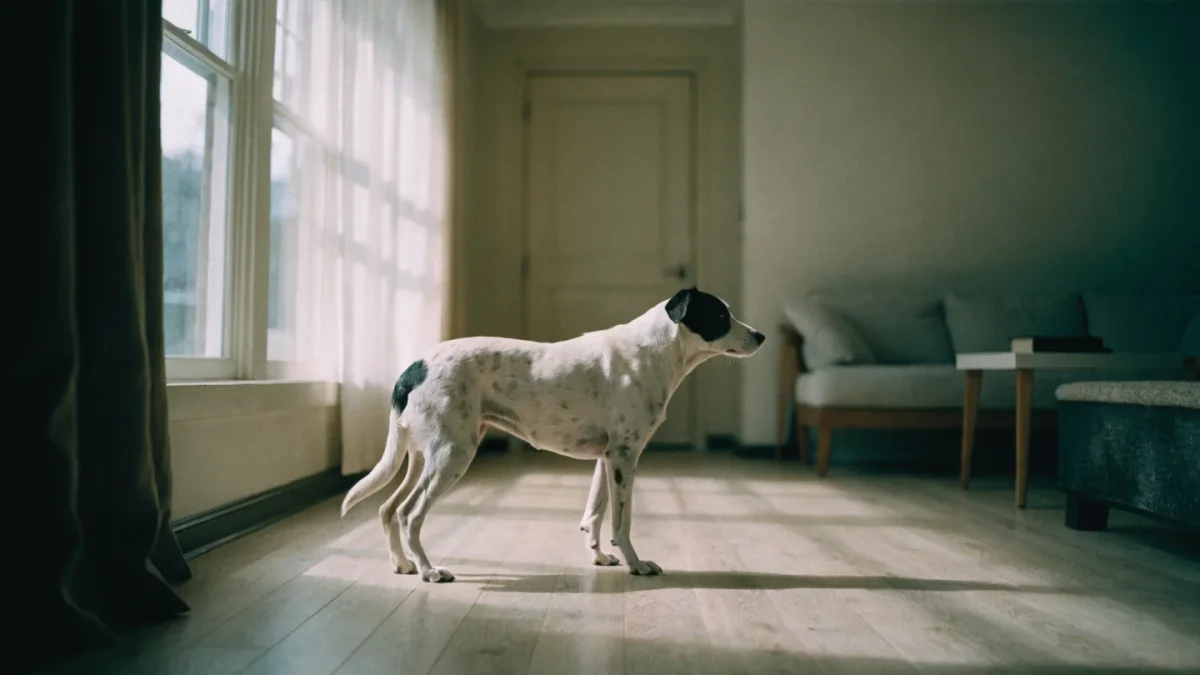
The dog often looks fine to people who don't know them well. They're not hiding or shaking. They're just never truly relaxed.
Causes
Genetic predisposition. Some dogs have a neurobiological tendency toward high anxiety. This is often evident from puppyhood, not dependent on traumatic experience.
Inadequate early socialization. Dogs with socialization gaps from the critical period often develop broad anxiety rather than specific phobias.
Chronic stress history. Extended periods of unpredictable, aversive environments can produce generalized hypervigilance.
Secondary generalization. A dog with untreated situational anxiety (noise phobia, separation anxiety) may over time generalize to broader anxiety.
The Treatment Approach
Medication. For many generalized anxiety dogs, this is where you start rather than finish. Behavior modification for a dog that can't physically settle is very limited — the American Veterinary Society of Animal Behavior is clear that anxiety and fear treatment plans should combine medication with environmental management and behavior modification, not save it for a last resort. A vet assessment and discussion of anxiolytic options is an early-stage conversation.
Relaxation as a skill. Building a conditioned relaxation response — teaching the dog that specific contexts (mat, specific cue, slow breathing from owner) predict calm — is a long-term piece. See relaxation protocol for dogs. These sessions work; they just take many repetitions over months.
Environmental stress reduction. Look at everything in the dog's daily life that might be adding to the cumulative stress load. Chaotic household? Lots of exposure to triggers? Too many strangers coming through? Reducing the overall arousal burden lowers the baseline. This is the concept behind trigger stacking — a generalized anxious dog is always partially stacked.
Predictable routine. Highly anxious dogs benefit enormously from predictability. Same schedule, same feeding times, same walk routes to start. Predictability reduces the "what's coming next" vigilance.
Appropriate exercise — not excessive. Exercise helps, but over-exercise in anxious dogs can backfire. Long intense runs sometimes increase, not decrease, arousal levels in anxious dogs. Sniff-heavy slow walks are often more effective than fast exercise.
Enrichment. Scatter feeding, nose work, puzzle feeders — cognitively engaging activities that produce calm focus rather than arousal. See confidence building games for fearful dogs for activities that build positive emotional states.
The trajectory of generalized anxiety treatment is measured in months, not weeks. Progress is real, but gradual. Most generalized anxious dogs improve meaningfully with consistent work and appropriate support.