

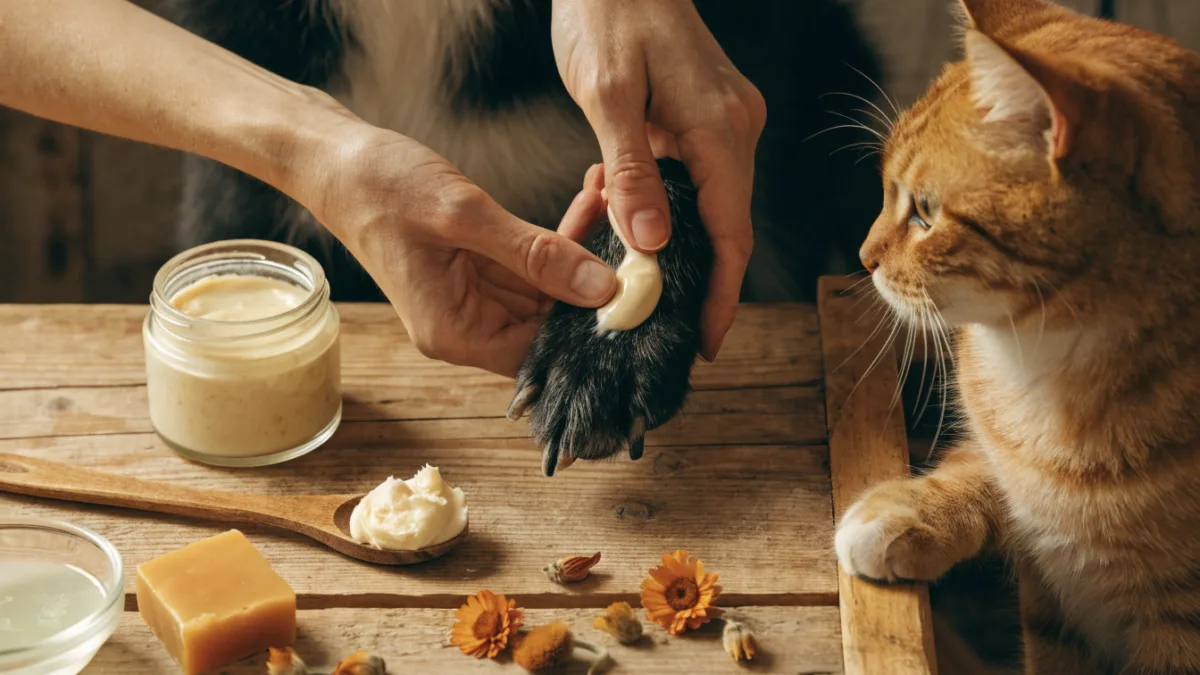
Just last week, I had a patient named Baxter, a spirited four-year-old Golden Retriever, come into the clinic. His owner, Mark, mentioned that Baxter had started holding his left front paw up during their morning walks. When I flipped Baxter’s giant paw over, I saw the problem: his normally tough pads were rough, calloused, and starting to split at the edges from the harsh winter salt on the pavements. Mark sheepishly asked if he could just use his wife’s heavy-duty hand lotion to soften them up.
It’s a very common instinct. When we see our pets’ feet looking like cracked, dry sandpaper, we want to slather them in the same heavy creams we use for our own hands. But I had to gently redirect Mark. Human lotions often contain artificial fragrances, dyes, and chemicals that are toxic if ingested. And when it comes to our pets, whatever goes on their paws will eventually end up in their mouths.
With rising global temperatures and more frequent extreme weather events—like summer heat domes and winter polar vortexes—the incidence of burned or frostbitten paw pads has risen sharply in recent years. Preventative care is becoming a standard part of year-round pet wellness routines. Making your own lick-safe paw balm is one of the easiest, most effective ways to protect your furry friends. Let’s walk through how to make one that is safe for every pet in your home.
The “Lick-Safe” Imperative: Why Cats Change the Recipe
If you have both dogs and cats, this next part is critical. I once treated a beautiful three-year-old Siamese cat named Luna. Her owner had used a leftover dog paw balm on Luna’s mildly dry pads. The balm contained tea tree oil, which is often praised in dog grooming products for its antifungal properties. Within a few hours, Luna was drooling, uncoordinated, and profoundly lethargic. Fortunately, we caught it early, but it was a scary reminder that dogs and cats process chemicals very differently.
Cats lack a specific liver enzyme called glucuronyl transferase. This enzyme is responsible for breaking down and metabolizing many compounds, including certain essential oils and phenols. Because they can’t process these substances, compounds that are perfectly safe—or even beneficial—for a dog can quickly become highly toxic to a cat. Therefore, any balm you make must be 100% natural and food-grade.
The Essential Oil Trap
Many well-meaning pet parents turn to essential oils like tea tree, eucalyptus, peppermint, or citrus to add healing properties or a pleasant scent to their homemade remedies. Avoid these entirely. Even small amounts of these oils can cause severe neurological and liver damage in cats, and frankly, they offer no real benefit for cracked pads. Stick to base oils and waxes that do the heavy lifting without the added risk.
The Lineup: Choosing the Right Ingredients
The goal of a paw balm is twofold: moisturize the tissue and lock that moisture in. The best way to achieve this is by using natural emollients and sealants. Here is what you should look for:
- Beeswax: This is the backbone of any good paw balm. It acts as a natural, protective sealant. It shields the delicate paw pads from harsh surfaces—like hot summer pavement or freezing winter snow—while locking the healing oils underneath.
- Coconut Oil: Naturally antibacterial and antifungal, coconut oil provides deep moisturization. It’s highly digestible, so you don’t have to panic if your dog or cat licks it off in small amounts.
- Shea Butter: Rich in vitamins A and E, shea butter is ideal for severely cracked pads. It provides intense hydration and helps reduce inflammation.
- Olive Oil: A heavy-duty emollient that helps soften rough, calloused tissue over time.
- Lanolin: A natural wax derived from sheep’s wool, highly effective at softening tough skin. However, use it in moderation. In rare cases, it can cause contact dermatitis in sensitive pets, and ingesting large amounts can cause gastrointestinal upset like loose stools.
I’ll admit, early in my career, I didn’t fuss much about petroleum jelly (often sold as Vaseline). It’s technically non-toxic because it passes through the digestive system mostly intact. But over the years, I’ve completely changed my mind. Petroleum jelly is a byproduct of oil refining and offers zero nutritional or healing properties. Over the last five years, consumers have become highly educated about the potential toxins in human cosmetics, and we are demanding the same clean, plant-based standards for our pets. Natural butters and oils actively heal the skin rather than just coating it in a synthetic film.
Let’s Make the Balm: Two Vet-Approved Recipes
Depending on what you have in your pantry, here are two proven recipes shared by.[1] and featured in [2] that align perfectly with [3]
Recipe 1: The Summer Healer
Best for regular use before walks in extreme weather to protect against hot pavement or summer sand.
- ½ cup Beeswax (pastilles melt the easiest)
- 3 tbsp Coconut Oil
- 6 tbsp Olive Oil
Recipe 2: The Deep Conditioner
Best for severely dry, mildly cracked, or calloused pads that need intensive repair.
- 4 tbsp Virgin Coconut Oil
- 2 tbsp Shea Butter
- 2 tbsp Beeswax
The Double Boiler Method
Preparation is simple, but temperature control is everything. You must use a double boiler (or a heat-proof glass bowl set over a small pot of simmering water) over low heat. High heat will destroy the beneficial vitamins in the shea butter and olive oil. Add the beeswax first, as it has the highest melting point. Once it begins to melt, add your oils and butter. Stir continuously until the mixture is completely liquid and seamlessly blended. Pour the liquid into small tins or silicone molds and leave it at room temperature until it solidifies into a smooth balm.
Application Secrets from the Exam Room
Applying the balm is straightforward, but timing matters. If you apply it and immediately let your dog run across the living room carpet, you’re going to have a mess, and the balm won’t have time to absorb.
“The best application advice I can give is to make it part of the bedtime routine. When your pet settles in to sleep, they are less likely to walk around or immediately groom.”
If you apply it during the day, distract them with a puzzle toy or a long-lasting treat for 5 to 10 minutes. This gives the beeswax time to set and form that protective barrier before they start licking it off or tracking it through the house. With consistent application 1–2 times daily, minor paw pad cracks typically begin to heal within 3 to 7 days.
When to Skip the DIY and Call the Vet
While natural paw balms are fantastic for dry, calloused, or mildly cracked pads, they are not a substitute for medical care. If your pet has deep fissures, active bleeding, or signs of infection (like pus, foul odor, or severe swelling), they need veterinary attention. Deep injuries often require veterinary-prescribed balms containing medical-grade silver sulfadiazine or antibiotics to heal properly. If you apply a DIY balm to an open, bleeding wound, you risk trapping bacteria inside, which can lead to a severe abscess.
It’s also worth noting that veterinary dermatologists are reporting a significant increase in environmental atopy (allergies) in both dogs and cats. Pets with environmental allergies frequently lick and chew their paws to soothe the itching. This constant moisture leaves the pads macerated—a medical term for skin that has been softened and weakened by prolonged wetness—which makes them prone to cracking and bacterial infections. Natural paw balms are increasingly being used not just for weather protection, but to repair the barrier on allergy-damaged paws. However, the balm will only do so much; you’ll need to work with your vet to manage the underlying allergy to see long-term improvement.
When sourcing your ingredients, consider the environmental impact. If you want to make your balm 100% vegan, you can easily substitute beeswax with Candelilla wax or Carnauba wax. And if you do choose beeswax, try to source it from ethical, local beekeepers. Supporting local hives promotes pollinator conservation, which is vital for our ecosystem. Taking care of our pets and taking care of the planet often go hand in hand.
Sources
- pet communities — facebook.com
- DIY tutorials — instagram.com
- veterinary guides on paw care — youtube.com