

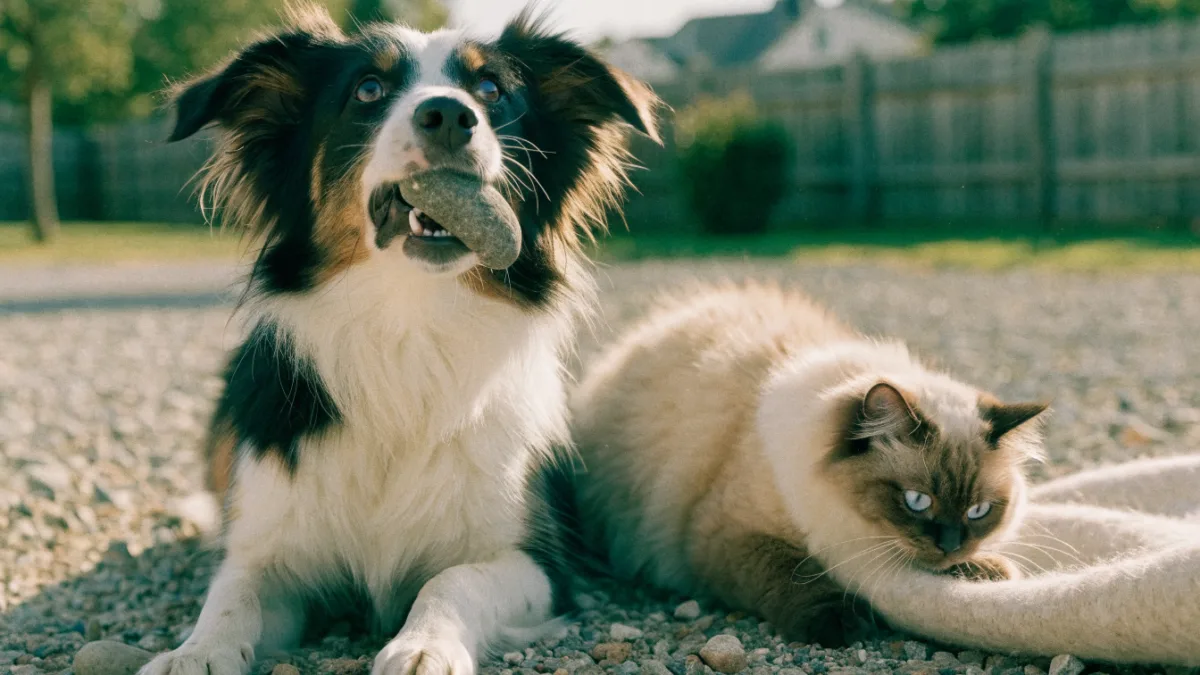
Just last week, I found myself standing in a surgical suite, carefully extracting a perfect, smooth river rock from the small intestine of a three-year-old Labrador named Buster. His owner, completely distraught, kept asking me why a dog who got top-quality food and plenty of exercise would eat a rock. It’s a question I hear in the clinic all the time, usually phrased as, “Doc, is he just completely dumb?”
The truth is, our pets aren’t eating rocks, plastic, or fabric because they lack common sense. They are engaging in a behavior called pica—the persistent eating of non-food, non-nutritional items. While it might look like a quirky, funny habit when a kitten suckles a wool blanket or a puppy hoards socks, pica is actually a giant flashing red flag. It’s a behavior driven by deep medical or psychological distress, and it can have fatal consequences if we ignore it.
Medical Quirk vs. Hidden Disease: Why Pets Eat Strange Things
I used to think that pica, especially feline wool sucking, was just a harmless behavioral quirk. I’d see Oriental breeds like Siamese or Burmese cats obsessively nursing on sweaters and assume it was just a genetic oddity linked to premature weaning. But the more research that emerges, the more my mind has changed. We now know that eating non-food items is frequently a clinical sign of an underlying physical issue.
When a pet turns up at a clinic eating things they shouldn’t, the first job is detective work: figuring out whether the cause is medical or behavioral.
The Physical Root: The Gut-Brain Axis
One of the most exciting recent developments in veterinary medicine is our understanding of the.[1] We are finding that pica is frequently a symptom of Chronic Enteropathy (CE), which is essentially an inflammatory bowel condition.
When a dog or cat has CE, their intestinal lining gets inflamed. This inflammation blunts the intestinal villi—the tiny, finger-like projections responsible for absorbing nutrients. Even if you are feeding your pet a premium diet, their body isn’t absorbing the vitamins and minerals it needs. This malabsorption alters their brain signals, triggering intense cravings for strange objects as their body desperately tries to fix a nutritional deficit or soothe their uncomfortable gastrointestinal tract. Other medical culprits include anemia, parasites, and even diabetes.
The Behavioral Root: Anxiety and Boredom
If we rule out medical issues, we have to look at the mind. [2] is incredibly common. Over the last few years, veterinary behaviorists have noted a massive spike in anxiety-based behaviors, including pica. Much of this has been linked to separation anxiety developing as owners transitioned back to working in the office after spending months at home during pandemic lockdowns.
For a bored or highly anxious pet, chewing on a rock or sucking on a piece of plastic can serve as a self-soothing mechanism. It releases pent-up energy and provides a temporary sense of comfort.
The Real Dangers of Dining on Dirt and Dresses
Regardless of why your pet is doing it, the physical act of eating non-food items is inherently dangerous. A dog eating rocks (a specific type of pica known as lithophagia) is one of the most terrifying things I treat.
- Gastrointestinal Obstructions: This is the biggest fear. Swallowed toys, fabric, or rocks can completely block the stomach or intestines. If the intestine stretches too far and ruptures, the resulting abdominal infection is often fatal without emergency surgery.
- Dental Trauma: Chewing on hard objects like rocks or hard plastics frequently leads to fractured teeth, slab fractures on the molars, and deep, painful lacerations to the gums and soft palate.
- Poisoning and Toxicity: The items they eat aren’t clean. Rocks can be coated in lawn chemicals, automotive fluids, or heavy metals. Plastic wrap might be covered in food residue that is toxic to pets, like garlic or onion powder.
The Punishment Debate: Why Scolding Doesn’t Work
There is an old-school mindset that if a pet chews something they shouldn’t, you should scold them or use bitter sprays to make the object taste awful. I strongly advise against this.
Animal behaviorists argue fiercely against punishment because it completely misses the point. If your cat is sucking wool because of severe underlying gastrointestinal inflammation, spraying the sweater with bitter apple spray doesn’t fix the cat’s stomach ache. Furthermore, if the pica is anxiety-driven, scolding your pet only serves to increase their stress. And when anxiety goes up, compulsive disorders like pica almost always get worse.
Safe Strategies to Curb the Craving
Fixing pica requires a multi-layered approach. [3] is the only way to permanently stop the behavior.
1. Environmental Management
You have to break the physical habit first. If your dog eats rocks, you need to clear the yard of gravel and keep them on a leash when walking near riverbeds. If your cat sucks on blankets or socks, put the laundry in a closed closet and keep bedroom doors shut. Make the preferred item completely inaccessible while you work on the underlying issue.
2. Dietary Adjustments
If we diagnose a condition like Chronic Enteropathy, we will likely recommend a dietary overhaul. This usually means switching to a highly digestible, hypoallergenic diet to calm the gut inflammation, or a high-fiber diet to help the intestines function properly. Always consult your veterinarian before making drastic diet changes, as they need to tailor the nutrition to your specific pet’s bloodwork and condition.
3. Behavioral Modification and Redirection
Instead of punishing your pet for eating a rock, redirect that energy into something safe. If you catch them scrounging in the yard, immediately call them to you and ask for a “sit.” When they do, reward them with a safe, highly engaging chew toy or a dental chew. For cats prone to wool sucking, provide safe outlets like freshly grown cat grass or lick mats smeared with wet food. Increase their daily physical and mental exercise using puzzle feeders to tire out their brains.
4. Addressing the Anxiety
If separation anxiety or boredom is the trigger, we have to manage the stress. Pheromone diffusers that mimic calming mother-and-baby signals can be plugged into wall outlets. Anxiety wraps—which provide gentle, constant pressure to the dog’s torso, similar to swaddling a baby—can help nervous pets feel more grounded. In severe, compulsive cases, consult a veterinary behaviorist about anti-anxiety medications.
Signs You Need to Head to the Clinic
Even with the best management, pets can be sneaky. If your pet has a history of pica, you need to be hyper-vigilant for the signs of an intestinal blockage. If you notice any of the following, do not wait—head to an emergency veterinarian immediately:
- Repeated, unproductive vomiting (bringing up only fluid or stopping entirely after dry heaving)
- Sudden, profound lethargy or hiding behavior
- A sudden, complete loss of appetite
- Signs of abdominal pain (hunching the back, crying when picked up)
- Changes in bathroom habits, particularly constipation or straining
Pica is a complex condition that straddles the line between medicine and behavior. But the most important thing to remember is that your pet isn’t doing this to spite you. They are doing it because something in their body or their environment is telling them it will make them feel better. By shifting our perspective from “bad behavior” to “cries for help,” we can start treating the root cause and keep dangerous objects out of their mouths—and out of our surgical suites.
Sources
- connection between the gut and the brain — veterinaryvertex.buzzsprout.com
- Behavioral pica — vetmed.ucdavis.edu
- Treating the root cause — bestfriends.org