

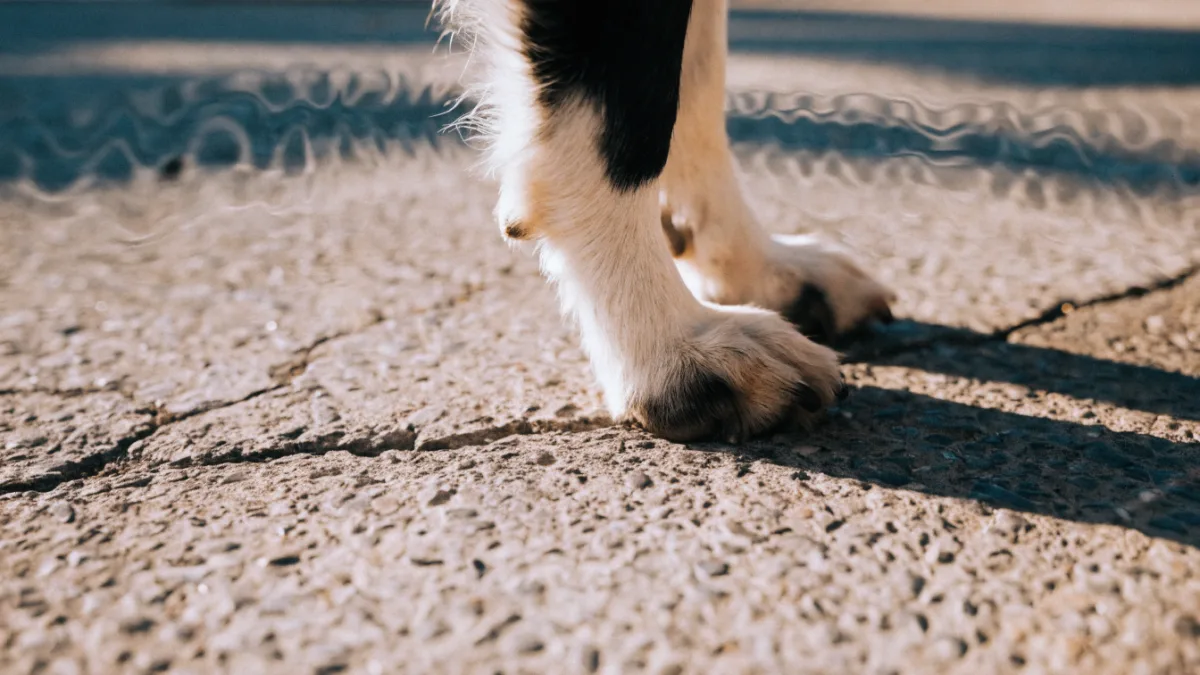
Picture a July afternoon: a panicked owner named Marsha rushes her three-year-old German Shepherd, Kaiser, into a clinic. They’d been for what she called a “quick lunchtime loop” around the neighborhood — maybe twenty minutes, she figured, because the sun was out and she wanted Kaiser to burn off some energy before she went back to work. By the time they arrive, Kaiser is limping, his pads raw and blistered, and Marsha is in tears. “I didn’t even think about the sidewalk,” she keeps saying. “It didn’t feel that hot to me.”
It’s a story I hear every single summer, and it’s exactly why I want to talk about what hot ground does to our pets — and why dogs and cats face completely different risks when the temperature climbs.
The Ground Is Lying to You About the Temperature
Here’s something that catches almost every pet owner off guard: the air temperature and the ground temperature are not the same thing. Not even close. Asphalt acts as what engineers call a “heat sink” — it absorbs solar radiation throughout the day, traps it, and radiates it back upward. On a sunny 85°F (29°C) afternoon, black asphalt can easily reach 140°F (60°C) or higher. Concrete and brick run a bit cooler but still climb well above the air temperature.
The numbers are sobering. Research shared by meteorologists and veterinary organizations shows that a dog can sustain painful paw burns on hot pavement in as little as one minute. On a hot sidewalk, you’re looking at roughly five minutes before tissue damage begins. And because pavement holds heat like a thermal battery, it stays dangerously hot for hours — sometimes even after the sun dips below the horizon. Clinics see pad burns from evening walks all summer, when owners assumed the ground had cooled off.
The simplest test I teach every client: place the back of your hand flat against the pavement and hold it there for seven seconds. If you can’t comfortably keep your hand there, your dog can’t comfortably walk on it. Period.
Why Dogs Bear the Brunt of Summer’s Heat
Obligate Walkers on Obligated Routes
Dogs don’t have much say in where they walk. They rely on us to choose the route, set the pace, and decide when it’s time to head home. If we lead them across a parking lot or down a sun-baked sidewalk, they’ll follow — often eagerly, because they’re happy to be with us. That loyalty is part of what makes this injury so heartbreaking. Kaiser wasn’t trying to tell Marsha he was in pain; he was trying to keep up.
Cats, by contrast, are the opposite. They are selective, deliberate creatures who move through the world on their own terms. A cat seeking a sunbeam on the living room rug is making a calculated choice to absorb warmth — it’s a form of thermoregulation, the process by which animals manage their internal body temperature. And if that sunbeam gets too intense? The cat moves. Cats instinctively route themselves through shade, hop onto cooler surfaces, or find higher ground. They don’t need us to intervene because they’re already self-regulating.
Those Thick Pads Aren’t Armor
I often hear owners argue that their dog has “tough feet” — that years of walking on rough trails or city streets have built up calluses that make them immune to heat. I understand the logic, and I used to give it more credence myself. But the evidence is clear: while paw pads can toughen against mechanical abrasion (rough gravel, for instance), they cannot build tolerance to thermal burns. Heat damage is a completely different injury mechanism.
Paw pads are remarkable structures. They’re composed of thick keratin — the same protein in our fingernails — layered over epithelial tissue and cushioned by fat pads underneath. But what many people don’t realize is how highly vascularized they are. Those pads contain a dense network of blood vessels specifically designed to help dogs release body heat through their feet. It’s one of their primary cooling mechanisms. That same rich blood supply also means that once a pad is burned, the inflammation and tissue damage can be extensive and slow to heal.
And the damage goes beyond the paws themselves. Walking on hot pavement actually raises a dog’s core body temperature, because heat transfers from the ground through those vascularized pads and into the bloodstream. This is what I call “stealth heatstroke” — the dog isn’t overexerting, isn’t locked in a car, but is slowly cooking from the ground up. By the time Marsha brought Kaiser in, his internal temperature was elevated, and we were managing both his pad burns and early heat stress.
Why Sunbathing Cats Rarely End Up in the ER
Sunbathing in cats is a natural, healthy behavior. Cats have a higher baseline body temperature than humans — around 100.5 to 102.5°F (38 to 39.2°C) — and they actively seek warmth to maintain it, especially after sleeping or in cooler weather. When my own cat, Pickle, stretches out in a square of afternoon light, she’s doing something purposeful and self-regulating.
The key difference is agency. A cat in a sunny spot can leave whenever she wants. She’s not tethered to a leash, dependent on a human to notice her discomfort, or forced to cross a surface to reach a destination. Outdoor and indoor-outdoor cats will naturally seek out grass, soil, shade, and elevated perches when the ground becomes uncomfortable. Their agility — that effortless leap onto a wall or fence — means they rarely have to traverse long stretches of hot pavement at all.
That said, cats aren’t completely immune. A cat trapped on a hot balcony with no shade, or an indoor cat on a sun-heated windowsill with no escape, can absolutely develop hyperthermia. And cats are notorious for hiding discomfort until it’s severe. But in terms of paw burns specifically? The combination of behavioral selectivity, physical agility, and voluntary exposure makes this a rare presenting complaint in feline medicine compared to the stream of dogs we see each summer.
Protecting Your Dog: Practical Strategies
So what do we actually do about it? The good news is that with some planning, summer walks can remain safe and enjoyable.
Timing Is Everything
Shift your walks to the early morning — ideally before 8 a.m. — or late evening, well after the sun has set and the pavement has had time to release its stored heat. I tell clients to test the ground with the seven-second hand rule every single time, even when it “feels” cool enough. Hydration matters enormously here too. Bring water for your dog on every walk, offer it frequently, and watch for signs of overheating: excessive panting, dark red gums, wobbliness, or reluctance to continue.
The Booties-versus-Balms Debate
Pet owners debate this one heatedly (no pun intended), and I see merit on both sides. Dog booties made from breathable, heat-resistant materials offer the most direct barrier between pad and pavement. If you go this route, look for booties with flexible, non-slip soles and breathable uppers — and introduce them gradually. Many dogs need a few short, positive sessions indoors before they’ll accept footwear outdoors.
Paw balms and waxes are popular with owners who find booties unnatural. These products create a thin protective layer over the pad and can help maintain pad health. However — and this is important — a balm will not prevent thermal burns the way a physical barrier will. Think of it as supporting pad resilience rather than providing true heat protection. For genuine hot-pavement safety, physical barriers outperform topical ones.
Choose Your Surface Wisely
Grass, dirt paths, and shaded trails are your friends. If your regular route includes unavoidable stretches of pavement, consider driving to a park instead. And remember: light-colored concrete stays cooler than dark asphalt, so even choosing a different surface at the same time of day can make a meaningful difference.
One final note I share with every client: if your dog does show signs of pad injury — limping, licking paws excessively, visible blisters or raw spots, or reluctance to walk — please call your veterinarian. Do not apply human burn treatments, which can be toxic if ingested. We can assess the depth of the injury, provide appropriate pain management, and bandage the paws to protect them during healing. Pad burns can take weeks to fully recover, and secondary infections are common if they’re left untreated.
Summer is meant to be enjoyed with our animals — safely. Kaiser recovered fully, by the way, though Marsha now sets an alarm for 6:30 a.m. walks and keeps a close eye on the ground temperature every step of the way. She told me recently that the seven-second rule has become second nature. That’s all any of us in veterinary medicine hope for: not to scare you, but to help you build simple, sustainable habits that keep the animals you love by your side — comfortably — for many summers to come.