

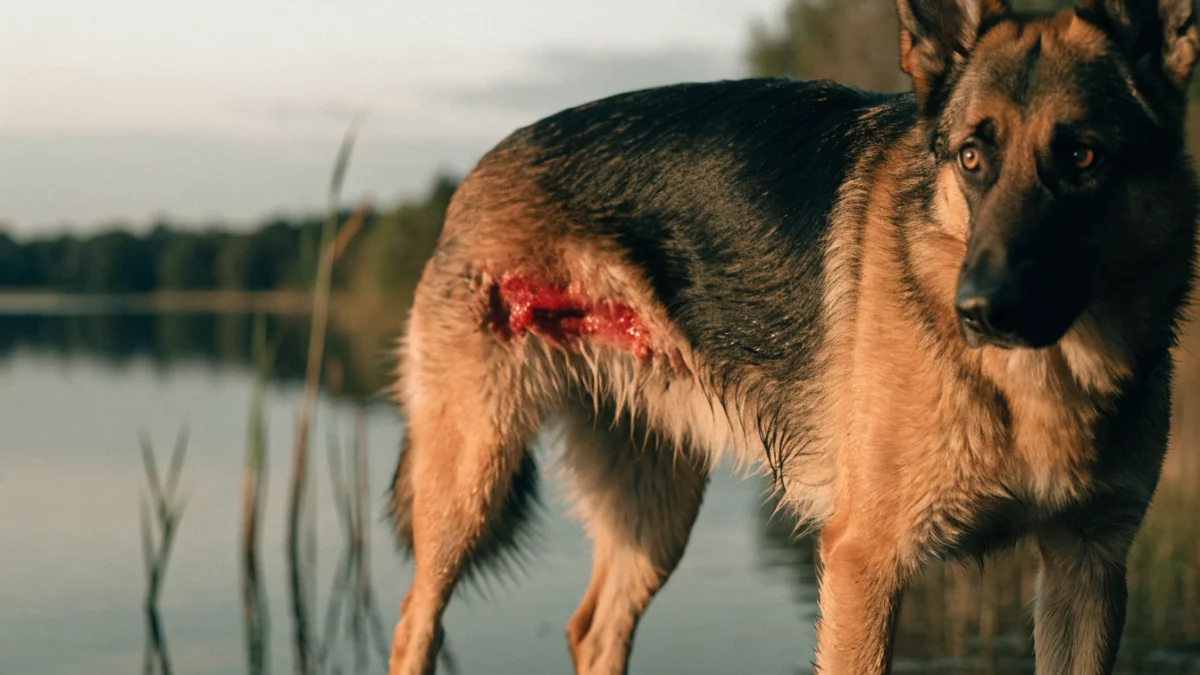
Picture a frantic owner rushing a beautiful, lovable Golden Retriever named Barnaby into a clinic. Barnaby is a notorious swimmer, and his owner had let him air dry in the yard after a late afternoon dip in the local lake. He went to bed smelling like a wet sponge, perfectly happy. But when his owner woke up the next morning, she found a glaring, oozing, red patch the size of a pancake on Barnaby’s cheek. The surrounding fur was gone, the skin was weeping, and Barnaby wouldn’t stop frantically licking it. His owner was terrified it was a spider bite. One look, and the unmistakable odor of infection gave it away: the classic overnight eruption of a hot spot.
What Exactly Is a Hot Spot?
In veterinary medicine, we call this condition Acute Moist Dermatitis or Pyotraumatic Dermatitis. Those are intimidating terms, but they simply translate to a sudden, wet, inflammation of the skin caused by self-inflicted trauma. Let me break that down: “pyo” means pus, and “traumatic” means the dog is doing it to themselves.
A hot spot begins with a minor itch. Maybe a flea bite, a tiny scrape, or a stray drop of trapped bath water. The dog licks the spot to soothe it. However, a dog’s tongue is abrasive, and constant licking breaks down the delicate skin barrier. This allows normal, everyday bacteria—usually Staphylococcus—to invade the tissue. The bacterial infection causes a intense, burning itch, which makes the dog lick and chew even more aggressively. It is a vicious, painful cycle that can cause a massive, infected lesion to appear in a matter of mere hours. As.[1] notes, these lesions are not just red; they rapidly ooze pus, emit a distinct foul odor, and cause sudden, patchy hair loss.
Why Dogs Fall Victim to the Itch-Scratch Cycle
To understand how to stop hot spots, we have to understand what starts that initial itch. In my years of practice, I almost always trace the root cause back to one of five triggers:
1. Trapped Moisture and Matted Coats
This is the number one culprit I see, especially in thick-coated breeds like Newfoundlands, Retrievers, and Shepherds. When a dog swims or gets a bath and isn’t dried down to the skin, the damp hair acts like a breeding ground for bacteria. I’ve definitely changed my mind over the years about “air drying”—it is a hard pass for double-coated dogs. You must dry them thoroughly.
2. Parasites and Allergies
A single flea bite can send a highly sensitive dog into an obsessive grooming spiral. Similarly, dogs with environmental allergies (atopy) or food allergies have inherently inflamed skin that sends “itch” signals to the brain non-stop. You can learn more about identifying these underlying factors through resources like the [2]
3. Pain, Stress, and Anal Gland Issues
Dogs can’t reach for an aspirin when their back hurts, and they can’t tell you they’re anxious about a neighborhood construction project. Instead, they comfort themselves by licking. Often, this psychogenic (behavioral) licking targets a painful joint. Other times, a dog is obsessively licking their haunches or the base of their tail because their anal glands are impacted and uncomfortable.
The Feline Advantage: How Cats Dodge the Bullet
If hot spots are such a rapid, aggressive skin reaction, why don’t our cats get them? It’s a great question I hear often. While cats are certainly prone to their own skin issues—like feline acne or eosinophilic granuloma complex—they rarely, if ever, develop true acute moist dermatitis.
The secret lies in feline anatomy and psychology. First, cats are meticulous, quiet groomers. They use their rough, barbed tongues to constantly remove dead hair and debris, meaning their coats rarely mat or trap moisture against the skin the way a dog’s dense undercoat does. Second, when a dog itches, they tend to chew aggressively and repeatedly traumatize a specific area. Cats, on the other hand, tend to groom in broad, sweeping strokes that are less likely to break the skin and set up a bacterial infection. Finally, the feline skin microbiome and coat density are fundamentally different from canines, making them far less hospitable to the explosive bacterial overgrowth we see in dogs.
Treating the Horror: Clipping, Cleaning, and Breaking the Cycle
When a dog arrives at a clinic with a hot spot, the first job is to stop the itch-scratch cycle immediately. If the licking doesn’t stop, no medication will work.
The “To Shave or Not to Shave” Debate
There is an ongoing debate in the holistic and veterinary communities about shaving the hot spot. I firmly believe—and clinical evidence supports—that we must carefully shave the hair away from the lesion, and often a wide margin around it. Why? Because a hot spot needs to breathe. If we leave the wet, matted fur over it, the infection will just continue to brew underneath. Shaving the area allows air to hit the wound, dry up the moisture, and lets us clean it properly with an antiseptic.
Medications and the Resistance Debate
Because a hot spot is a bacterial infection, antibiotics and anti-inflammatories are heavily prescribed. However, the veterinary community is actively debating antibiotic overuse. With the rise of terrifying superbugs like Methicillin-resistant Staphylococcus pseudintermedius (MRSP), I’ve had to change how I practice. I no longer reach for oral antibiotics immediately. In many mild cases, we rely entirely on topical antimicrobial shampoos and sprays to kill the surface bacteria without contributing to global antimicrobial resistance.
We also rely on corticosteroids (like prednisone) to stop the inflammatory itch fast. Some owners worry about the side effects of steroids, which is completely valid. To mitigate this, we use the lowest effective dose for the shortest possible time, often paired with physical barriers like an e-collar (the dreaded cone) to physically prevent the licking while the skin heals.
New Science: Microbiomes and Targeted Therapies
The most exciting development I’ve seen recently in veterinary dermatology is the shift away from simply “killing all bacteria.” We now understand that healthy skin needs a balanced [3]—a thriving community of good bacteria that naturally keeps the bad bacteria in check. New topical therapies are designed to support this healthy skin flora rather than just acting like a nuclear bomb for bacteria.
We also have incredible, targeted anti-itch medications now. Drugs like oclacitinib and injections like lokivetmab have completely changed how we manage underlying allergic dogs. Instead of relying solely on steroids with all their side effects, we can use these targeted therapies to block the specific itch signals traveling to the dog’s brain, stopping the self-mutilation before a hot spot can even form.
Prevention in a Changing World
Ultimately, preventing hot spots requires a multi-layered approach: strict, year-round flea and tick control, regular brushing to prevent matting, and thorough blow-drying after every bath or swim. It also means paying attention to our changing environment. Warmer, wetter weather patterns globally have led to longer and more intense flea seasons, which directly translates to more hot spot cases walking through clinic doors outside of the traditional summer months.
While our domestic dogs and cats aren’t facing the existential threats of endangered wildlife, their health is intimately tied to the environments we curate for them. By understanding the mechanics of acute moist dermatitis, staying vigilant about moisture and parasites, and respecting the delicate balance of our pets’ skin, we can spare our canine companions the sudden horror of the hot spot—and keep them happily sleeping through the night.
Sources
- Cornell University's Riney Canine Health Center — vet.cornell.edu
- VCA Animal Hospitals guide on skin conditions — vcahospitals.com
- microbiome — missionvet.com