

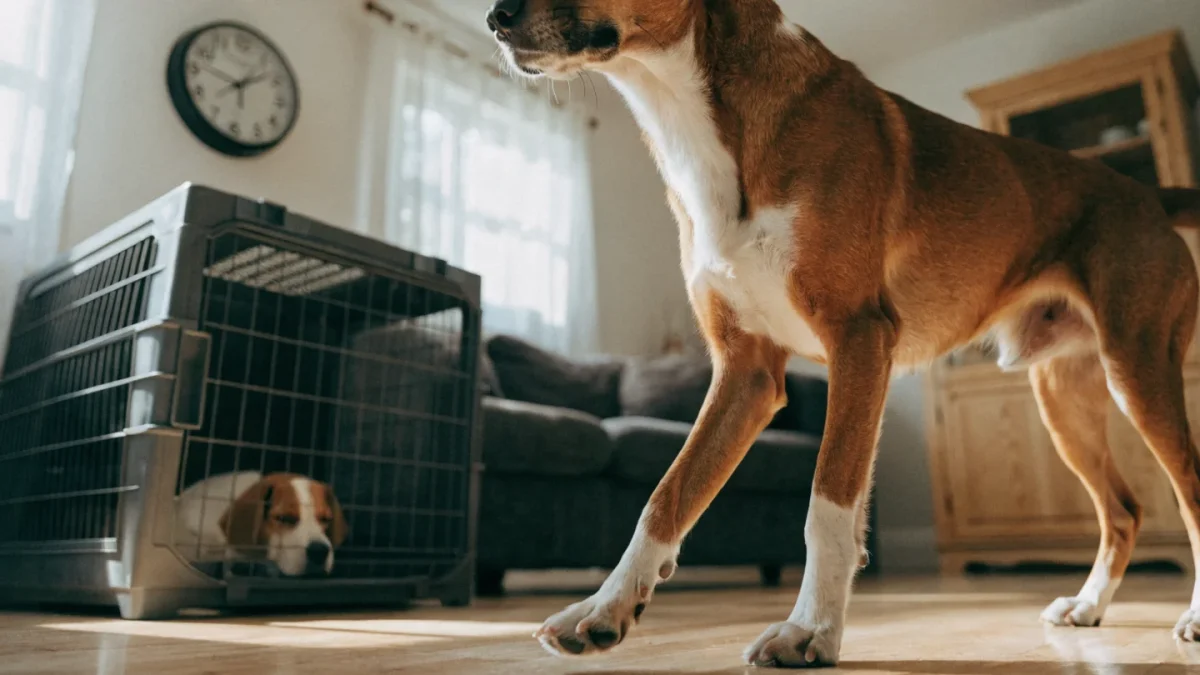
The crate is a management tool with real limits. Those limits exist for physiological and behavioral reasons, not arbitrary rules, and understanding them matters for responsible dog ownership.
The Physical Limit: Bladder Capacity
Dogs can't hold it indefinitely. The absolute ceiling for crate time is how long a dog can reasonably wait before needing to eliminate — and that limit varies dramatically by age.
Rough maximum crate duration by age (daytime):
- 8-10 weeks: 1 hour
- 10-12 weeks: 2 hours
- 3 months: 3 hours
- 4 months: 4 hours
- 5-6 months: 4-5 hours
- 7+ months: 5-6 hours
- Adult dogs: 6-8 hours maximum, occasionally
Note: these are maximums, not targets. Just because a dog can physically hold it doesn't mean extended crating is ideal.
Overnight Is Different
Dogs sleep overnight the same way humans do. Most adult dogs can be crated overnight (7-9 hours) without bathroom issues once they're past puppyhood. Their metabolism and bladder capacity are different during sleep than during active waking hours.
Puppies under about 4 months will likely need at least one overnight break. Expect to set an alarm for middle-of-the-night bathroom trips during the early weeks — it's temporary.
The Behavioral Limit
Physical bladder capacity is only part of the equation. A dog that's crated for extended periods doesn't get:
- Exercise
- Social interaction
- Mental stimulation
- Exploration and environmental processing
These aren't optional extras. A dog crated 10+ hours daily with minimal time for these needs will develop behavioral problems: excessive barking, destructive behavior when released, anxiety, or depression.
The general guidance most behaviorists use: a dog shouldn't spend more than half their waking hours in a crate. For a dog awake 12-14 hours, that suggests 4-6 crated hours maximum per day.
When You're Gone Longer
If your work schedule means your dog is alone for 8-10 hours, a crate for that entire duration is not the answer. Options:
- A dog walker or midday visit
- A dog-safe room rather than a crate for extended time
- Doggy daycare on some days
- A dog door to a safe, enclosed outdoor area if your setup allows
The crate schedule by age guide at puppy crate schedule by age has specific breakdowns for puppies. (See also: how to train a puppy when you work full time.)
The complete crate training guide covers the broader context of how crating fits into a dog's daily routine.
A crate isn't a substitute for a dog-appropriate life schedule. Used within reasonable limits, it's a valuable tool. Used as a parking solution for a dog that doesn't fit into the household routine, it causes real harm. Know the difference.