

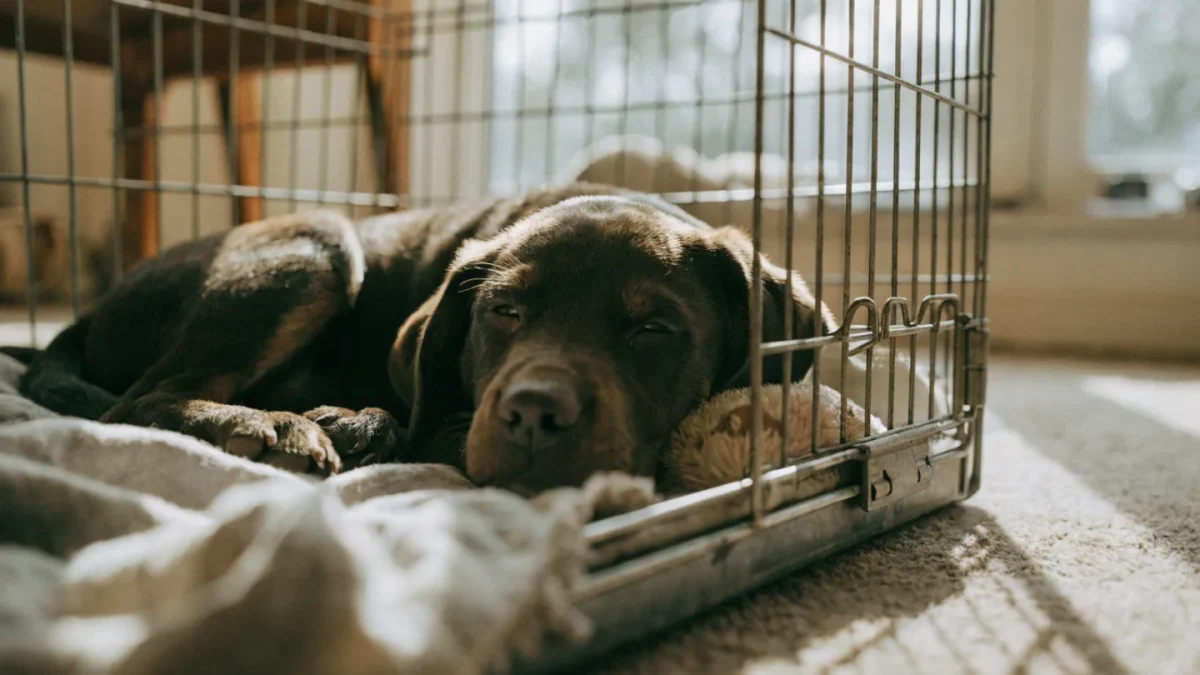
Crate training has a bad reputation it doesn't deserve. Used properly, it's not confinement — it's a safe space your dog chooses to be in. The distinction matters, and it starts with how you teach it.
A dog that dreads the crate was usually introduced to it wrong: shoved in under protest, left too long too fast, or used as punishment. A dog that loves the crate was introduced systematically, with every crate moment paired with something good.
Why Use a Crate?
Crates serve several legitimate purposes:
Safety when unsupervised. Puppies and new dogs can get into serious trouble when unsupervised — electrical cords, toxins, destruction that can be dangerous. A crate prevents access to problems until the dog earns freedom.
House training aid. Dogs avoid soiling their sleeping space, making the crate useful for housebreaking if sized appropriately.
Travel and vet visits. A dog comfortable in a crate travels more safely and is far easier to manage in veterinary settings.
Recovery from injury or surgery. Restricted movement is sometimes medically necessary. A dog that already accepts crating handles this far less stressfully.
A settled resting place. Many crate-trained dogs choose to sleep there voluntarily even when the door is open.
Equipment: Getting the Setup Right
The crate should be just large enough for the dog to stand, turn around, and lie down. Not a massive crate where a puppy can use one end as a bathroom. If you buy a large crate for a puppy, block off the back section.
Bedding: something comfortable but washable. Blanket, mat, or crate pad. Some puppies chew bedding — if yours does, remove it until they've outgrown the chewing phase.
Location: somewhere near family activity, at least initially. Isolating the crate in a basement or garage makes it feel like exile and slows the process.
Step-by-Step Introduction
Week 1: The door stays open.
Put the crate in a main room. Toss treats inside without requiring the dog to enter. Let them investigate and exit freely. Don't close the door. Feed meals inside the crate. The crate becomes associated with food before anything restrictive happens.
Week 2: Closed door, short duration.
Once the dog is entering willingly for treats and meals, close the door for a moment — literally while they eat their meal, then open it. Extend to 1-2 minutes while you're visible. Stay nearby. Treat through the door while they're inside. Open before any distress starts.
Week 3-4: Building duration.
Gradually extend time inside. Five minutes, 10 minutes, 20 minutes. Stay in the room initially. Then move briefly to another room and return before the dog shows concern.
Key rule: never extend duration past where the dog is comfortable. If the dog is whining or barking, you've gone too far. Go back to shorter durations and build more slowly.
Overnight Crate Training
The first nights are often the hardest — puppies especially vocalize when isolated.
Keep the crate in your bedroom for the first few weeks. Your presence is genuinely comforting, and proximity means you'll hear if they need to go out.
Ignore mild whining — entering as soon as they whine teaches them that whining brings you. But respond to the urgent, intense vocalization that signals they need to go outside.
There's a full approach to this in the overnight crate training guide if the nights are particularly rough.
Duration Limits
A crate is not indefinite confinement. Maximum times vary by age:
- Puppies under 10 weeks: 1 hour maximum
- Puppies 10-12 weeks: 2 hours
- Puppies 3-6 months: 3-4 hours
- Adult dogs (with good bladder capacity): 4-6 hours, occasionally 8 hours for sleep
These are maximums, not targets. Dogs need exercise, social interaction, and mental stimulation. A dog in a crate 10+ hours daily is not having their needs met.
What Never to Do
- Never use the crate as punishment. "Go to your crate" said angrily defeats everything you've built.
- Never leave a dog in a crate with a choke collar, prong collar, or leash attached. Strangulation risk.
- Never force a reluctant dog in. Lure, entice, never shove.
- Never ignore sustained, distressed vocalization. Distinguish "I want out and I'm complaining" from "I need out and I'm panicking" — the latter warrants response.
Troubleshooting
Dog won't enter: Back up. More treat work with the door open, more meals inside, more patience.
Dog cries immediately when door closes: Duration too long too fast. Reset to 30-second increments.
Dog fine alone but panics when left: Could be separation anxiety specifically, not crate resistance. Check the separation anxiety article for a different approach.
Dog cries all night: See the overnight crate training guide. This is solvable.
FAQ
Is crate training cruel?
Not when done correctly. A properly introduced crate is a comfortable, safe space. The cruelty comes from improper use — punishment crating, excessive duration, forcing a dog in who hasn't been taught to accept it.
How long does crate training take?
Varies considerably. A puppy introduced properly from the beginning can be crate-comfortable within 2-4 weeks. An adult dog with bad crate associations may take longer.
When can my dog have full house freedom?
When they've demonstrated reliable behavior unsupervised — no destructive chewing, no accidents, no getting into dangerous things. For some dogs that's 1 year; for others it's 2-3 years.
Should I put food and water in the crate?
Water is fine for longer durations. Food in the crate is mainly used during training. Remove food bowls before closing for overnight or extended crating.
Can I crate my dog while I'm home?
Yes. Crating during calm, home time (while you work from home, watch TV, eat dinner) normalizes the crate as a resting space rather than associating it only with your departure.
The investment in teaching a dog to genuinely like their crate pays back across years of easier travel, vet visits, and a dog who has a quiet, comfortable place to settle when the house is busy. Do it right the first time and it lasts.