
I had a client whose dog had a "stay" that lasted about four seconds and then evaporated whenever she turned her back. She thought the dog understood stay but just chose not to do it when she walked away.
That's not a disobedience problem. That's a training problem. The behavior had never been built past the turning-around-in-your-kitchen phase.
Stay is actually three different skills bundled into one word: duration, distance, and distraction. Most people teach one of them and call it done. To get a stay that holds up in real life, you need all three — built separately, then combined.
First: Get the Stay Concept
Your dog needs to understand what stay means before you can develop it. If they don't already have a reliable sit, start there first.
Ask for a sit. Pause. Wait one second without moving or speaking. If your dog holds position, mark it ("yes") and deliver a treat. If they break, calmly reset them to sit and try again with a shorter pause.
That's the core concept. Stay in position until I tell you otherwise.
Do ten repetitions at one second. When they're solid, go to two seconds. Then five. Then ten. Then thirty.
The release word: Your dog needs to know when they're done. Pick a clear release word — "free," "okay," "break," "done" — and use it consistently every time you end a stay. Without a release word, your dog is left guessing, which leads to breaking early.
Building Duration
Duration means your dog can hold position for longer periods without movement or prompting from you.
Build it incrementally. Two seconds, then five, then ten. Don't try to jump from ten seconds to two minutes. Any time your dog breaks, you went too far too fast — go back one step and rebuild.
Don't stare at your dog during long stays. It creates pressure. Practice glancing away, checking your phone (yes, literally), looking at the ceiling. Your dog needs to learn that a stay continues even when you're not making eye contact.
During duration work, stay close to your dog. You're building time, not space. Distance comes later.
Building Distance
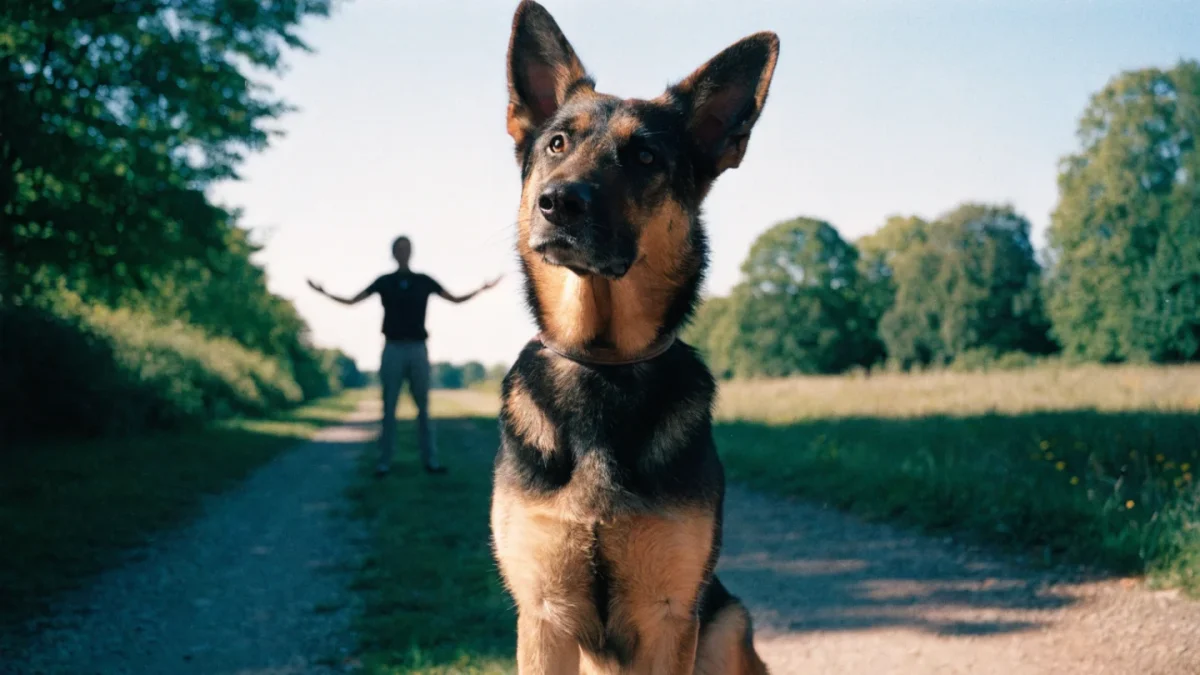
Once your dog can hold a sit-stay for 30-60 seconds with you standing right in front of them, start adding space.
Take one step back. One. Return to your dog (this is important — go back to them rather than calling them to you). Reward in position.
Next rep: two steps. Return. Reward.
The key is always returning to your dog to reward, rather than calling them to you or releasing them to come to you. If you release them from position to give them a treat, you've accidentally built "come to me" into the end of every stay. That creates a dog that drifts toward you at the end of stays.
Work up to 10 feet, then 20 feet, then out of your dog's sight temporarily. Add distance slowly. Any time your dog breaks, you've gone too far too fast.
Building Distraction
Distance and duration don't matter if your stay falls apart when a squirrel runs by. Distraction is where stay actually gets field-tested.
Start with mild distractions: you moving around (not away, just moving), dropping something, clapping your hands. Then add bigger distractions in controlled settings: a toy on the floor nearby, another person walking past, a sound.
Each new distraction is essentially a new lesson. Reduce your duration and distance expectations when you introduce a significant new distraction. Once the distraction becomes familiar, add back the time and distance.
In public settings: When you go somewhere with big environmental distractions, start over at short durations with you right next to your dog. "New place" equals "new dog" in terms of what they can hold. Build back up quickly — it usually takes fewer repetitions than the original learning — but don't skip the rebuilding process.
Combining the Three
Only after your dog can do reasonable duration, distance, and distractions separately should you start combining them.
Three feet away for thirty seconds: fine. Ten feet away for ten seconds with mild distractions: harder. Ten feet away, out of sight, for two minutes, with a distraction: that's an advanced stay.
Most household stays are a combination of duration and mild distraction — holding position while someone comes through the door, while you prepare dinner, while guests walk through. Build toward what you actually need.
What to Do When the Stay Breaks
When your dog breaks stay before you've released them, say nothing. Don't scold, don't repeat "stay." Just calmly return them to the original position and start the rep again, usually with lower criteria (shorter time, less distance). (See also: advanced dog obedience training.)
Breaking stay is almost always a criteria problem — you asked for too much duration, distance, or distraction at once. Reduce the difficulty and rebuild. It's information, not defiance.
This week: build a 30-second stay with you standing right next to your dog in your living room. Once that's solid, take one step back and rebuild. Don't rush the distance. Duration with you nearby is more useful than distance without it.