

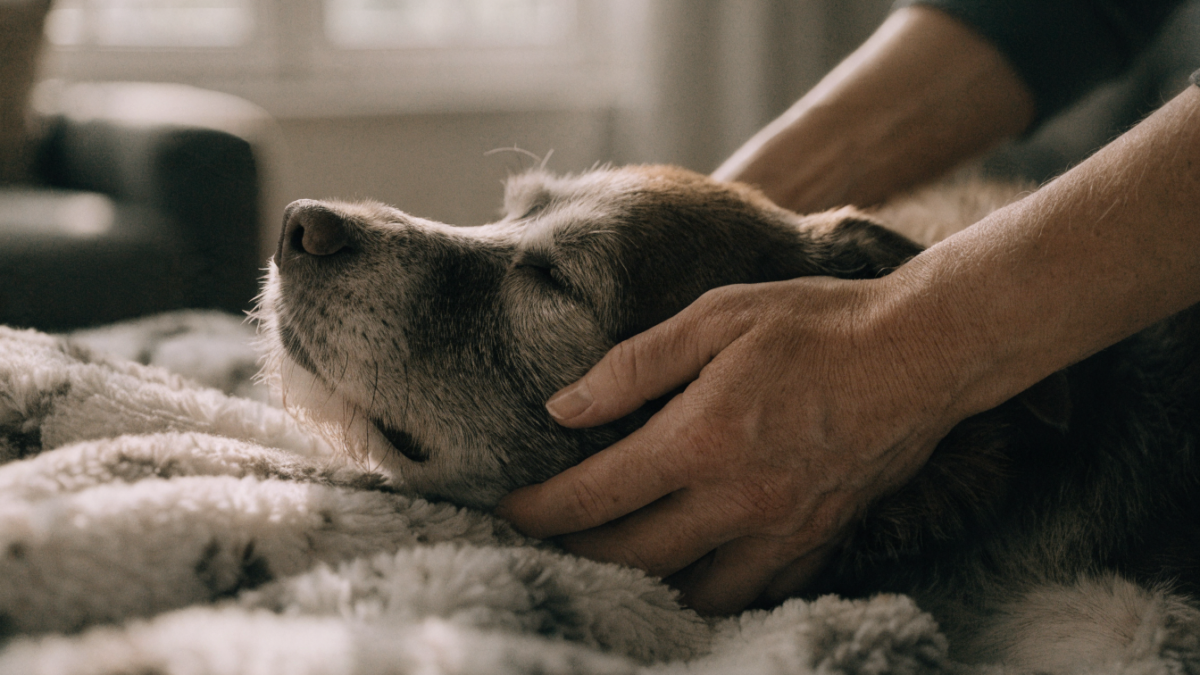
Saying goodbye to a beloved animal is one of the hardest things you’ll ever do. I sat with a client named Margaret last month, her 14-year-old Golden Retriever Bailey’s head resting in her lap, and watched her struggle with a question I hear almost every day: should we do this at home, or at the clinic? Bailey had hemangiosarcoma, an aggressive cancer, and the time had come. Margaret wanted to do right by her dog, but she didn’t know what “right” looked like. That conversation inspired me to write this piece, because understanding your options during end of life pet care can transform a terrifying experience into one that, while heartbreaking, is also peaceful and meaningful.
What Actually Happens During Euthanasia
Let me walk you through the procedure itself, because I find that demystifying this process takes away about 90% of the fear people carry. The modern euthanasia process is a two-step approach designed to be virtually painless, and I’ll explain each step the way I explain it to families sitting in my exam room.
Step One: Deep Sedation
First, I administer an injection of pain medication combined with sedatives. Think of it like general anesthesia prep. Your pet gets relaxed, their eyes soften, and they drift into a deep, peaceful sleep. This takes about 5 to 15 minutes. They’re not aware of anything after this point. I always tell families they can pet their animal, talk to them, and be present during this phase. For cats or nervous dogs, I’ll sometimes place this first injection under the skin rather than into a vein, which means I can even do it while the pet is in their favorite bed.
Step Two: The Final Injection
Once your pet is fully sedated and your family is ready, I administer the second injection, typically an overdose of an anesthetic called pentobarbital. This medication stops brain function first, then gently stops the heart. It takes effect quickly, usually within a minute or two. Your pet doesn’t feel pain. They simply aren’t conscious to experience anything.
One thing I always prepare families for: as the body lets go, your pet may take a few deep, sighing breaths. Sometimes there are muscle twitches or what looks like a shudder. These are natural reflexes from the nervous system releasing, not signs of distress or pain. I’ve performed hundreds of these procedures, and those reflexes, while startling if you’re not expecting them, are completely normal. Your pet is already peacefully asleep when they occur.
In-Home Pet Euthanasia: When Home Is Where the Heart Is
In home pet euthanasia has become increasingly available, and for many families, it’s the gentlest option. A veterinarian comes to your house, often with a technician, and performs the procedure in whatever spot your pet loves most. I’ve euthanized dogs on sunny porches, cats wrapped in their favorite blankets on the couch, and even one elderly Beagle named Cooper who passed away lying in a patch of sunlight on his living room floor, exactly where he’d napped every afternoon for 12 years.
The Benefits of Saying Goodbye at Home
- Zero travel stress. For senior pets or animals in pain, a car ride to the clinic can be exhausting and frightening. Home eliminates that entirely.
- Familiar surroundings. Your pet stays comfortable in their own environment, surrounded by their own smells and sounds.
- Privacy for your family. You can grieve openly without worrying about other clients in a waiting room. You can invite family members to be present.
- Other pets can be present. This is something I strongly encourage when possible. Household animals often understand what’s happened when they can see and smell their companion after passing. It can help them process the loss and reduce behavioral changes like searching or vocalization.
- No rushed timeline. The veterinarian is there for you, on your schedule, not managing a full clinic of appointments.
The Cost Consideration
I want to be honest about the financial reality. In home pet euthanasia typically ranges from $200 to $450 or more, depending on your pet’s size, the travel distance, and whether you need an after-hours or weekend appointment. Clinic euthanasia, by comparison, generally runs $50 to $150. That’s a significant difference, and I understand it’s not accessible for everyone.
Some families feel guilty that they can’t afford the at-home option. Please don’t. What matters most is that your pet is surrounded by love and handled with gentleness. A clinic setting with a compassionate veterinarian can absolutely provide that. The location doesn’t determine the quality of your goodbye.
Clinic Euthanasia: What to Expect and How to Make It Meaningful
If you choose or need to have the procedure performed at your veterinary clinic, there are ways to make it as comfortable as possible. Most clinics have a quiet room set aside for euthanasia appointments. You can request extra time, ask to sit on the floor with your pet, and bring their favorite blanket or toy.
I encourage owners to call ahead and ask the reception team to schedule them at a quieter time, often late morning or early afternoon. Many clinics will let you come in through a separate entrance to avoid the waiting room. Don’t be afraid to advocate for what you need. Your veterinarian wants this to be as peaceful as you do.
Clinic euthanasia is also typically faster to schedule. If your pet is in crisis, you can often be seen the same day. Some clinics offer emergency euthanasia services 24 hours a day. For families facing a sudden decline, this availability can be a true relief.
Pet Hospice: Buying Time and Quality
Not every terminal diagnosis means immediate goodbye. Pet hospice, sometimes called Pawspice, is a rapidly growing field focused on comfort care rather than cure. The goal is to manage pain, maintain hygiene, and preserve quality of life for as long as is humane. I work with several hospice patients at any given time, adjusting medications, suggesting environmental modifications like ramps or orthopedic beds, and checking in regularly with families.
The Quality of Life Scale
One tool I use constantly is the HHHHHMM scale. It’s a checklist that helps families objectively evaluate whether their pet is still enjoying life. The letters stand for:
- Hurt: Is pain well-controlled?
- Hunger: Is the pet eating enough?
- Hydration: Are they drinking adequately?
- Hygiene: Can they stay clean, especially after eliminations?
- Happiness: Do they still express joy or interest?
- Mobility: Can they move around without undue struggle?
- More good days than bad: This one is crucial. When bad days outnumber good ones, it’s often time.
I have families score each category from 0 to 10. A total below 35 usually signals that the balance has tipped. Telehealth has also made pet hospice more accessible. I can video chat with families to assess mobility, watch their pet eat, and discuss medication adjustments without the stress of an in-person visit for a fragile animal.
Natural Passing vs. Euthanasia: A Compassionate Reality Check
This is a conversation I have more than any other, and it’s worth addressing directly. Some owners tell me they want their pet to “just pass naturally in their sleep.” I understand the impulse. It feels gentler, less intervened, more peaceful. But I have to be honest with you from my clinical experience: natural dying from a terminal illness is rarely peaceful.
Animals hide pain instinctively. By the time you see obvious distress, they’ve often been suffering silently for some time. Natural death from organ failure, cancer, or heart disease can involve hours or even days of difficulty breathing, nausea, and disorientation. I’ve seen it, and it’s heartbreaking in a way that’s completely preventable.
Euthanasia is not giving up. It is, in my professional opinion, one of the most profound acts of love we can offer. We take on the emotional pain so they don’t have to carry the physical pain.
Aftercare: Honoring Your Pet’s Body
Once your pet has passed, regardless of where the euthanasia occurred, you’ll need to decide on aftercare. Your options generally include:
- Communal cremation: Your pet is cremated alongside other animals, and ashes are not returned. This is the most affordable option.
- Private cremation: Your pet is cremated individually, and their ashes are returned to you in an urn or container. This costs more but allows you to keep or scatter the remains.
- Home burial: If local zoning laws permit and you have the space, some families choose to bury their pet on their property. Check regulations first.
- Pet cemetery burial: A formal burial at a dedicated pet cemetery, which includes a plot, casket, and marker.
Many in-home euthanasia providers now include grief support as part of their standard service. You might receive a follow-up sympathy card, a clay paw print keepsake, or information about pet loss support groups. I’ve changed my mind about how important this is. Early in my career, I focused only on the medical procedure. Now I understand that end of life pet care means supporting the humans too.
Making Your Decision
There’s no universally right answer between home and clinic euthanasia. Here’s what I tell families: think about what your pet would want. Are they terrified of car rides? Does the clinic make them anxious? If so, home might be worth the extra cost if it’s feasible for you. Are they comfortable being handled and examined? Have you been managing their care at the clinic for years with the same team? Then the clinic might feel like the right, familiar place.
Consider the other people in your household too. Will children want to be present? Does your partner feel strongly about location? What about the practical logistics of aftercare pickup? These are all valid factors.
I once worked with a family who chose clinic euthanasia for their cat, Whiskers, because their toddler wanted to be there, and they felt the clinical environment would give them more emotional support. Another family scheduled an at-home appointment for their dog, Duke, because their other dog, Rosie, had been his companion for 11 years, and they wanted her to understand. Both were beautiful, loving goodbyes. Both were the right choice for those families.
A Final Thought
Grief is the price we pay for loving these animals, and it’s a price I’d pay a thousand times over for the joy they bring. Whatever you choose, in-home or clinic, know that you’re making a decision out of deep love. That love is the medicine that matters most in those final moments. Your pet won’t remember the location. They’ll remember, in whatever way animals remember, that you were there, holding them, speaking their name, telling them they were the best dog or cat who ever lived. Because they were. And because you gave them a peaceful goodbye when they needed it most, you’ll carry that love with you long after they’re gone.