

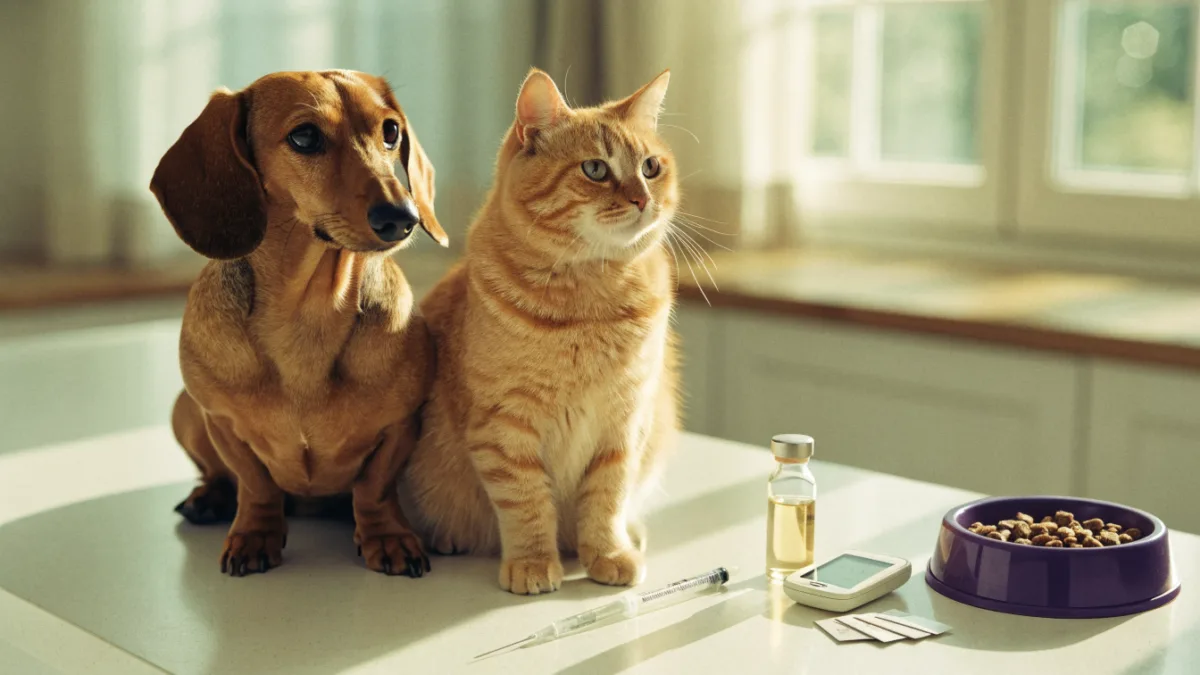
Picture Mark sitting in the exam room with his 8-year-old Beagle, Buster, looking like he’d just been handed a death sentence. Buster had been drinking water obsessively and having accidents in the house—classic signs of diabetes. Mark’s hands were shaking.
“I can’t give my dog a shot,” he told me, close to tears. “I hate needles. I’ll pass out.”
If you’ve just heard those same words—”Your pet has diabetes”—you might be feeling the exact same way. The thought of managing daily pet insulin injections feels terrifying, but I promise you, it is entirely doable. I’ve walked hundreds of pet parents through this exact scenario, and within a week, they’re giving shots like seasoned pros. Let’s talk about what daily life with a diabetic pet actually looks like, and why dog diabetes treatment is remarkably different from managing the condition in cats.
The Diagnosis and the Dreaded Needle
Let’s address the elephant in the room: the needles. The image of a huge syringe probably pops into your head, but veterinary insulin syringes are incredibly tiny. We use ultra-fine needles that are injected just under the skin—a process called subcutaneous injection. Dogs and cats have a much looser attachment between their skin and the underlying muscle than humans do. Most pets don’t even feel the poke, especially if you give it while they’re happily distracted by their food bowl.
When I sent Mark home with Buster’s supplies, I had him practice injecting a folded piece of cold lunchmeat to get the feel of the plunger. By day three, Mark was giving Buster his shot while the dog was munching on his breakfast, completely oblivious to the tiny prick.
Consistency is your best friend. Both dogs and cats typically require injections twice daily, about 12 hours apart, strictly timed around their feeding schedule. You aren’t just giving medication; you are replacing a natural hormone that the body expects at precise intervals to process a meal. A modern tool that helps immensely with the fear of needles is the veterinary insulin pen. Similar to the pens used by humans, these devices eliminate the need to draw insulin from a vial with a syringe. You simply dial in the exact dose, press a button, and a hidden, incredibly tiny needle delivers the medication. These pens are fantastic for reducing dosing errors and making the process far less intimidating.
Food as Medicine: Canines vs. Felines
Diet is the foundation of managing diabetes, but what works for a dog will actually harm a cat, and vice versa. Their metabolisms handle energy completely differently.
The Canine Approach: Fiber and Complex Carbs
Dogs develop a condition very similar to.[1] Their pancreas simply stops producing insulin, meaning they will require lifelong insulin therapy. For dogs, I typically prescribe a high-fiber, complex-carbohydrate diet. Fiber slows down the digestion and absorption of,[2] preventing those dangerous post-meal sugar spikes. It also helps overweight dogs feel full, which is crucial because carrying excess fat exacerbates insulin resistance.
The Feline Approach: Low-Carb, High-Protein
Cats, on the other hand, are obligate carnivores. I recently diagnosed a 12-year-old, slightly chubby Tortoiseshell cat named Pickles. If I had put Pickles on the high-fiber kibble I gave Buster, she would have spiraled. Cats metabolize energy from protein, not carbohydrates. Feeding a diabetic cat a high-carb diet forces their already exhausted pancreas to work overtime, causing massive glucose spikes.
For Pickles, we transitioned her immediately to a low-carbohydrate, high-protein diet, primarily consisting of wet food. This dietary shift alone drops many cats’ blood sugar levels significantly. Since cats usually develop a disease similar to Type 2 diabetes, removing the carbohydrate overload and helping them lose excess weight is half the battle.
Tracking the Numbers: Modern Glucose Monitoring
To properly adjust insulin doses, we need to know what your pet’s [3] is doing throughout the day. How we gather that data has evolved significantly over the years.
The Problem with Clinic Curves
I’ll be honest—I’ve changed my mind on how we track this. Early in my career, I would have owners drop their pets off at the clinic for a “glucose curve.” We would draw blood every two hours for 12 hours to track the insulin’s effectiveness.
The problem? Stress. Imagine being poked with a needle six times in a strange, loud environment. Stress naturally triggers a spike in blood sugar. This is especially true for cats, who are highly prone to stress-induced hyperglycemia. We were getting inaccurate readings because the clinic environment was artificially inflating their numbers, leading to improper dosing.
The Rise of Home Monitoring
Today, I strongly advocate for home monitoring. Teaching an owner to prick the edge of their pet’s ear with a tiny lancet and use a standard handheld glucometer is surprisingly easy, and pets tolerate it beautifully at home.
Even more exciting is the recent introduction of Continuous Glucose Monitors (CGMs) in veterinary medicine. These are small, wearable sensors (originally designed for humans) that we attach to the pet’s skin, usually between the shoulder blades. They track glucose levels continuously for up to two weeks without requiring a single needle prick after the initial application. When Pickles the cat was wearing her monitor, her owner could just scan the sensor with a smartphone app while the cat napped. It gave us a perfect, stress-free picture of her glucose levels.
The Great Divide: Lifelong Management vs. Remission
Here is the most profound difference between canine and feline diabetes: the possibility of a cure.
Canine Diabetes: A Lifelong Commitment
As I mentioned, dogs almost exclusively suffer from insulin-dependent diabetes. Once a dog’s pancreatic beta cells are destroyed, they do not regenerate. Dog diabetes treatment requires a lifelong commitment to twice-daily injections. There are no oral alternatives for dogs, and they will rarely, if ever, go into remission. However, with consistent care, a proper diet, and a solid routine, diabetic dogs can live perfectly normal, happy lives for years. Buster is still happily chasing squirrels in his backyard, completely unbothered by his morning routine.
Feline Diabetes: The Possibility of Remission
Feline diabetes remission is a very real phenomenon. Because cats usually suffer from Type 2-like diabetes—where the body still produces some insulin but is resistant to it—their pancreas can actually heal if we intervene early and aggressively.
Historically, some vets tried to manage feline diabetes with oral hypoglycemic pills to avoid injections. But modern veterinary consensus heavily favors early, aggressive insulin therapy. By giving a cat insulin injections right away, we let their exhausted pancreas “rest.” Combined with a strict low-carb diet, this rest period allows the pancreas to recover and potentially start producing insulin independently again. Pickles achieved remission after just four months of insulin and dietary therapy. Today, she no longer needs injections—a true miracle for her owner, who initially thought she was signing up for a decade of needles.
For owners who absolutely cannot inject their cats, there is recent hope. Within the last couple of years, the FDA approved new oral liquid medications designed specifically for feline diabetes. These are a massive breakthrough, though it’s important to note they do not work for every cat. Your vet will need to run specific tests to ensure your cat is eligible, as these oral drugs can cause severe side effects if the cat has concurrent illnesses like kidney disease. They are also exclusively for cats; there are no oral alternatives for dog diabetes treatment.
Navigating the Highs and Lows
Even with perfect management, you need to know the warning signs of blood sugar extremes. It is vital to act quickly when things go off track.
Hyperglycemia (high blood sugar) is what happens if the diabetes is left untreated or under-treated. You will see a return to the classic symptoms: excessive drinking and excessive urination. While it’s not an immediate emergency, it means we need to adjust your treatment plan.
Hypoglycemia (low blood sugar) is the true emergency. This happens if the pet receives too much insulin, vomits up their food right after eating, or exercises much more heavily than usual. You will see sudden lethargy, shaking, disorientation, or even seizures. I tell every single diabetic pet owner to keep a source of fast-acting sugar—like clear corn syrup or honey—on hand at all times. If your pet is stumbling or weak, you rub the syrup directly onto their gums. It absorbs rapidly into the bloodstream, saving their life before you can get to the car. And of course, always consult your veterinarian before making any changes to your pet’s dosage or routine.
Managing a diabetic pet feels like climbing a steep learning curve in the beginning, but you won’t be climbing it alone. By focusing on a strict routine, understanding the distinct dietary rules for your specific species, and utilizing modern at-home monitoring, you can effectively manage this condition. While we may not be saving endangered species in the wild, by catching the signs early and committing to their daily care, we are actively conserving the health, happiness, and lifespan of the irreplaceable companions resting right at our feet.
Sources
- Type 1 diabetes in humans — vet.cornell.edu
- glucose — vetspecialists.com
- blood sugar — vcahospitals.com