

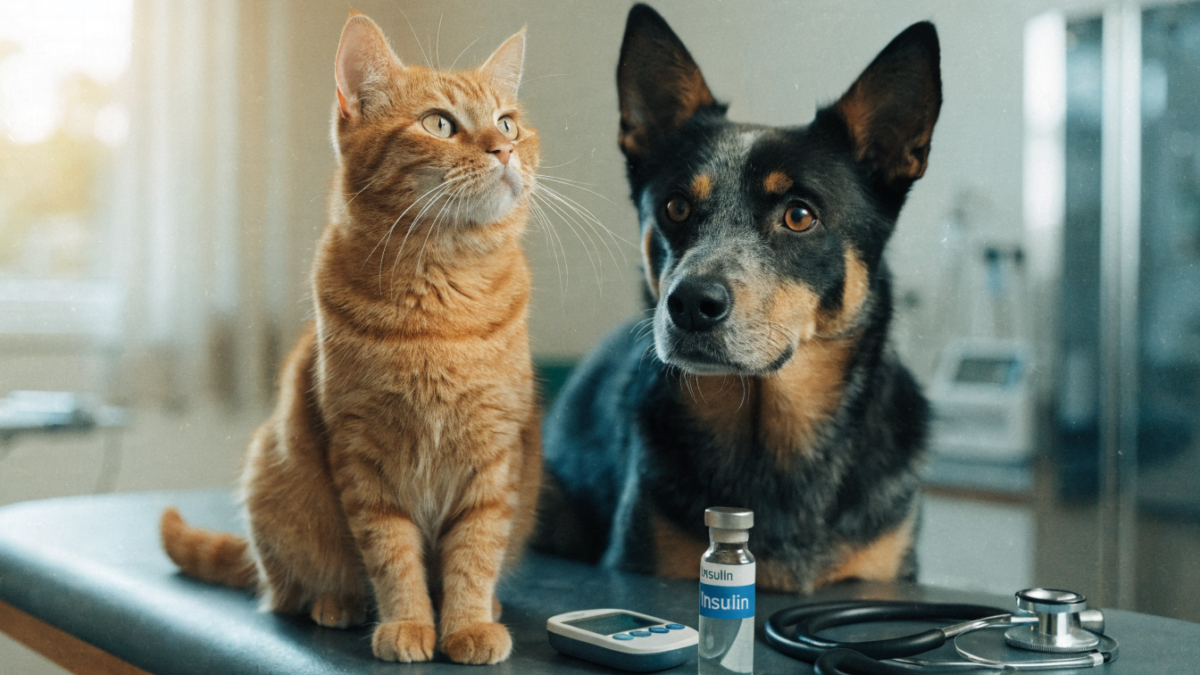
Picture Mrs. Huang carrying Mochi into a clinic last October. The first thing anyone noticed was how much weight the nine-year-old orange tabby had gained since his last visit. “He’s drinking so much water,” she said, “and the litter box smells… sweet, almost.” Across town the same week, a six-year-old Schnauzer named Bruno came in with the opposite complaint — sudden weight loss despite a ravenous appetite. Both pets ended up with the same diagnosis: diabetes mellitus. But the disease processes underneath couldn’t have been more different. And understanding that difference shapes everything about how they’re treated.
Two Diseases, One Name
Diabetes mellitus — the condition where the body can’t properly regulate blood glucose — affects both dogs and cats, and the normal blood sugar range for both species sits in a remarkably similar window of about 75 to 120 mg/dL. But the reason that number climbs into dangerous territory depends entirely on which species we’re looking at.
Dogs almost exclusively develop what we call insulin-dependent diabetes mellitus, which mirrors human Type I diabetes. Their immune system attacks and destroys the beta cells in the pancreas — the specialized cells responsible for manufacturing insulin. Think of it like a factory where the workers have been laid off. The pancreas simply can’t produce enough insulin to move glucose from the bloodstream into cells where it’s needed for energy. Without insulin acting as the “key” that unlocks cell doors, sugar accumulates in the blood with nowhere to go.
Cats, on the other hand, predominantly develop Type II diabetes — the same form that accounts for roughly 90 to 95 percent of human diabetes cases worldwide. In feline Type II diabetes, the pancreas still produces insulin, at least initially, but the body’s tissues become resistant to it. The cells essentially become deaf to insulin’s signal. To compensate, the pancreas pumps out more and more of the hormone, and eventually those overworked beta cells burn out and stop functioning properly. So while we categorize feline diabetes as Type II, it often evolves into a hybrid state where insulin resistance and impaired insulin secretion coexist. Some veterinary endocrinologists argue that the human classification system doesn’t neatly capture this complexity, and honestly, I think they have a point.
“The naming debate matters less than the clinical reality: dogs need insulin replacement, while cats need insulin sensitization — and sometimes both.”
The Sugar Spike: What Happens When Glucose Overflows
When blood glucose exceeds that 120 mg/dL threshold — and in diabetic patients, we often see readings well above 400 mg/dL — the body runs into a plumbing problem. The kidneys act as a filtration system, and under normal conditions, they reclaim all the glucose from the bloodstream before it reaches the urine. But there’s a limit to how much glucose the kidneys can reabsorb. Once blood sugar surpasses that threshold (typically around 180 mg/dL in both species), glucose begins spilling into the urine — a condition called glucosuria.
Here’s where the cascade begins. Glucose in the urine acts like a sponge, pulling water with it through a process called osmotic diuresis. That’s why diabetic pets urinate excessively — a symptom called polyuria. All that fluid loss triggers intense thirst, or polydipsia, as the body tries to keep up with dehydration. When Mrs. Huang described Mochi draining his water bowl twice a day and flooding the litter box, that classic pattern immediately put diabetes on my radar.
The sugar spike also explains the weight loss in dogs like Bruno. Even though Bruno was eating more than ever, his cells were literally starving because without insulin, glucose couldn’t enter them. His body started breaking down fat and muscle for fuel instead, which is why he looked thinner despite an increased appetite. Left untreated, this energy crisis can progress to a life-threatening condition called diabetic ketoacidosis, where acidic ketone bodies accumulate in the bloodstream.
Why One Blood Test Isn’t Enough
Diagnosing diabetes sounds straightforward — just check blood glucose, right? If only it were that simple. Cats, in particular, are notorious for something called stress hyperglycemia. When a cat is frightened — and let’s face it, most cats aren’t thrilled about visiting the vet — their blood glucose can temporarily spike to 300 mg/dL or higher, even if they’re perfectly healthy. I’ve seen healthy, anxious cats post blood sugar readings that would immediately qualify a dog for a diabetes diagnosis.
That’s why veterinary guidelines require evidence of persistent hyperglycemia alongside glucose in the urine before confirming a diagnosis. We may also run a test called fructosamine, which reflects average blood glucose over the previous two to three weeks, cutting through the noise of a single stressed-out reading. Cornell University’s Feline Health Center emphasizes this multi-step diagnostic approach specifically because of how easily stress can mislead us in cats.
Treatment Paths Diverge
Dogs: Lifelong Insulin Replacement
Because diabetic dogs aren’t producing insulin, treatment is straightforward in principle: they need insulin from an outside source, every day, for the rest of their lives. There’s no diet change or weight loss program that will restart a destroyed pancreas. For Bruno, that meant a conversation with his owner explaining that twice-daily insulin injections would become part of their routine permanently. Most owners are understandably intimidated by the idea of injecting their dog, but the needles are tiny — smaller than those used for vaccines — and the vast majority of dogs don’t even notice once the routine is established. Bruno’s owner had him regulated within three weeks, and at his last checkup, he was back to chasing squirrels with the enthusiasm of a dog half his age.
Cats: The Possibility of Remission
Feline diabetes treatment is where things get genuinely exciting. Unlike dogs — and unlike most human Type I diabetics — cats can achieve what we call diabetic remission. Because the underlying problem is insulin resistance rather than complete beta cell destruction, if we can aggressively lower blood glucose early with insulin therapy, those exhausted beta cells sometimes recover. The pancreas starts producing insulin again, and the cat can eventually be weaned off injections entirely.
I’ve changed my mind about how to approach feline diabetes over the past decade. Early in my career, I sometimes started cats on oral medications like glipizide — drugs commonly used in human Type II diabetes — hoping to avoid the need for injections. But the evidence has become overwhelming that early, aggressive insulin therapy combined with a low-carbohydrate diet gives cats the best shot at remission. A study published in the journal Veterinary Sciences and indexed through PubMed Central reinforces that achieving strict glycemic control quickly is what protects remaining beta cell function. Oral medications simply can’t lower blood sugar fast enough or consistently enough to match that outcome.
Diet plays an enormous role here. Cats are obligate carnivores, and their metabolism isn’t designed to handle the high carbohydrate load found in many dry kibble formulations. Switching a newly diagnosed diabetic cat to a high-protein, low-carbohydrate diet — typically canned food — can dramatically improve insulin sensitivity. When combined with gradual weight loss in overweight cats, this dietary shift addresses the root cause of insulin resistance rather than just treating the symptoms.
Mochi went home with a veterinary-specific insulin, a strict low-carb canned food regimen, and a weight loss plan. Four months later, we had successfully tapered him off insulin entirely. Mrs. Huang still checks his blood glucose periodically with a continuous glucose monitor — a small sensor attached to his skin that transmits readings to her phone. These monitors, originally designed for human diabetics, have become one of the most valuable tools in veterinary medicine over the last several years. They let us track a pet’s blood sugar curve over days or weeks without the stress of repeated needle pricks, which means better data and more precise dosing decisions.
The Obesity Connection We Can’t Ignore
If there’s one trend in veterinary medicine that keeps me up at night, it’s the feline obesity epidemic. Indoor cats living sedentary lifestyles, eating calorie-dense dry food left out in bowls all day, are developing Type II diabetes at rates we’ve never seen before. Obese cats face a risk of diabetes that’s roughly four times higher than their lean counterparts. The link between excess body fat and insulin resistance is well established — fat tissue isn’t inert storage; it actively produces inflammatory hormones that interfere with insulin signaling.
The good news is that this means feline diabetes is largely preventable in ways that canine diabetes is not. We can’t prevent the autoimmune destruction of beta cells in dogs — that process happens regardless of weight or lifestyle. But we can absolutely reduce a cat’s diabetes risk through portion-controlled feeding, species-appropriate low-carbohydrate diets, and regular activity. Even something as simple as using food puzzles instead of bowls can turn mealtime into exercise and mental enrichment simultaneously.
What This Means for You and Your Pet
Diabetes isn’t the devastating diagnosis it was twenty years ago. For dogs, modern veterinary-specific insulins combined with home glucose monitoring allow most patients to live full, active lives. For cats, remission is a realistic goal when the disease is caught early and treated aggressively with insulin, diet, and weight management.
If your dog or cat shows any of the classic warning signs — increased thirst, excessive urination, unexplained weight loss despite a normal or increased appetite, or a sweet smell to the breath or urine — don’t wait. Early intervention makes an enormous difference in both species, but in cats, it can literally mean the difference between temporary treatment and lifelong disease. Mochi is living proof of that, and so are the thousands of cats who’ve walked out of remission protocols and back into healthy, insulin-free lives. The science is clear, the tools have never been better, and every year we’re getting better at using them — but only if we catch the sugar spike before permanent damage sets in.