

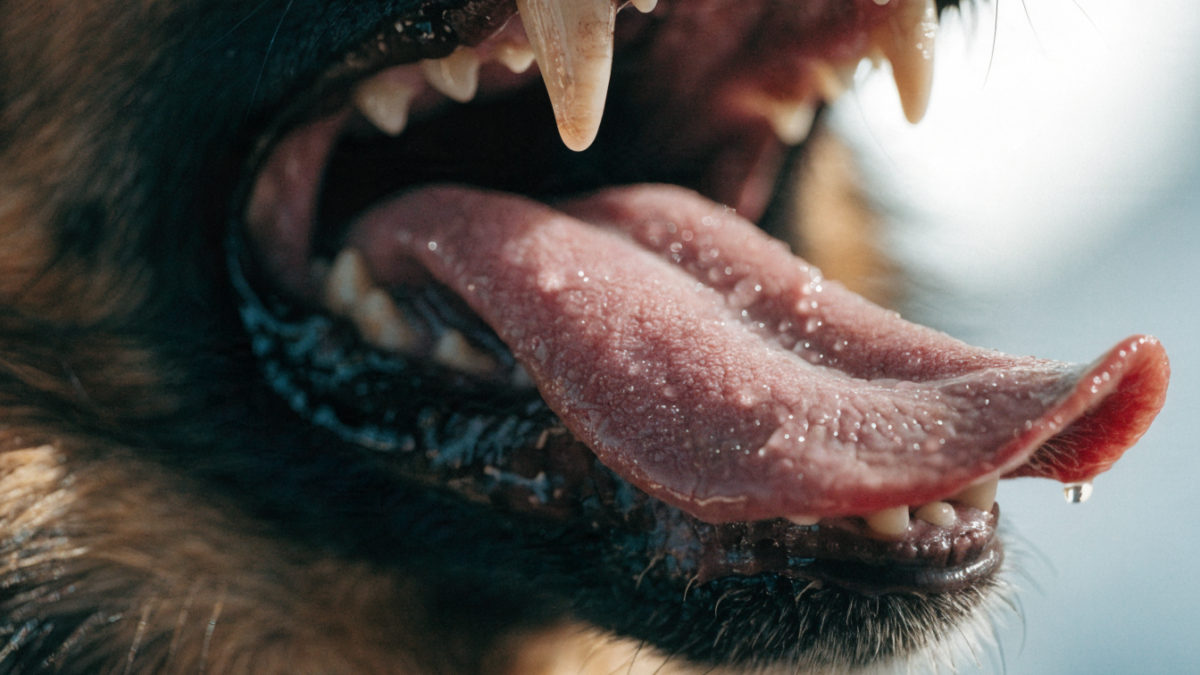
Let me guess — at some point in your life, someone told you that a dog’s mouth is cleaner than yours. Maybe it was your uncle at a family barbecue, watching his Golden Retriever enthusiastically lick a toddler’s face. Or maybe you read it online, sandwiched between articles about how swallowing gum stays in your stomach for seven years and how humans only use 10% of their brains. Here’s the thing: this myth comes up in clinics at least once a week, usually from well-meaning owners who see nothing wrong with their dog licking a scraped knee or planting a wet one right on their lips. So let’s settle this once and for all, because the answer matters more than you might think.
Where the “Healing Spit” Myth Actually Came From
The idea that dog saliva is some kind of natural antiseptic has been around for centuries, and honestly, I understand why people believed it. If you watch a dog get a small cut on its paw, what’s the first thing it does? It licks. And in many cases, that wound does seem to heal. Ancient physicians even noticed this — there are records from Egyptian, Greek, and Roman medicine suggesting that dog saliva had curative properties.
Here’s what’s actually happening: dog saliva does contain lysozymes, which are enzymes that can break down the cell walls of certain bacteria. It also contains small amounts of nitric oxide, another compound with mild antimicrobial effects. These are real, measurable properties. The problem is that people took a kernel of truth and stretched it into a blanket statement that dog mouths are inherently clean or sterile. They’re not. Not even close.
I think about a patient named Buckley, a four-year-old Beagle who came in last spring with a paw abscess. His owner, Martin, had let Buckley lick a small pad wound for days, genuinely believing the saliva would heal it. By the time Martin brought him in, the paw was swollen to twice its normal size and we had to put Buckley on antibiotics. “But I thought his spit was supposed to be antibacterial?” Martin said, looking genuinely confused. It is — mildly. But that mild effect is quickly overwhelmed when you’re dealing with the sheer volume and variety of bacteria living in that same mouth.
What’s Really Living in There
Thanks to recent advances in DNA sequencing, researchers have been able to map the canine oral microbiome — the complete community of microorganisms living in a dog’s mouth. The results are pretty eye-opening. A typical dog’s mouth hosts over 600 distinct species of bacteria. For comparison, human mouths harbor somewhere between 500 and 700 species. So numerically speaking, we’re in the same ballpark.
But here’s where it gets interesting: most of those bacterial species are completely different from the ones in your mouth. Dogs and humans evolved with separate oral ecosystems. The bacteria that thrive in a dog’s mouth are adapted to a dog’s diet, a dog’s immune system, and — let’s be honest — a dog’s lifestyle.
When a dog licks its own backside, snacks on something questionable it found under a bush, or greets another dog by sniffing rear ends, it’s picking up microbes that you and I simply don’t encounter in our daily lives.
So when people ask me “Whose mouth is cleaner — mine or my dog’s?” I have to give a frustratingly veterinary answer: it depends on what you mean by “cleaner.” Your dog’s mouth isn’t necessarily carrying more bacteria than yours, but it is carrying different bacteria. And some of those bacteria are things you really don’t want introduced into an open wound or your own mouth.
The “Seven Times Cleaner” Urban Legend
You may have heard a very specific version of this myth — that a dog’s mouth is “seven times cleaner” than a human’s. I’ve never been able to track down where that number came from, and I’m fairly certain someone just made it up at some point. There’s no scientific study, no peer-reviewed paper, no legitimate source that supports this claim. It’s complete fiction. Yet it gets repeated in casual conversation and shared on social media constantly. If you see it, please do us all a favor and gently correct it.
Should You Let Your Dog Lick Your Face?
This is where the conversation gets a little more nuanced, and where reasonable people can disagree. Let me walk you through what the science actually tells us.
For a healthy adult with a normally functioning immune system, the risk of getting sick from your dog’s saliva is genuinely low. Your skin is an excellent barrier. Your immune system is designed to handle everyday microbial encounters. Millions of dog owners receive affectionate face licks every single day without any consequences whatsoever. I’m not going to pretend otherwise.
However — and this is an important however — there are specific situations where you should absolutely draw the line:
- Open wounds: Don’t let your dog lick any cut, scrape, burn, or sore. The bacteria in dog saliva can cause infections, and in rare cases, serious ones.
- Your mouth and lips: Mucous membranes absorb bacteria much more readily than intact skin. Transferring dog oral bacteria directly into your mouth is unnecessary risk for no real benefit.
- If you’re immunocompromised: This includes anyone undergoing chemotherapy, living with HIV/AIDS, taking immunosuppressive medications, or dealing with conditions that weaken immune function. Also be extra cautious with very young infants whose immune systems are still developing, elderly individuals, and pregnant women.
I had a client named Ruth, a 67-year-old woman recovering from a kidney transplant. She was on heavy immunosuppressants to prevent organ rejection, and her little Cavalier King Charles Spaniel, Daisy, was her constant companion. When Ruth got a small scratch on her hand and Daisy licked it — something that had happened a hundred times before — it turned into a infection that landed Ruth in the hospital for four days. The culprit was Pasteurella, a bacterium that lives harmlessly in many dogs’ mouths but can cause real problems when it enters a body that can’t mount a strong immune defense.
The Bacteria You Should Know About
There’s one organism that’s been getting more attention in recent years, and I think it’s worth knowing about: Capnocytophaga canimorsus. This bacterium lives in the mouths of many healthy dogs and cats — it’s completely normal for them. But if it gets into a human bloodstream through a bite wound or, less commonly, through saliva entering an open wound, it can cause severe infection. In extreme cases, it’s led to sepsis and even amputation. These outcomes are rare, thankfully, but they tend to make headlines precisely because they’re so dramatic.
The key word here is rare. I don’t want you to panic about this. But if you’re in a higher-risk category and you experience a dog bite — even a small one — seek medical attention promptly. Dog bites are a different conversation entirely from playful licks. They create deep puncture wounds that trap bacteria under the skin where your immune system struggles to reach them. Any dog bite that breaks the skin warrants a call to your doctor.
What About Your Dog’s Dental Health?
Since we’re talking about what’s living in your dog’s mouth, let’s flip the conversation around. If you’re concerned about bacteria — and you should be — the most important thing you can do is maintain your dog’s oral health. Periodontal disease is one of the most common conditions I diagnose, affecting an estimated 80% of dogs by age three. Infected gums don’t just cause bad breath and tooth loss; they create a highway for bacteria to enter the bloodstream and affect the heart, liver, and kidneys.
I’ve changed my mind about dental care over the years. Early on, I thought of it as almost cosmetic — nice to have, but not urgent. After reading up on the systemic damage that chronic dental disease causes, I now consider it one of the most impactful things you can do for your dog’s overall health and lifespan.
Here’s what I recommend looking for:
- Daily tooth brushing with a veterinary-approved toothpaste (never use human toothpaste — the fluoride and xylitol are toxic to dogs). Look for products with the veterinary oral health council seal.
- Professional dental cleanings under anesthesia as recommended by your veterinarian. I know anesthesia makes people nervous, but modern protocols are very safe, and non-anesthetic cleanings simply can’t address what’s happening beneath the gumline.
- Dental chews and diets designed to reduce plaque — look for products backed by clinical research, not just marketing claims.
- Annual oral exams as part of your dog’s regular wellness check.
Always consult your own veterinarian for specific recommendations and dosages, because every dog’s situation is different.
So, Can I Keep Kissing My Dog?
Here’s my honest take: if you’re a healthy adult and your dog has a clean bill of health, the occasional face lick isn’t something to lose sleep over. The bond between humans and dogs is real, valuable, and backed by decades of research showing tangible benefits to our mental and physical health. I’m not going to tell you to stop loving your dog the way you love your dog.
But let’s retire the myth. Your dog’s mouth is not cleaner than yours. It’s not sterile. It’s not an antiseptic. It’s a living ecosystem full of bacteria — some helpful, some harmful, most just occupying space. Knowing that helps you make informed choices about when those slobbery kisses are fine and when they’re worth avoiding.
And please — whatever you do — don’t let your dog lick your wounds. Buckley and his abscess would tell you the same thing if he could.
This article is based on current veterinary research and clinical experience. For specific guidance about your dog’s oral health or your own medical concerns, always consult with your veterinarian or physician. Learn more at.[1] and [2]
Sources
- PetMD — petmd.com
- Trooper Vet — troopervet.com