

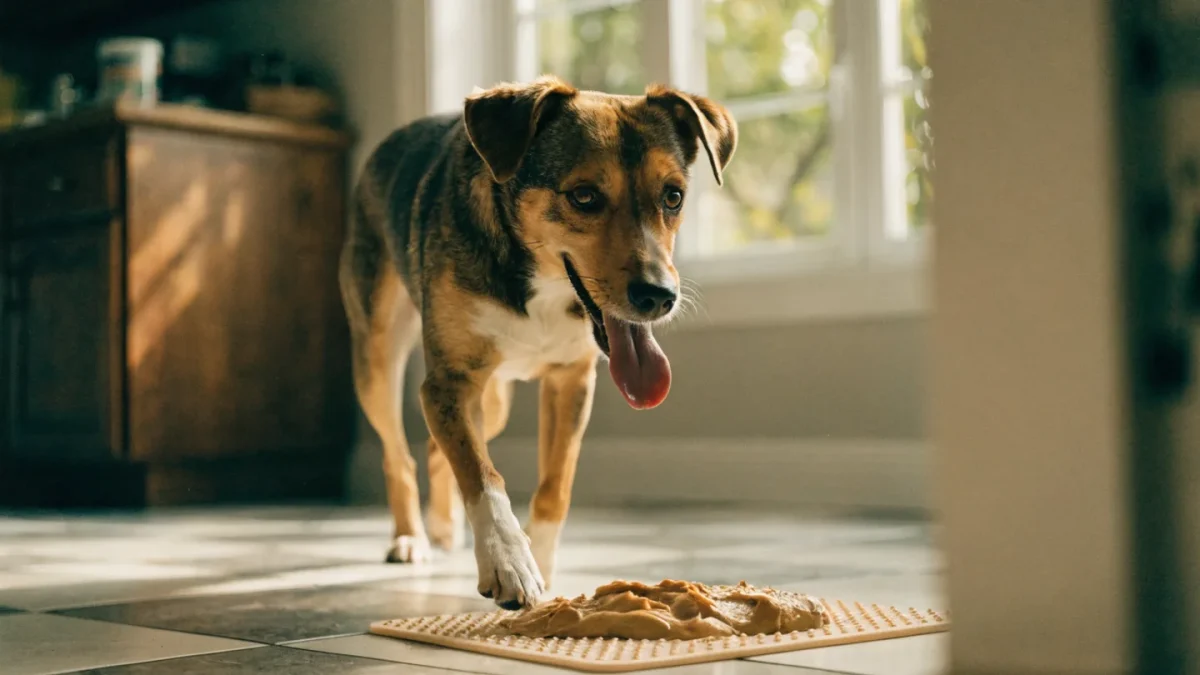
I started recommending lick mats to anxious dogs a few years back after seeing the research on how licking affects cortisol levels. I was skeptical at first — it seemed too simple. But the results spoke for themselves.
Dogs that were panting and pacing before vet visits calmed down noticeably in the ten minutes before we left. Dogs that were restless in new environments settled faster with a stuffed food toy. The licking itself was doing something.
Why Licking Is Calming
The mechanism isn't complicated. Repetitive, rhythmic actions — licking, chewing, swallowing — stimulate the parasympathetic nervous system. This is the "rest and digest" state, the opposite of the "fight or flight" response.
When a dog is stressed, the sympathetic nervous system is activated — cortisol is released, heart rate goes up, focus narrows. Repetitive licking is a behavioral outlet that actively counters this state. Research supports that repetitive oral behaviors like licking release endorphins and engage parasympathetic pathways — it doesn't eliminate the stressor, but it gives the nervous system a competing signal that measurably shifts physiological arousal state.
This is the same reason dogs mouth-handle food carefully when stressed rather than gulping it down — the oral action itself is self-regulating.
Lick Mats
A lick mat is a flat silicone mat with raised texture — grooves, bumps, and patterns that food can be spread across and into. The texture makes licking more effortful and extends the time spent.
What to put on them:
- Plain peanut butter (no xylitol — check labels)
- Canned pumpkin (plain, unsweetened)
- Wet dog food
- Plain Greek yogurt
- Cream cheese
- Blended banana
- Any spreadable food your dog tolerates
How to prepare:
Spread the food into the textured surface, pushing it into grooves so it takes real effort to lick out. For longer engagement and more cooling benefit, freeze for 2-4 hours before use.
When to use:
- Before vet visits or grooming
- During thunderstorms or fireworks
- During crate time or separation
- For settling during mealtimes while you eat
- As a post-exercise wind-down
A fresh lick mat lasts 5-15 minutes. A frozen one lasts 20-40 minutes depending on size and temperature.
Frozen Hollow Food Toys
Hollow rubber food toys stuffed and frozen work on the same licking-and-foraging principle but add problem-solving — the dog has to work to extract the food from the cavity.
Basic stuffing approach:
- Plug the small hole at one end with a piece of dry kibble or a small piece of fruit
- Fill with a mix of wet food, kibble, and a spreadable like peanut butter or yogurt
- Pack it in as tightly as possible for longer engagement
- Freeze overnight
Layering for variety:
Layer different textures: dry kibble at the bottom, wet food layer, kibble, spread on top. Different textures and flavors create variety as the dog works through it.
Difficulty levels:
- Easy: fresh, loosely filled
- Moderate: frozen, moderately packed
- Difficult: frozen solid, tightly packed with varied textures, small hole only
Start easy and build — a dog that can't get anything out gives up, which defeats the purpose.
Using These Strategically
The most effective use isn't just "give the dog something to do." It's anticipatory pairing — giving the lick mat or frozen toy before a stressor arrives, so the calming state builds before stress escalates.
Creating a safe space for anxious dogs often involves exactly this: a crate or quiet spot where the dog reliably receives these calming tools, building a positive association with the space.
If your dog is anticipating something stressful in 15 minutes, give the frozen toy now. By the time the stressor arrives, the licking session has already started the physiological shift.
Cleanup and Safety
Silicone lick mats are dishwasher safe — wash after every use, especially with dairy products. Inspect food toys before each use for cracks or worn areas where bacteria can accumulate.
Don't use lick mats as a primary meal replacement long-term — they're enrichment, not a nutrition delivery system. And don't introduce them right before a very triggering event for an anxious dog who has no history with them. Condition the tool positively first in a calm context.
One more thing: dogs that finish their frozen toy and then lie down and nap are not unusual. That's the tool working exactly as intended.