

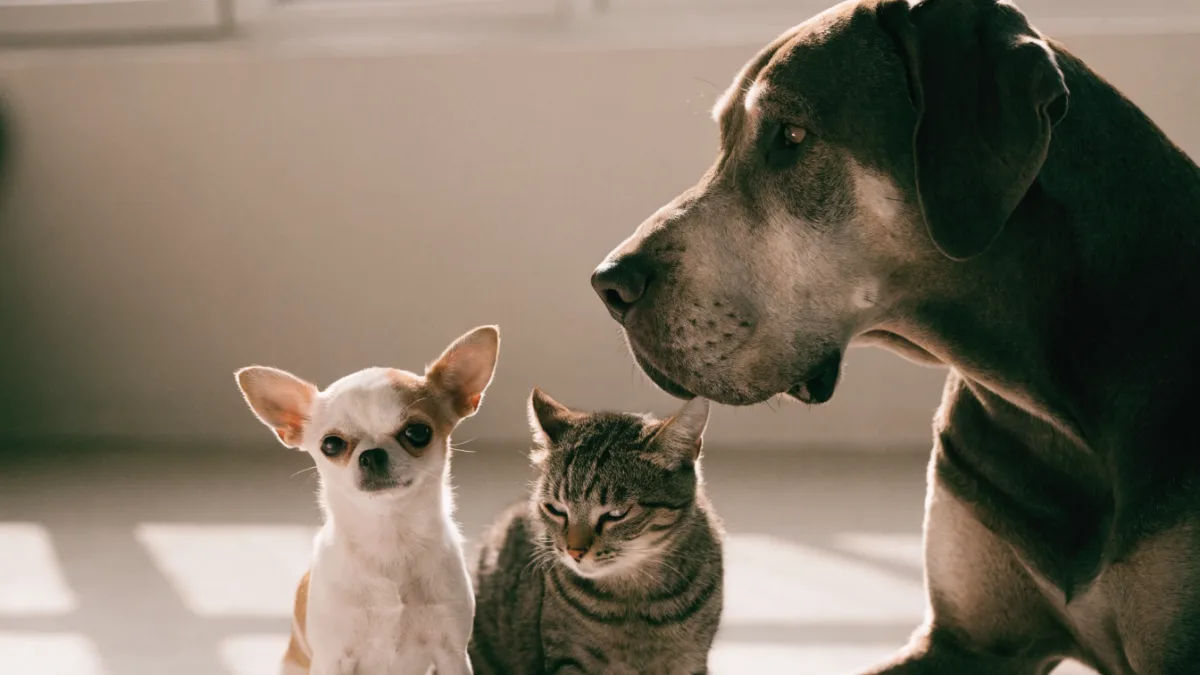
I’ll never forget an appointment I had a few years ago with a lovely woman named Karen and her two dogs. She had brought in Buster, a massive, gentle Great Dane, and Noodle, a scrappy little Chihuahua mix. Buster was seven years old, and his muzzle was already heavily flecked with gray. He moved with the slow, deliberate stiffness of a dog whose joints had seen better days. Noodle, on the other hand, was fourteen, bright-eyed, and practically vibrating with energy, trying to sniff my pockets for treats.
Karen looked at me, completely baffled, and asked, “How is my forty-pound dog in the prime of her life, while my hundred-and-forty-pound dog is an old man?”
It’s a question that comes up all the time. It defies everything we intuitively know about the natural world. But when we look closely at the biology of our pets, the lifespan gap between small dogs, cats, and giant breeds tells a fascinating—and sometimes heartbreaking—scientific story.
The Great Biological Paradox
To understand why giant dogs age so quickly, we first have to look at a rule that governs almost the entire mammalian kingdom. In the wild, bigger species live longer than smaller ones. Elephants can live for 70 years, while mice are lucky to see their second birthday. Generally speaking, larger animals have slower heart rates and slower metabolisms, which seems to protect them from the cellular wear and tear that causes aging.
But within the single species of Canis lupus familiaris—the domestic dog—this rule completely flips. As researchers at the University of Melbourne,[1] the dog is a unique biological anomaly. A tiny Pomeranian will likely outlive a towering Mastiff by several years.
The average lifespan for a large or giant dog is about 7 to 8 years. Small dogs, on the other hand, routinely average about 14 years, with many reaching the ripe old age of 18. Cats share a similar lifespan to small dogs, often living anywhere from 12 to 15 years or more.
The Tax of a Massive Frame
So, why does nature’s rule break down in our living rooms? The answer comes down to the sheer biological strain of carrying a massive frame.
Giant breeds don’t just grow larger; they grow faster. A Great Dane puppy will gain tremendous amounts of weight in just a few months. Their bodies work in absolute overdrive to multiply cells and build bone mass at an accelerated rate. This rapid cell division comes with a heavy metabolic toll. The faster a cell divides, the more vulnerable it is to DNA damage and oxidative stress—an influx of free radicals that essentially rust the body from the inside out.
Because their bodies are working so hard just to maintain their massive size, giant dogs experience accelerated cellular aging. This is why a giant breed is considered a “senior” citizen at just 4 years old. Small dogs and cats, whose bodies don’t have to sustain that explosive growth or carry around hundreds of pounds, don’t reach senior status until they are 10 years old.
The Onset of Age-Related Diseases
Because giant dogs are biologically “older” on the inside, they are highly susceptible to age-related health issues much earlier in life. This manifests in three main ways:
- Joint Problems: The sheer weight of a giant dog puts immense pressure on their skeletal system. Conditions like osteoarthritis and hip dysplasia set in early and progress rapidly.
- Heart Disease: A giant dog’s heart has to work incredibly hard to pump blood through a massive vascular system. This often leads to conditions like dilated cardiomyopathy, where the heart muscle stretches and weakens.
- Certain Cancers: Because their cells divide so rapidly during growth, there is a higher statistical risk for mutations. Bone cancer (osteosarcoma) is tragically common in giant breeds.
Is It Size, or Is It the Breed?
If you spend any time browsing pet forums, you’ll find an [2] among pet owners: is early death in large dogs strictly a result of their physical size, or is it the breed itself?
It’s a fascinating discussion. Most researchers agree that it’s a combination of both, but genetics play a massive role. Purebred dogs, especially giant ones, often have a much narrower gene pool. Historically, to create dogs that looked a specific way, breeders had to rely on inbreeding, which unfortunately concentrates bad genetic traits alongside good ones.
This is where the “mixed-breed advantage” comes in. Mixed-breed dogs tend to outlive purebred dogs simply because they have greater genetic diversity—a biological concept known as hybrid vigor. When you mix a Mastiff with a Labrador, you instantly widen the gene pool, offering a protective shield against the inherited diseases that plague purebreds.
Redefining “Senior” Care
Because giant dogs are considered seniors at age 4, there is an ongoing debate in the veterinary community about how early we should intervene with senior-specific care.
I’ll admit, I’ve changed my mind on this over the years. Early in my career, I used to wait until a large dog showed signs of slowing down before recommending joint supplements or diet changes. Now? I start the conversation at age three.
I often have owners ask me if they can give their giant breed puppy joint supplements or home remedies like golden paste (turmeric) to protect their joints as they grow. I completely understand the impulse—you want to protect your giant baby from future pain. While turmeric has wonderful anti-inflammatory properties, I always redirect owners to evidence-based care. Rather than relying on home remedies to fix a problem, we need to focus on scientifically formulated chondroprotective agents (like glucosamine and chondroitin) and, most importantly, strict weight management.
Keeping a giant breed lean is the single most effective way to reduce the metabolic toll on their frame. But before starting any new supplement regimen, always consult your vet to ensure it’s safe for your specific dog’s growth rate.
Feline Longevity and a Troubling New Trend
While dogs get most of the press for their weird aging rules, cats are not immune to lifespan fluctuations. Cats generally outlive dogs across the board. A well-cared-for indoor cat can easily live 15 to 20 years. Their metabolism and growth rate are perfectly paced, and they don’t have the massive weight extremes that dogs do.
However, recent [3] revealed something surprising. In 2019, researchers noted a small but notable decrease in life expectancy. This decline specifically impacted toy and giant dog size groups, as well as domestic cats.
Why are we seeing this modern dip in longevity? The data is still being parsed, but researchers point to a few likely culprits. For cats, an increase in indoor obesity and related diseases like diabetes is taking a toll. For dogs, modern breeding practices that push the limits of size—whether breeding dogs to be unnaturally massive or unnaturally tiny (like “teacup” breeds)—are introducing new health vulnerabilities. Access to veterinary care and emerging health trends also play a complex role in these shifting statistics.
When Karen brought Buster and Noodle in that day, there was no magic pill to turn back the clock for her big boy. Instead, the plan was proactive: a joint-supportive diet, pain management tailored to his size, and modified, low-impact exercise like swimming. Buster crossed the rainbow bridge at age nine, but those last two years were comfortable, pain-free, and full of joy.
The lifespan gap between a Chihuahua and a Great Dane is a humbling reminder of the biological compromises we make when we selectively breed animals. We can’t change the genetic hand our pets are dealt, but understanding their biology allows us to shift our focus. We might not be able to guarantee them the longest life, but with proactive, evidence-based care, we can absolutely guarantee them the best possible life for whatever time they have.
Sources
- point out — pursuit.unimelb.edu.au
- ongoing debate — reddit.com
- clinical data derived from veterinary records — pmc.ncbi.nlm.nih.gov