

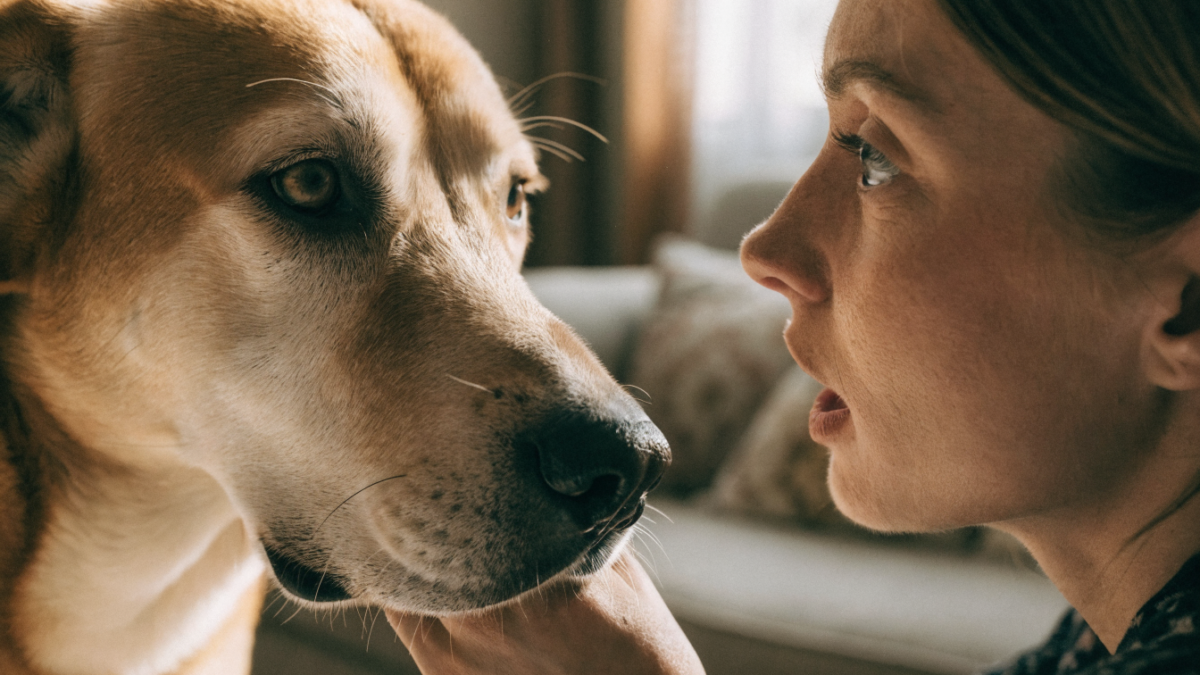
Stories like Clara’s are the reason medical alert dogs get studied at all. Clara brought her 7-year-old Golden Retriever, Maisie, into a clinic, near tears. “She won’t leave me alone,” she said. “She keeps pawing at my legs and staring at me. I think something’s wrong with her.” As Clara sat and talked, Maisie planted herself firmly between Clara’s knees, staring up with an intensity that put everyone in the room on edge. Fifteen minutes later, Clara seized. That dog knew. She’d known before any of the people did.
That was twelve years ago, and it fundamentally changed how I think about the animals sharing our homes. We’ve long known that dogs and cats have remarkable noses, but the medical community is finally catching up to what pet owners have whispered about for decades: our animals can smell illness. Not metaphorically, not mystically, but biochemically. And for people living with seizure disorders and diabetes, that superpower isn’t just fascinating. It’s lifesaving.
The Nose Knows: Why Dogs Out-Smell Every Machine We’ve Built
Let’s start with the hardware, because it’s genuinely staggering. A dog’s olfactory system is up to 100,000 times more sensitive than yours or mine. While humans limp through life with about 6 million olfactory receptors in our nasal passages, dogs possess up to 300 million. Their noses are built like chemical analysis laboratories, with a specialized structure that lets them separate and identify individual scent molecules in ways our technology still struggles to match.
When I explain this to clients, I often use this comparison: imagine walking into a restaurant and smelling “food.” That’s human-level detection. Now imagine walking in and identifying every single ingredient in every dish being prepared, the cleaning solution used on the counters that morning, and the perfume worn by the woman who sat at your table three hours ago. That’s the canine experience.
What Exactly Are They Smelling?
Here’s where it gets medically fascinating. Your body is constantly releasing what scientists call Volatile Organic Compounds, or VOCs. These are chemical compounds that evaporate at room temperature and drift off your skin, your breath, your sweat. The specific “recipe” of these VOCs changes based on what’s happening inside you.
When someone’s blood sugar crashes dangerously low, their body shifts into a different metabolic state and produces different chemical byproducts. When a seizure is brewing in the brain, a cascade of neurochemical changes alters the body’s scent signature before any physical symptoms appear. Dogs aren’t sensing electrical activity in the brain. They’re smelling the biochemical aftermath that bubbles up through breath and skin.
I used to think the stories about medical alert dogs were exaggerated. Then I started paying closer attention to the case literature on epilepsy and diabetes alert dogs. The pattern was impossible to ignore.
Seizure-Alert Dogs: Early Warning Systems on Four Paws
Specially trained seizure-alert dogs can warn their owners of an impending seizure anywhere from 15 to 45 minutes before it happens. That window is everything. It’s enough time to sit down somewhere safe, take rescue medication, call for help, or get to a protected environment. For someone living with uncontrolled epilepsy, that lead time can mean the difference between a manageable medical event and a traumatic injury.
I think of Marcus, a 34-year-old construction worker I’ve been treating for years. After his third concussion from falling during unexpected seizures, he was ready to give up his career. His neurologist suggested a seizure-alert dog. He ended up partnered with Greta, a smooth-coated Collie who alerts by circling him and making intense eye contact. Last spring, Marcus told me that Greta alerted while he was on a job site, giving him time to climb down safely. “She gave me my life back,” he said quietly.
How the Alerting Works
Every dog alerts differently, and that’s actually intentional. Trainers work with each dog’s natural tendencies. Some dogs paw persistently at their owner’s leg. Others bark. Some lie down across their owner’s feet to anchor them in place. The key is that the behavior is distinctive and unmistakable, something the dog would never do in any other context.
Beyond alerting, many of these dogs are also trained as response dogs. During or after a seizure, they can fetch medication, press emergency alert buttons, position themselves to cushion their owner’s fall, or lie beside them to prevent injury. The training process is rigorous, typically lasting 18 to 24 months, and the dogs who graduate are performing at a level that genuinely humbles me.
The Accuracy Question
Studies have shown that highly trained medical alert dogs achieve accuracy rates between 80 and 90 percent for detecting severe blood sugar drops and impending seizures. That’s not perfect, and I’m always upfront with clients about that. No alert dog should replace medical monitoring. But as an additional layer of protection, that accuracy rate is remarkable.
Cats: The Unsung Medical Alert Team
Now let’s talk about cats, because they deserve more credit than they get in this conversation. Cats have roughly 30 to 40 million olfactory receptors. That’s nowhere near a dog’s 300 million, but it’s still significantly more than humans. They also possess something we don’t: the Jacobson’s organ, or vomeronasal organ, located in the roof of their mouth. When a cat seems to be grimacing with their mouth slightly open, they’re actually funneling scent molecules into this specialized organ. They’re essentially tasting the air.
While dogs go through formal training programs, cats tend to be what I call “natural alerters.” There are hundreds of documented cases of house cats waking their owners from dangerous hypoglycemic sleep by aggressively pawing at their face, meowing loudly, or even knocking items off nightstands to create enough noise to rouse the household.
One of my long-term patients, an older tuxedo cat named Sergei, started waking his owner, Diane, every night around 3 AM. Diane thought it was behavioral. She tried feeding him later, playing with him more before bed, even closing the bedroom door. Sergei howled through it. When Diane finally mentioned it during a routine visit, I suggested she check her blood sugar during one of these episodes. It was crashing to dangerous lows overnight, something her daytime monitoring had completely missed.
What was Sergei smelling? Likely the acetone and other metabolic byproducts that appear during severe hypoglycemia, or even early diabetic ketoacidosis. That sweet, fruity scent on the breath that doctors are trained to watch for, cats can detect at much lower concentrations than any clinic test.
The Training Gap: Why Cats Stay Home
Here’s something I have to explain to clients frequently, and it often frustrates them: in the United States, under the Americans with Disabilities Act, only dogs, and occasionally miniature horses, can be legally recognized as service animals. Cats cannot be classified as service animals. They don’t have public access rights to restaurants, stores, or workplaces. They can be recognized as Emotional Support Animals for housing purposes, but that’s a different designation entirely.
This doesn’t diminish what cats do. It just means their medical alerting happens at home, where most dangerous nocturnal episodes occur anyway. For someone with diabetes who lives alone, a cat who insists on waking them during a nighttime blood sugar crash is performing genuinely lifesaving work, regardless of what legal category they fall into.
Prediction or Observation? The Scientific Debate
I want to be transparent about something that’s still being argued in the research community. Some scientists believe that what we call “medical alerting” isn’t actually prediction, it’s observation. They argue that dogs are detecting subtle micro-tremors, gait changes, or breathing pattern shifts that occur before seizures or blood sugar crashes, rather than smelling anything in advance.
I’ve followed this debate closely, and honestly, I’ve gone back and forth. But the more recent research has tilted me firmly toward the scent theory. Several well-designed studies have isolated sweat and breath samples from people before, during, and after seizures, then presented them to trained dogs in controlled settings. The dogs alerted to the pre-seizure samples without any human behavioral cues present. They were working from smell alone. The body produces something during a pre-seizure state that dogs can detect.
When Technology Meets the Nose
The research happening right now genuinely excites me. Scientists are working to identify the exact VOCs that dogs detect during seizures, blood sugar crashes, and even certain cancers. The goal is to create wearable “electronic noses,” devices that can mimic canine detection and alert wearers to physiological changes before symptoms hit.
Until those devices exist, we’re seeing an interesting competition between medical alert dogs and current wearable technology. Continuous Glucose Monitors have revolutionized diabetes management, and smartwatches can detect seizure-like movements. But comparative studies consistently show that dogs often alert to silent nighttime blood sugar drops faster than CGMs register them. The dog smells the metabolic shift before it shows up in the interstitial fluid the monitor is testing.
I’m not suggesting anyone abandon their CGM or smartwatch. But the data suggests these tools work beautifully together. The technology catches what the dog might miss. The dog catches what the technology hasn’t detected yet.
A Word of Caution About “Certified” Alert Dogs
This is where some straight talk is needed. Because medical alert dogs are so valuable, there’s a lucrative and largely unregulated market for them. Families spend thousands on dogs sold as “certified medical alert animals” who arrive with virtually no training. Online registries that offer to “register” your pet as a service animal for a fee mean absolutely nothing legally or practically.
If you or someone you love is considering a medical alert dog, look for organizations accredited by Assistance Dogs International or similar recognized bodies. Ask about their training protocols, success rates, and follow-up support. Expect the process to take time. A well-trained medical alert dog is an investment, and the legitimate organizations producing them are worth the wait.
The Breeds Doing This Work Best
Recent data from nonprofit training programs points toward certain breeds consistently rising to the top for medical alert work. Golden Retrievers and Collies are increasingly favored because they combine exceptional olfactory sensitivity with what trainers call “emotional intelligence,” the ability to stay calm under pressure and work cooperatively with humans. Labs remain popular choices as well. But breed is less important than the individual dog’s temperament, work drive, and bond with their person.
What strikes me most after years of watching these animals work is how the relationship transforms both partners. People who lived in constant fear of the next seizure or blood sugar crash find themselves trusting the world again. They sleep through the night. They take jobs they would have declined. They travel. The medical alert is almost secondary to the freedom.
And the animals themselves seem to find purpose in the work. I’ve watched alert dogs transform from anxious, under-stimulated pets into focused, confident partners once given a job that matters.
The bond between humans and domestic animals has always been deeper than utility. We share our homes with dogs and cats for companionship, comfort, and joy. But for some people, that bond is also a lifeline. The next time your dog stares at you intently for no apparent reason, or your cat insists on being close when you’re feeling off, consider that they might know something you don’t. Their noses have been reading your body’s chemical story all along.
We don’t need to mystify what these animals do. The science is catching up to what they’ve been showing us for generations. Dogs and cats aren’t psychic. They’re equipped with sensory capabilities we’re only beginning to understand, and they’ve chosen to use those capabilities to keep us safe. That’s not magic. That’s something better. That’s evolution creating a partnership where we protect each other, one scent molecule at a time.