
Every July, I get a wave of calls. Dogs that were "fine" until the fireworks started. Dogs that have progressively gotten worse over the years. Dogs that started destroying the house, or panting for hours, or trying to crash through windows.
Noise phobia is one of the most distressing experiences a dog can have — and one of the most undertreated. People wait until the event is happening and then have nothing to offer the dog. The time to work on noise phobia is months before the next noisy season.
Why Noise Phobia Often Gets Worse Over Time
Left untreated, noise phobia tends to escalate. Each terrifying storm or fireworks night adds to the emotional intensity of the association. The threshold for triggering panic can lower — eventually sounds that are just similar to fireworks (a car backfiring, a door slamming) start triggering the same panic response.
This is sensitization, the opposite of what you want. The way to avoid it is treatment, not waiting.
The Signs
Beyond the obvious (cowering, shaking, hiding), noise phobia can present as:
- Pacing and restlessness hours before a storm (dogs can detect pressure changes and distant thunder before humans can)
- Destructive escape attempts — going through walls, doors, fences
- Excessive drooling, panting, yawning
- Seeking out the owner obsessively
- Toileting inside despite being housetrained
- Self-injury in escape attempts
Treatment: The Three-Part Approach
Part 1: Safe space and environmental management
Give the dog a space they can choose to be in during events — not forced, chosen. An interior room with the least sound penetration, a covered crate if the dog loves their crate, white noise running. This doesn't fix the phobia but reduces acute distress.
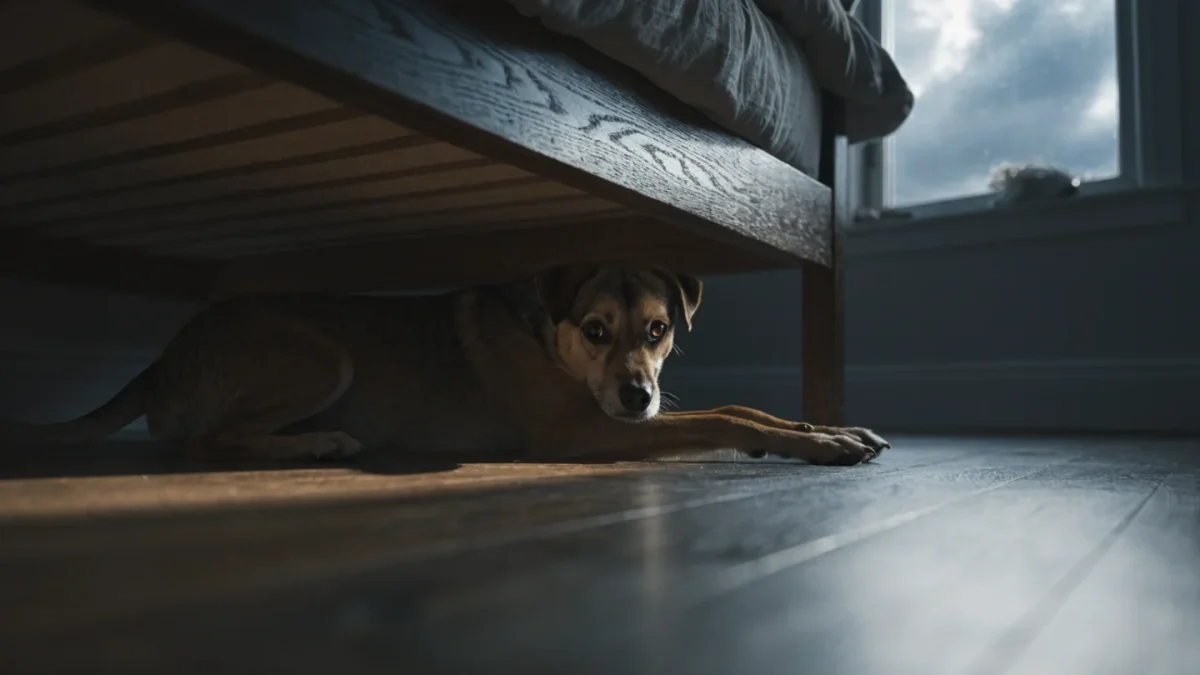
Some dogs feel safer in places they can fit tightly (behind the toilet, under the bed). That's fine — don't try to coax them out. Let them choose.
Part 2: Sound desensitization
This is the long-game treatment. See sound desensitization protocol for dogs for the full step-by-step, but the principle is:
Play recorded versions of the triggering sounds at very low volume. Pair with high-value food and positive activities. Over many sessions across weeks and months, gradually increase the volume. The goal is to change the dog's emotional association with the sound.
This only works if started at truly low intensity — so low the dog doesn't react. Starting too loud triggers the fear response rather than desensitizing it. It also only works if practiced regularly, and ideally started well before the actual event season.
Part 3: Medication for acute events
For moderate-to-severe cases, behavior modification alone during the actual event often isn't enough. This is squarely vet territory, not mine — but the short version is that medication for noise aversion generally falls into two buckets: something given ahead of a known event (a storm in the forecast, a fireworks holiday), and longer-acting daily options for dogs whose anxiety isn't limited to single events. Which bucket, which drug, and the dose is a conversation for your vet or a board-certified veterinary behaviorist — not something I'll guess at here.
The key distinction: sedatives (which just make the dog "look calm" while still being internally terrified) are different from anxiolytics (which actually reduce the anxiety). The goal is reducing the fear, not just physical sedation.
What Doesn't Help
Forcing the dog to "face" the fear at full intensity. Flooding (intense exposure) is not a reliable treatment for fear and can worsen phobia significantly.
Ignoring it and hoping it improves with time. Untreated noise phobia reliably gets worse, not better.
Punishing the fear response. Same principle as with aggression — you can't punish away an emotional state.
FAQ
My dog was fine with fireworks until last year. What changed?
Noise phobia can emerge later in life rather than being present from puppyhood. Triggers include aging (older dogs are more likely to have pain or hearing changes that amplify sound sensitivity), a particularly intense single experience, or cumulative sensitization over time.
Will pressure wraps help?
Some dogs respond well to pressure garments during noise events. The research is mixed on efficacy across the board — some dogs clearly get comfort from it, others don't. It's worth trying as a management tool, but it's not a treatment.
I work during the day and can't do the protocol. What do I do?
Short regular sessions of 10-15 minutes are effective. Even three sessions a week of sound desensitization work is meaningfully better than nothing. You don't need to be home all day.