

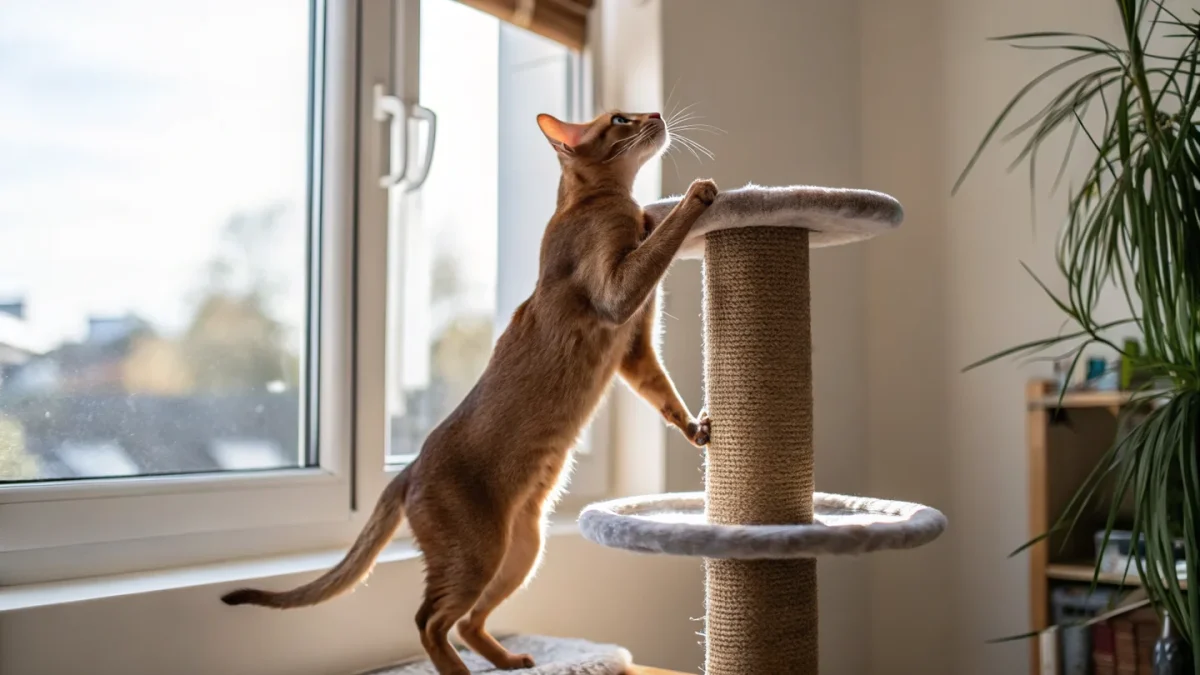
The Oriental Shorthair collects misconceptions with an efficiency that's almost impressive. Some come from the breed's visual relationship to the Siamese. Some come from the lean body type that reads as fragile to people who associate feline health with roundness. Some come from wishful thinking about the coat. Here are the most common ones, with what's actually true.
For the full breed picture, the complete Oriental Shorthair breed guide goes deeper on history, health, and care. This article is specifically about the mistakes people make before or shortly after getting one.
1. "It's just a Siamese in a different color"
This is the most common one, and it has a grain of truth that makes it sticky. The Oriental Shorthair and Siamese do share body type, voice, and general personality. They are regularly outcrossed for genetic diversity. But the Oriental Shorthair has been selectively developed as its own breed since the 1950s, with its own gene pool, its own standard, and its own 70-year history.
An ebony Oriental Shorthair isn't a "colorful Siamese" any more than a Labrador is a "yellow Golden Retriever." The shared family history doesn't erase the independent development.
2. "They're fragile because they look so skinny"
The lean body type fools people. Oriental Shorthairs are not fragile. They're muscular, athletic cats with a deceptively efficient build. Lifespans of 12-15 years are common. Individuals reaching 18 are not unusual. The absence of excess body mass doesn't indicate fragility — in fact, the lean build avoids the joint and cardiovascular stress that excess weight creates in cobby breeds.
3. "They must be low-allergen because the coat is so short"
The short coat does mean less airborne fur, and some people with mild cat allergies tolerate Oriental Shorthairs better than heavy-shedding breeds. But "low-allergen" and "hypoallergenic" are not the same thing, and the Oriental Shorthair is not hypoallergenic. The breed produces Fel d 1 — the primary cat allergen — at normal rates. The shorter, finer coat may distribute less of it, but the protein is still present. There is no guarantee for allergy sufferers.
4. "They need special diet because they're so thin"
Oriental Shorthairs have normal nutritional requirements. They don't need caloric-dense special diets to maintain their lean build — the lean build is genetic, not a consequence of insufficient feeding. Overfeeding an Oriental Shorthair produces an overweight, unhealthy cat, not a more robust-looking one. Twice-daily scheduled meals with a high-protein diet appropriate for the cat's age and activity level is what they need.
5. "If they're vocal, they must be unhappy"
The Oriental Shorthair's vocal nature leads some new owners to interpret constant meowing as distress. It usually isn't. These cats vocalize about everything, including contentment, greeting, mild curiosity, and a desire for company. The Oriental Shorthair temperament and social needs goes into the range of vocalizations in detail. A stressed Oriental Shorthair does vocalize differently — with more urgency and at unusual hours — but the baseline conversational chatter that runs through their day is normal expression, not distress.
6. "They're too high-maintenance for most people"
This one is partially right but often overstated. The grooming is genuinely simple — weekly brushing for the minimal coat. The dietary needs are standard. The health concerns are manageable with routine veterinary care.
What is genuinely demanding is their social requirement: they need company, interaction, and stimulation. But "high-maintenance" usually implies complexity or unpredictability, and the Oriental Shorthair is neither. Their needs are clear and consistent. Meeting them is a matter of household fit, not complexity. An owner whose life suits the breed's social requirements will not find them high-maintenance at all.