

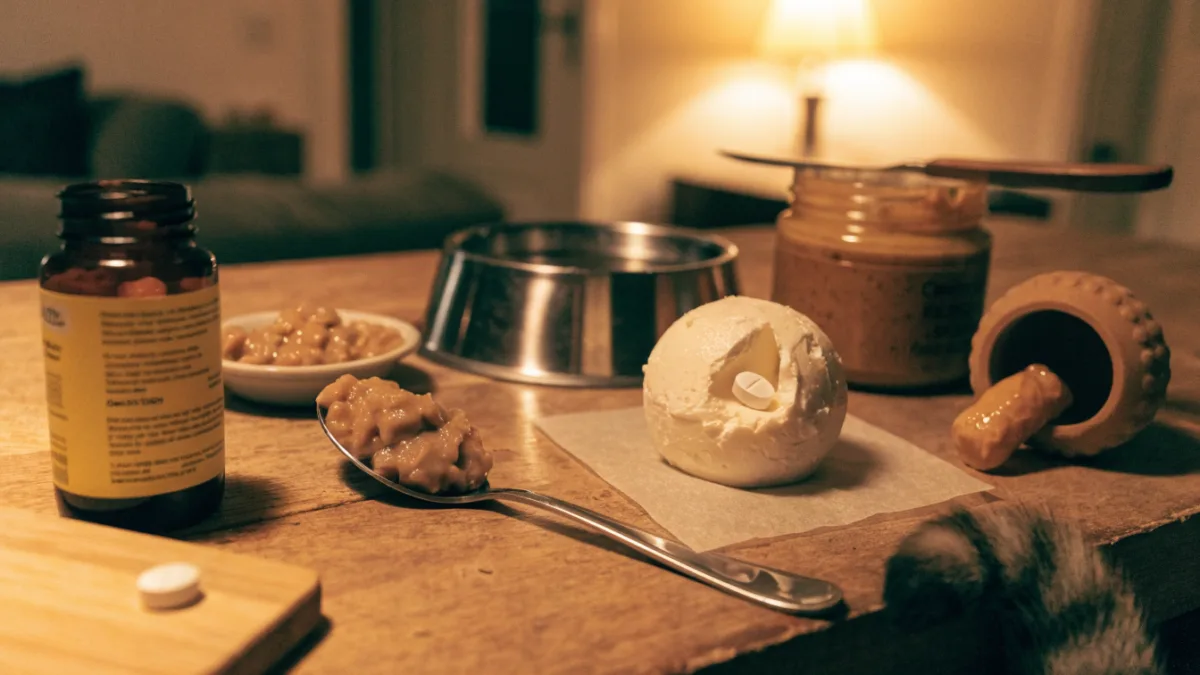
If you have a senior pet or an animal managing a chronic illness, you already know that the daily medication routine can feel like a battle of wits. Just last week, I sat in my exam room with Mark, who was near tears trying to give his 14-year-old Beagle, Buster, a daily dose of fluoxetine (often known by the brand name Prozac) for severe separation anxiety. Mark told me, “I feel like I’m poisoning our bond. He runs away the second I open the pill bottle.”
Whether you are dealing with a anxious dog or a grumpy senior cat, the stress of administering medication is incredibly real. Owners often worry that forcing pills will damage their relationship with their pets. But medicating your pet doesn’t have to be a wrestling match. With a few proven pet medication tricks, you can bypass the picky eating, avoid the bitter taste of medications like Gabapentin, and keep those tails wagging.
The Art of the Bribe: Hiding Meds in Food
Whenever an owner asks me for the easiest way to give dog medicine, I always start with the same advice: use their nose against them. Scent is the most effective way to mask the medicinal smell that pets can easily detect.
When my patient Elena was struggling to give her 12-year-old Maine Coon cat, Barnaby, his daily arthritis medication, she tried hiding it in a piece of deli ham. Barnaby happily ate the ham, leaving a suspiciously clean, slightly wet pill on the kitchen floor. Cats and intelligent dogs are experts at separating the “vehicle” from the medicine.
Choosing the Right “Vehicle”
To outsmart a cautious pet, you need wet, strong-smelling foods. The goal is to completely encapsulate the pill so no bitter powder leaks out. Excellent options include:
- Wet cat or dog food: Use a pate-style food, which is easy to mold around a tablet.
- Tuna: A small piece of tuna packed in water can easily mask a pill’s scent.
- Peanut butter: A classic for dogs. Just be sure to check the ingredient list to ensure it does not contain xylitol (sometimes listed as birch sugar), which is highly toxic to dogs.
- Meat-flavored baby food: Check the label to ensure there is no garlic or onion powder in the ingredients.
- Moldable soft treats: Look for commercially available soft treats specifically designed to be stretched and molded around pills.
The Danger of Food Aversion
Here is a mistake I see far too often, and I’ll admit, I’ve changed my mind on this over the years based on what I’ve seen in clinical practice. Early in my career, I used to tell owners to just crush the pill into their pet’s normal bowl of kibble or regular wet food.
The problem? Many chronic medications are incredibly bitter. If you hide a bitter pill in your cat’s favorite everyday food, you risk causing a food aversion. I’ve treated several cats who permanently refused to eat their once-favorite pate because they associated the smell with a bad taste. Always use a “high-value” treat that is entirely separate from their daily nutrition so their regular meals remain a safe, positive experience.
How to Pill a Cat When the Food Bribe Fails
Let’s be honest—some cats simply will not fall for a food bribe, no matter how fragrant the tuna is. When that happens, you need to know how to pill a cat directly. It feels daunting, but it is a quick, mechanical process once you get the hang of it.
The most important rule is to be firm but gentle. You aren’t trying to hurt them; you are simply helping them swallow.
Step-by-Step: The Direct Method
If you need to physically give your cat a pill, follow these steps:
- Prep your space: Sit on the floor with your cat backed against your body so they cannot back away from you.
- The “Burrito” wrap: Gently wrap your cat in a soft towel. This makes them feel secure and prevents them from swatting at your hands with their claws.
- Open the mouth: Use your non-dominant hand to gently grasp the top of their head, placing your thumb and forefinger right behind their cheekbones. Tilt their head straight back. When their head is tilted back, their lower jaw will naturally drop open slightly.
- Place the pill: Use your dominant hand to drop the pill as far back on the center of their tongue as possible.
- Trigger the swallow: Hold their mouth closed and gently stroke their throat in a downward motion. You can also lightly blow on their nose. Both of these actions trigger the natural swallowing reflex.
If you find that your cat is a master at spitting pills back up, I highly recommend asking your local pet pharmacy for a “pill gun” or “pill popper.” It is a simple plastic dispenser that allows you to push the pill to the very back of the throat without having to put your fingers inside their mouth. Always follow the pill with a small syringe of water or a tasty liquid treat to ensure the medication doesn’t get stuck in the esophagus.
Giving Dog Medicine to the “Smart” Pup
While cats usually require direct pilling when food fails, dogs present a different challenge. My patient Buster the Beagle knew exactly what was inside that spoonful of peanut butter. He would expertly lick the peanut butter clean, leaving the capsule perfectly intact.
For intelligent, cautious dogs, hiding pills in a single treat often has a remarkably high failure rate. Instead of moving straight to forcing the pill down their throat, try the rapid-fire decoy method.
Have three small, identical treats ready. Hide the medication in the second treat. Give the dog the first treat, immediately followed by the medicated treat, and instantly offer the third treat. Because they see the third treat coming, they will usually swallow the second treat whole without chewing it to get to the next reward.
Direct Oral Administration for Dogs
If your dog is too suspicious even for the decoy method, you can directly pill them. Gently grasp their upper jaw right behind their large canine teeth (the fangs) and tilt their nose toward the ceiling. Their jaw will relax. Drop the pill as far back in the mouth as possible, close their mouth, and stroke their throat until they swallow. Always pair this with a massive celebration and a “safe” treat afterward so they learn that pilling time results in a reward.
When to Call in Reinforcements: Compounding
If pilling your pet is causing severe stress to both of you, stop. There is no medal for suffering through a daily battle. The bond you share with your pet is far too important to let a pill ruin your snuggle time.
To combat the “picky eater” problem, veterinary compounding pharmacies have become a modern lifesaver for owners of senior and chronically ill pets. A compounding pharmacy can take a harsh, bitter medication and completely reformulate it.
We use compounding frequently in my clinic for daily medications like Gabapentin or Prozac. You can ask your vet if the medication can be made into:
- Flavored chews: Formulated to taste like chicken, fish, or even marshmallow.
- Liquids: Often much easier to gently squirt into the side of the mouth than a hard pill.
- Transdermal ear gels: This is a game-changer for cats. The medication is absorbed directly through the skin of the inner ear, meaning you never have to open their mouth at all.
Always consult with your veterinarian before changing how you administer a medication, as not all drugs can be safely crushed or compounded.
Navigating chronic illness or the golden years with a beloved companion animal requires patience, but it is a profound act of love. When we take the time to learn how to care for them gently—whether by mastering a pill popper or sourcing a custom-flavored compound—we honor the deep, interspecies bond we share. Taking the fear out of veterinary care isn’t just better for our pets’ physical health; it protects the quiet, trusting relationship that makes them family.