

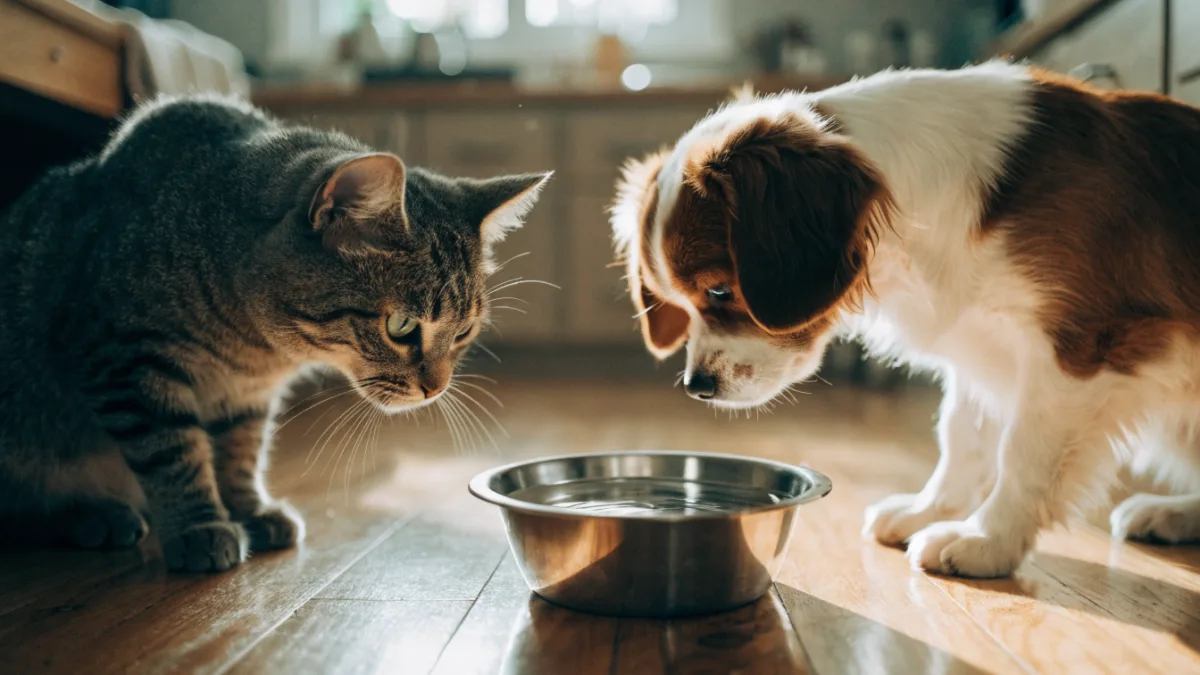
Last spring, a client named Karen brought her eight-year-old Golden Retriever, Biscuit, into my clinic. She wasn’t worried about anything specific — Biscuit seemed fine, she said, maybe just a little hungrier than usual. But then she mentioned something almost in passing: “I’m filling that water bowl three times a day now. Used to be once.” That single sentence triggered a blood panel, which revealed early-stage kidney disease. We caught it early enough to manage, and Biscuit is still doing well. That’s the thing about water bowls — they’re one of the most underappreciated diagnostic tools sitting right in your kitchen.
How Much Water Is Normal?
Before we talk about what’s abnormal, let’s establish a baseline. For dogs, a good rule of thumb is roughly 1 ounce of water per pound of body weight each day. So a 50-pound Labrador needs about 50 ounces — a little over a liter and a half. Cats generally need slightly less, partly because they’re smaller and partly because their bodies are remarkably efficient at conserving moisture. If your cat eats mostly wet food, which can be 70-80% water, you might rarely see them at the bowl at all, and that’s perfectly fine.
But here’s where it gets tricky: “normal” fluctuates. A dog who’s been hiking on a warm afternoon will drink more. A cat who’s just switched from wet food to dry kibble will suddenly start visiting the water dish more often. Neither of these scenarios is cause for alarm. What matters is establishing a pattern over time — and noticing when that pattern shifts.
Drinking Too Much: When the Bowl Empties Too Fast
In veterinary medicine, we call excessive thirst polydipsia — literally “much drinking.” It’s one of the most significant warning signs I look for, and I’d rather owners err on the side of reporting it.
When a pet suddenly starts draining their bowl, I start thinking about three major possibilities:
- Kidney disease: The kidneys lose their ability to concentrate urine, so the body flushes out more water, which means the pet drinks more to compensate. This is especially common in older cats.
- Diabetes mellitus: When blood sugar runs high, the body tries to dump the excess glucose through urine — and takes water with it. I once diagnosed a six-year-old Maine Coon named Ollie after his owner mentioned the litter box was “soaked through” every single day. Classic combination of polydipsia and what we call polyuria (excessive urination).
- Cushing’s disease (hyperadrenocorticism): An overproduction of cortisol disrupts water balance. It’s more common in dogs than cats, particularly in smaller breeds like Poodles and Dachshunds.
None of these are situations where you should wait and see. If your pet’s water consumption has noticeably increased and stayed elevated for more than a few days, that warrants a veterinary visit and bloodwork. Early intervention genuinely changes outcomes — especially with kidney disease, where we can slow progression significantly with the right diet and management plan.
How to Measure at Home
You don’t need fancy equipment. For a week, measure the amount of water you put in the bowl each morning using a measuring cup. Track it in a note on your phone. If the number creeps upward consistently, you have concrete data to share with your vet — and that data is invaluable. There are also now app-connected water fountains that track consumption in milliliters, which I think is a genuinely useful development for pets with known health conditions that require monitoring.
Drinking Too Little: The Quiet Concern
While excessive drinking gets more attention, decreased water intake can be just as serious — and it’s harder to spot because an empty bowl doesn’t tell you whether your pet drank the water or ignored it.
Cats are particularly prone to under-drinking. Their ancestors were desert-dwelling animals who got most of their moisture from prey, so modern house cats don’t have a strong thirst drive. A cat eating only dry food and drinking minimally is essentially living in a state of low-grade dehydration, which over years can contribute to urinary tract issues and crystal formation in the bladder. This is actually one of the reasons I’ve changed my thinking over the years — earlier in my career, I didn’t emphasize wet food enough for cats. The research on feline urinary health has really shifted my recommendations.
Signs that your pet may be dehydrated include:
- Lethargy or unusual tiredness — not wanting to go for walks, sleeping more than normal
- Loss of appetite or turning away from favorite treats
- Dry, sticky, or tacky gums instead of the normal slick, moist feel
- Sunken-looking eyes
- Skin that doesn’t snap back quickly when you gently pull it up between the shoulder blades (what we call a “skin tent”)
If you’re seeing several of these signs together, don’t try to force your pet to drink large amounts of water rapidly — that can actually cause vomiting and make things worse. Call your vet. Dehydration can escalate quickly, especially in very young, very old, or small animals.
The Bowl Itself: More Important Than You Think
Material Matters
A 2023 study by Raspa and colleagues examined the microbiological contamination of pet bowls, and the findings reinforced something I’ve been telling clients for years: the material your bowl is made from genuinely affects your pet’s health. Plastic bowls, while inexpensive, develop microscopic scratches over time that become breeding grounds for bacteria. Stainless steel and ceramic are far more hygienic because they don’t develop those grooves where bacteria can hide.
I’ve seen cases where a pet’s chronic mild gastrointestinal upset resolved entirely after switching from a scratched plastic bowl to a stainless steel one. The owners thought I was overthinking it — until the improvement was obvious.
Location and Routine
Bowl placement matters more than people realize. Water bowls should be in a quiet, low-traffic area where your pet feels safe lingering to drink. If the bowl is right next to a noisy washing machine or in a corner where the dog gets cornered by toddlers, they may avoid it. Cats especially dislike having their water too close to their food or litter box — it’s a hardwired instinct, since in the wild, water near a food source or waste area is more likely to be contaminated.
Daily routine builds healthy habits. Change the water completely at least once a day — don’t just top it off. Wash the bowl with hot water and soap. And yes, run it through the dishwasher regularly if it’s dishwasher-safe. That thin film that develops on the surface of a water bowl? It’s called a biofilm — a layer of bacteria that forms on wet surfaces. Your pet can smell and taste it even when you can’t, and it may be one reason they’re drinking less than they should.
Tap Water Versus Filtered: What I Tell Clients
This is a question I get constantly, and my answer is usually pragmatic. If your local tap water is safe for you to drink, it’s generally fine for your pet. That said, some pets are sensitive to chlorine and will drink more readily from a filtered source. If investing in a filtered fountain gets your cat to drink more water, that’s a worthwhile investment in my book. The goal is hydration — however you get there.
One Final Thought
The water bowl isn’t just a utility item. It’s a daily report on your pet’s health sitting right there on your kitchen floor. The couple of seconds it takes to notice whether the level is higher or lower than yesterday, whether the water looks clean, and whether your pet approaches the bowl willingly — those seconds can catch disease early, sometimes months before other symptoms appear. I think about Biscuit often, and about how different her outcome might have been if Karen had waited until more obvious signs appeared. Your pet can’t tell you when something feels off, but their water bowl often can. All you have to do is pay attention.