

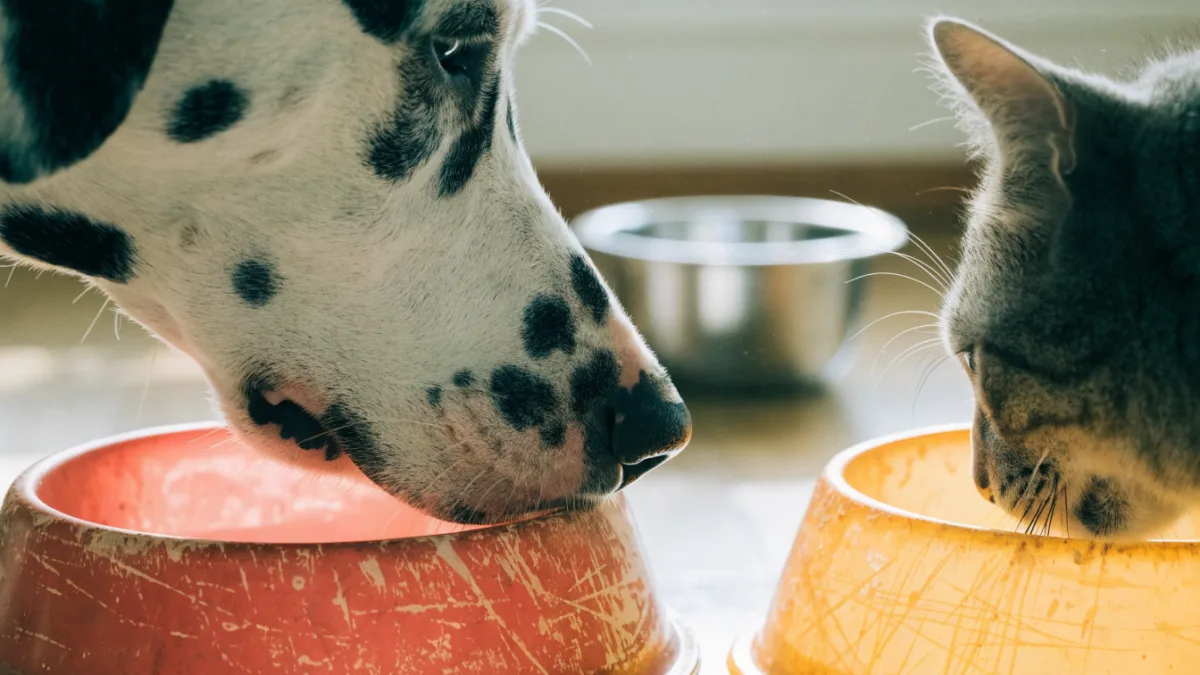
When a client named Marcus brought his three-year-old black Labrador, Duke, into the clinic last spring, he pointed at Duke’s nose and said, “He’s turning into a vintage leather couch.” I laughed, but I understood exactly what he meant. Duke’s once-ink-black nose had developed patchy brown and pink spots, almost overnight it seemed. Marcus was worried it was an autoimmune condition or some kind of infection. The answer, though, was sitting in Duke’s kitchen: a well-loved plastic food bowl with a surface that had become cloudy and scratched from years of use. I see this scenario play out constantly, and it’s one of those issues that feels almost too simple to be real. But the material your pet eats and drinks from can have a genuine, visible impact on their health—and two of the most common manifestations are feline chin acne and canine nose depigmentation.
The Two-Part Problem With Plastic
Plastic pet bowls are cheap, lightweight, and they don’t shatter when your eighty-pound shepherd steps on them. I understand the appeal, and I’m not here to make anyone feel guilty about past choices. But from a clinical standpoint, plastic creates problems through two distinct mechanisms that work together to cause trouble.
The first issue is physical. Plastic scratches easily—even the hard, durable varieties marketed for “aggressive chewers.” Every scrape from a metal scoop, every claw that hooks the rim, every cycle through a hot dishwasher creates microscopic grooves in the surface. Your fingers might feel a smooth bowl, but under a microscope, that plastic looks like a network of tiny canyons. When your dog or cat presses their chin, nose, and lips against the bowl to eat, those rough edges create constant low-grade friction against the skin.
The second issue is what moves into those canyons. Bacteria, oils from pet food, and environmental grime settle into the scratches where sponges and soap can’t fully reach. A study published in the Journal of Small Animal Practice highlighted how porous feeding surfaces can harbor bacterial loads that are difficult to eliminate through normal cleaning routines. Even bowls that look spotless can carry a microbial community that transfers directly to your pet’s face with every meal. This is why even meticulous owners who scrub their pet’s plastic bowl daily still see recurrent skin issues—the bacteria have essentially moved into the walls of the bowl itself.
The pet supply industry is starting to catch on. Independent retailers, including Odyssey Pets in Dallas, have publicly announced their decision to phase out plastic and certain ceramic bowls from their inventory entirely, citing dermatological concerns shared by veterinarians. Larger retailers are slowly following suit as consumer awareness grows. This isn’t alarmism—it’s a practical response to a well-documented problem.
Feline Acne: The Chin Bumps You Can’t Ignore
Cat acne is one of those conditions that sounds almost amusing until you’ve dealt with it. I’ll never forget a patient named Mochi, a sweet seven-year-old calico whose owner brought her in because she had what looked like “a dirty chin that wouldn’t clean off.” On examination, I found a cluster of small blackheads—comedones, in medical terms—across Mochi’s chin and lower lip area. A few had progressed into angry red papules, and one had become a small pustule that was clearly uncomfortable.
Feline acne develops when the hair follicles on a cat’s chin become clogged with excess sebum and keratin, the natural oils and proteins your cat’s skin produces. In mild cases, you’ll see tiny black specks that resemble flea dirt but don’t wash away. In moderate cases, the follicles become inflamed and red. In severe cases, those inflamed bumps become infected, swollen, and painful—and your cat may start rubbing their face against furniture or refusing to eat because pressing their chin against any surface hurts.
Plastic bowls aren’t the sole cause of feline acne—hormonal imbalances, stress, and allergies can all play a role—but they’re one of the most common and most easily fixable triggers. The friction from eating out of a scratched plastic bowl irritates the hair follicles on the chin, and the bacteria transferred from the bowl’s grooves can directly infect those already-compromised follicles. Pam Johnson-Bennett, a certified cat behavior consultant and author of multiple feline behavior books, has spoken publicly about how plastic food bowls are a frequent, preventable contributor to chin acne in cats who otherwise have healthy immune systems.
When Your Dog’s Nose Changes Color
Dudley, the Lab I mentioned earlier, is a classic example of what we call contact depigmentation. His nose didn’t change because of illness or genetics—it changed because of what it was touching twice a day, every day.
A dog’s nose gets its color from melanin, the same pigment that determines human skin and hair color. When melanin production in the nose tissue slows or stops, the dark color fades to brown, pink, or even a pale grayish-white. There are natural, harmless causes of this: seasonal changes can trigger what’s commonly called “snow nose,” where a dark nose lightens during winter months and darkens again in summer. Some dogs simply lose nose pigment as they age.
But contact depigmentation is different. It happens when a dog’s sensitive nose tissue is repeatedly exposed to a material that triggers a localized inflammatory response—essentially a mild, low-grade allergic contact dermatitis. Plastic is the most common trigger because it can contain additives, dyes, and residual compounds that leach out as the surface wears. The immune system reacts to these compounds by creating inflammation in the skin cells, and melanocytes—the cells responsible for producing melanin—are sensitive to inflammation. When they’re irritated, they slow down or stop pigment production.
The good news is that this type of depigmentation is often reversible if the trigger is removed early enough. I recommended Marcus switch Duke to a stainless steel bowl, and within about four months, his nose had darkened significantly. Not every case resolves completely, particularly if the depigmentation has been present for a long time, but switching away from plastic gives the melanocytes the best chance to recover.
It’s worth noting that I always biopsy or investigate further when a dog comes in with sudden nose color changes. While bowl-related depigmentation is common, similar changes can be associated with immune-mediated conditions like discoid lupus erythematosus or vitiligo. If your dog’s nose is changing color, don’t assume it’s the bowl—have your veterinarian evaluate it.
The Ceramic Question
Here’s where things get nuanced, and honestly, I’ve changed my thinking on ceramics over the years. Early in my career, I lumped all ceramic bowls into the “better than plastic” category without much thought. Then I started seeing patients like Pepper, a five-year-old Border Collie mix whose owner had spent good money on what she thought was a high-quality ceramic bowl from a craft market. Pepper developed both chin acne and nose depigmentation within a few months of starting to use it.
When we dug deeper, we discovered the bowl was handmade with an unsealed interior glaze—or possibly no food-safe glaze at all. The clay itself was porous, meaning it was absorbing food residue and harboring bacteria in exactly the same way scratched plastic does. Some imported or vintage ceramics may also contain lead-based glazes, which are a separate health hazard entirely.
Not all ceramics are problematic. A properly manufactured ceramic bowl with a food-safe, fully sealed glaze that’s been certified for human food use can be an excellent choice. The key is integrity—if the glaze is intact, the surface is smooth and non-porous, and the bowl is dishwasher-safe, you’re in good shape. The moment you see crazing, chips, or cracks in the glaze, that bowl needs to go. Bacteria settle into those hairline fractures, and the exposed ceramic underneath is porous enough to absorb whatever touches it.
What to Use Instead
My recommendation, hands down, is stainless steel for food and water bowls. It’s non-porous, it doesn’t scratch easily, it’s dishwasher-safe, and it doesn’t react with food or harbor bacteria in the way plastic does. Look for bowls labeled as food-grade stainless steel—typically 18/8 or 304 stainless. These are the same standards used for human cookware and surgical instruments. Avoid lightweight, cheap bowls that can tip easily, since the thin metal can dent and create crevices where bacteria accumulate.
If you prefer ceramic, choose bowls from reputable manufacturers who explicitly state that their glazes are food-safe and lead-free. The bowl should feel heavy and solid, and the interior should be completely smooth with no visible imperfections in the glaze. Replace it immediately if you notice any cracking or chipping.
Glass bowls are another option, particularly for water, though they’re obviously breakable and may not be practical for larger or more enthusiastic dogs. Look for tempered glass if you go this route.
Regardless of material, the bowl matters less than the maintenance. Wash food bowls daily with hot water and soap, and run them through a dishwasher on the sanitizing cycle at least weekly. Water bowls should be washed every few days at minimum. A clean stainless steel bowl that’s been sitting with days of slimy residue at the bottom can still cause problems.
I also recommend having at least two sets of bowls so you always have a clean one ready while the other is being washed. This small investment pays off in fewer vet visits and a more comfortable pet.
The Bigger Picture: Small Choices, Real Impact
The most rewarding part of addressing bowl-related health issues is seeing how quickly pets improve once the problem is fixed. Mochi’s chin acne cleared up within three weeks of switching from plastic to stainless steel, with no medication needed. Duke’s nose regained most of its dark pigment over four months. Pepper’s skin issues resolved completely once her owner replaced the problematic ceramic bowl. These outcomes represent something I find genuinely hopeful: sometimes the solution to a medical problem is simpler than we expect, and small, intentional changes in how we care for our animals can dramatically improve their quality of life.
Whether you share your home with a dog, a cat, or a small ark of animals, taking a few minutes to evaluate their feeding setup is one of the most accessible, affordable ways to invest in their long-term health. And when you think about the broader picture—choosing durable, non-toxic materials that last for years rather than cheap plastic that ends up in landfills—you’re making a choice that’s better for the planet, too. Our pets rely on us to make informed decisions on their behalf, and the least we can do is make sure the vessel holding their dinner isn’t the thing making them sick.