

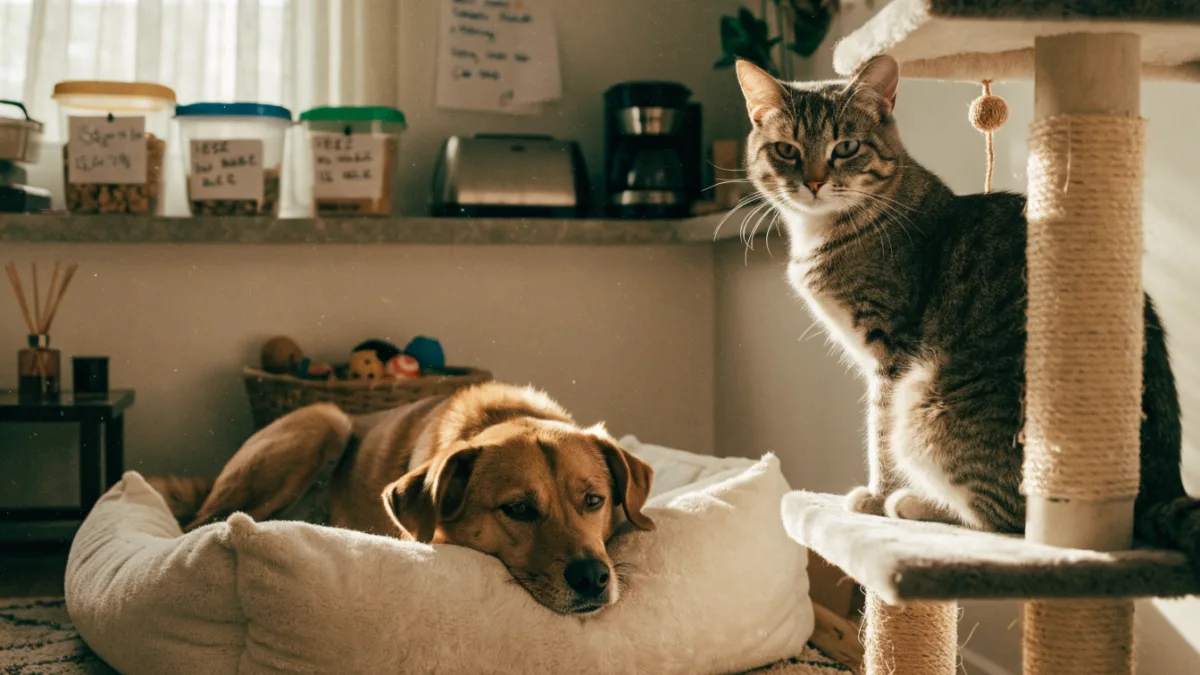
Last spring, I left my two pets—Biscuit, an orange tabby with a vendetta against closed doors, and Barnaby, a mutt who loves people but panics when left alone—for a four-day wedding. I thought I had prepared perfectly. I left a giant bowl of kibble, scribbled down my emergency contact, and asked a neighbor to pop in twice a day. I returned to find Biscuit had lodged herself behind the refrigerator for 48 hours straight, and Barnaby had methodically shredded my living room rug.
It was an absolute disaster, but it taught me a vital lesson: leaving pets with a sitter isn’t just about ticking off feeding schedules and handing over a key. It requires a strategic blend of environmental and behavioral preparation. With animal shelters and vets reporting a massive spike in post-pandemic pet anxiety, our companion animals are often experiencing their first prolonged separations from us. Whether you are dealing with a pandemic puppy or an older rescue, setting them—and their sitter—up for success requires a bit of science and a lot of empathy.
The Meet and Greet: Making the Sitter a Friend
You wouldn’t hand your house keys to a total stranger and expect your pets to be fine with it, but that’s exactly what many of us do. According to experts, [1] begins with a proper introduction so your pet doesn’t view the caregiver as an intruder.
Dogs navigate the world through scent. Having your sitter visit before you leave allows your dog to map the sitter’s smell while you’re still there to act as a security blanket. Have the sitter offer your dog their absolute favorite, high-value treats—think real meat or cheese, not dry biscuits. You want your dog to form a positive association: “This new person smells funny, but they give me roast beef, so they’re officially my best friend.”
Cats, on the other hand, are fiercely territorial and thrive on predictable routines. A disruption—like their human vanishing and a stranger appearing—is a leading cause of feline stress. When a cat is stressed, they don’t just pout; they hide in impossible places, refuse to eat, or start treating your bathmat like a litter box. When the sitter comes over for the meet-and-greet, tell them to completely ignore Biscuit. Let her observe from the top of her cat tree. Trying to force affection on a skeptical cat is the fastest way to ensure they will never trust the sitter.
A common debate is whether it is better to have a sitter come to your home or take your pet to a boarding facility. For cats, keeping them in their familiar territory is almost always the better choice. Moving a cat to a new environment filled with the smells and sounds of other animals is a recipe for panic. For dogs, it depends on their personality, but keeping them in their own home significantly reduces the shock of your absence.
Environmental Hacks: Scent, Space, and the Free-Roaming Debate
Once you’ve covered the behavioral basics, it’s time to hack the physical environment. Your goal is to make your home feel like you never actually left.
The Dirty Laundry Trick
This might sound a little gross, but it is scientifically backed. Take a worn, unwashed t-shirt or a pair of socks and leave it in your pet’s bed. Your concentrated smell acts as an environmental pacifier. When Barnaby gets anxious, he buries his nose in my old gym socks, and his heart rate visibly drops. It reassures him that I am coming back because my scent still dominates the space.
Creating a Safe Zone
Every pet needs a retreat. For Biscuit, it’s a quiet guest bedroom with her favorite cardboard box. For Barnaby, it’s his crate. This brings up a surprisingly heated debate among pet parents: free-roaming versus crating when a sitter is present.
Free-roaming feels nicer to us because we hate the idea of our pets being “locked up.” But Jake (who handles all the dog training in our house) always reminds me that a sitter cannot possibly supervise a dog 24/7. If your dog falls into the 20% to 40% of canines suffering from separation anxiety, they might resort to destructive habits the second the sitter leaves the room to take a shower. Using baby gates or a comfortable, crate-trained space keeps them safe from chewing electrical cords or eating hazardous items. It isn’t a punishment; it is a vital management tool to prevent emergencies.
Artificial Calm
If you have a highly anxious pet, look into plugging in species-specific synthetic pheromone diffusers a few days before you leave. These products mimic the natural calming pheromones mother dogs and cats produce. They won’t drug your pet, but they do help take the edge off and make the environment feel inherently safer.
Writing the Pet Sitter Bible: Routines, Diets, and Debates
When it comes to the daily routine, [2] needs to be exhaustive. Do not just write “1 scoop in the morning” on a sticky note. You need to detail their entire existence.
- Exact Diets: Write down the brand, the exact portion sizes (e.g., “half a cup, leveled, not heaped”), and where the food is stored. Detail any dietary restrictions or allergies clearly.
- The Diet Controversy: Some boarding facilities suggest switching pets to a “sensitive stomach” or bland diet while you are away to prevent stress-induced diarrhea. Do not do this. Most veterinary behaviorists agree that a sudden diet change actually causes gastrointestinal distress. Keep your pet on their exact regular food to avoid compounding their stress with an upset stomach.
- Exercise and Play: Outline specific requirements. “Barnaby needs a 30-minute walk at 7 AM” or “Biscuit demands 15 minutes of laser-pointer play at dusk.” Giving the sitter a schedule to follow helps the pet’s routine remain predictable.
- Cleaning Logistics: For cats, note how often the litter box needs scooping (usually twice a day). Tell the sitter exactly where the enzyme cleaner and paper towels are for inevitable accidents.
Tech, Health, and Handling the Worst-Case Scenario
Modern pet care involves a lot of technology. Smart treat-tossing cameras and automatic feeders are fantastic tools to environmentally prepare your pets, allowing you to monitor their behavior remotely. However, experts strongly warn against talking to your pets through the camera. Hearing your disembodied voice echo through the living room is incredibly confusing for them. They can hear you, and they can smell your scent on your dirty socks, but they cannot find you. This often triggers more anxiety than it soothes. Watch the camera feed, toss the treat, but keep your mouth shut.
Vaccinations and Hazards
Whether you are using an in-home sitter or taking your pet to a commercial facility, up-to-date vaccinations are non-negotiable. [3] means ensuring environmental safety for everyone involved. Rabies, Distemper, and Bordetella (kennel cough) for dogs are universally required, alongside proof of current flea, tick, and heartworm preventatives.
Before you leave, do a sweep of your home. Get down on your hands and knees and look at the world from a dog or cat’s perspective. Pick up toxic plants (like lilies, which are fatal to cats), secure trash cans, and put away small chewable objects that a bored pet might swallow.
Emergency Logistics
Leave a clearly labeled document with all your emergency logistics. This should include:
- Your primary veterinarian’s phone number and address.
- The number and address for the nearest 24-hour emergency animal hospital.
- The number for animal poison control.
- A trusted local friend or neighbor who has a spare key and can act as a backup.
Ensure all pet medications are clearly labeled with the correct dosage and instructions. If your pet needs medication, ask your vet if they can provide pre-measured, clearly marked pill organizers so the sitter doesn’t have to guess.
Preparing your pets for a sitter takes time, patience, and a willingness to see the world from their perspective. But taking the extra steps to manage their environment and routines before you leave is the kindest thing you can do. It ensures your pet stays calm and safe, your home remains intact, and you actually get to enjoy your vacation without getting a series of increasingly frantic text messages from your sitter.
Sources
- preparing for your pet sitter — facebook.com
- the information you leave for your pet sitter — hpanimalhospital.com
- Preparing your pet for boarding or sitting — theheightsveterinaryclinic.com