

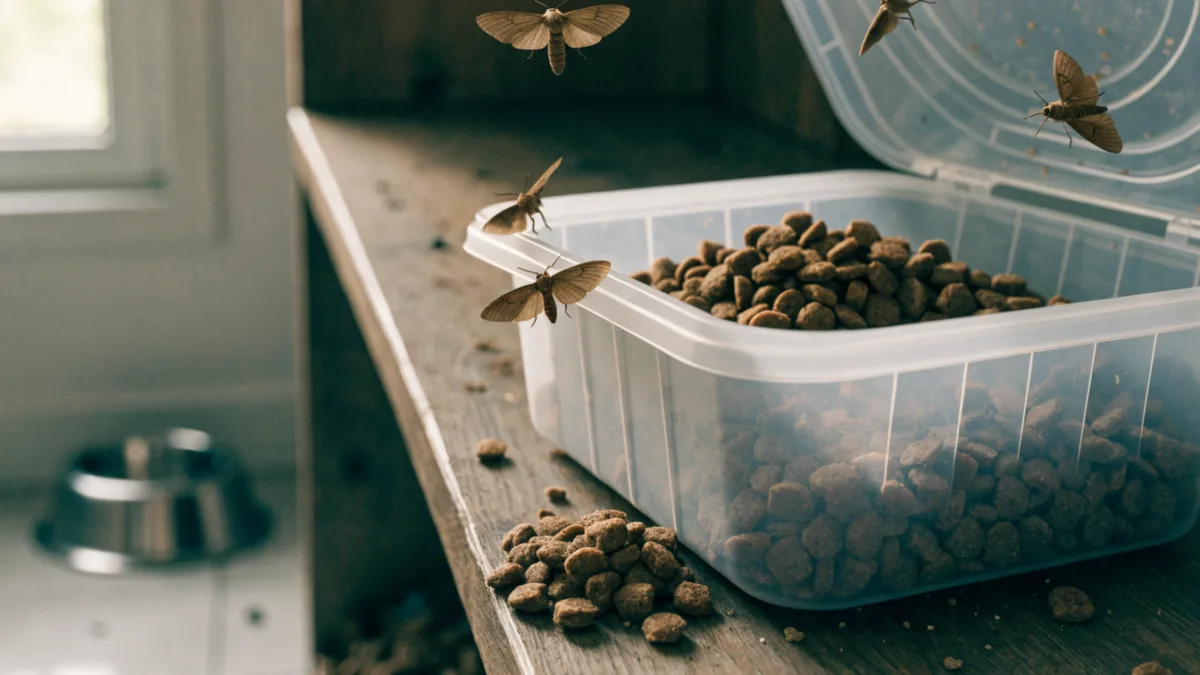
Cooper, a five-year-old Golden Retriever with a normally bottomless appetite, suddenly refused his breakfast. His owner, Mark, brought him into the clinic convinced something was terribly wrong. After a thorough examination, Cooper looked perfectly healthy. When I asked Mark to describe Cooper’s demeanor at home, he mentioned the dog had been sniffing his food bowl and walking away, looking disgusted. I asked Mark to go home, open his kibble bin, and really look at the food. An hour later, my phone rang. Mark was completely grossed out. He found fine, silky webbing clumped under the rim of the lid and tiny larvae crawling along the bottom of the plastic bin. Cooper wasn’t sick; he was just refusing to eat food that had been taken over by pantry moths.
This scenario happens more often than you might think. We spend a great deal of money on high-quality food for our dogs and cats, only to inadvertently serve it up as an all-you-can-eat buffet for pantry moths and house mice. Storing kibble properly isn’t just about keeping it fresh; it is a critical step in protecting your pet’s health from bacterial contamination, mold, and pest-borne diseases.
The Great Kibble Debate: To Dump or Not to Dump
If you walk into the home of almost any pet owner, you will likely find a massive plastic bin filled to the brim with kibble. For years, dumping the entire bag of food into a plastic container was the standard advice. I used to recommend it myself because it keeps the food neatly contained. But the evidence has evolved, and I’ve completely changed my mind on this practice.
Why the Original Bag is Your Best Friend
Dumping kibble directly into a plastic bin is one of the worst things you can do for the food’s integrity. High-quality kibbles are coated with fats and oils to make them palatable and to deliver essential fatty acids. When you pour these coated kibbles into a bare plastic container, those fats stick to the sides and bottom. Over time, these trapped oils oxidize and turn rancid.
I always tell my clients: You wouldn’t leave a stick of butter out on the counter in a warm kitchen for six weeks and then eat it. The fats in your pet’s kibble are no different. Once they oxidize, they turn rancid, and that smell is a magnet for pests.
The original packaging is specifically engineered to prevent this. Retail pet food bags feature a specialized fat barrier—usually a thin plastic or wax lining on the inside of the thick paper—that keeps the oils inside the kibble and oxygen out. The bag also contains critical information you need in the event of an emergency: the manufacturer’s barcode, batch number, and expiration date. If there is a recall, you need this information to verify your pet’s safety.
The Bag-in-Bin Method
The most effective, evidence-based strategy is the “bag-in-container” method. Keep the kibble inside its original retail bag, fold the top down securely to push out excess air, and then place that entire bag inside an airtight container. This gives you a double layer of defense. The bag preserves the food’s nutritional integrity and keeps the oils off the plastic, while the hard container keeps determined chewers and invaders out.
Airtight containers also do double duty by keeping kibble fresh while actively protecting it from ambient humidity. If you live in a humid climate, moisture creeping into dry food can encourage the growth of mold, which produces dangerous mycotoxins.
Evicting the Squatters: Pantry Moths and Mice
Let’s talk about the uninvited guests. Kibble is nutrient-dense, and whether you are dealing with Indianmeal moths or field mice, the scent of fish, poultry, or fat-coated carbohydrates will draw them in from surprisingly long distances.
The Moth Life Cycle
Pantry moths are incredibly persistent. The female moth can lay hundreds of microscopic eggs directly in a food source. When those eggs hatch, the larvae are the ones doing the damage—they are the culprits spinning the webbing Mark found in Cooper’s food.
Because moths are particularly drawn to the smell of oxidizing fats, washing your storage container between batches is non-negotiable. If you simply dump a new bag of kibble into a bin that has old, rancid oil residue on the bottom, you are ringing the dinner bell for every moth in the neighborhood. When you finish a bag of food, wash the bin with hot, soapy water and dry it completely before introducing a new bag.
Mice in the Kitchen
Then there are rodents. A client of mine, Maria, brought her nine-year-old Chihuahua, Lola, into the clinic because the little dog was acting restless at night and picking at her meals. Maria mentioned offhand that she had found some droppings near the corner where she kept the food. Mice are opportunistic and can chew right through paper and thin plastic bags to access the kibble inside.
Storing your pet food off the floor—on a shelf or inside a raised cabinet—significantly reduces the potential for pest infestations. Mice prefer to travel along the floor edges where they feel safe from predators. Placing your food inside a hard, airtight container, and elevating it, makes it nearly impossible for a mouse to reach, let alone chew through.
The Scoop Troop: Hygiene Habits You’re Probably Skipping
Here is a question I ask almost every client who comes in with a pet experiencing unexplained gastrointestinal issues: where do you keep your pet food scoop? Nine times out of ten, the answer is “inside the bin.” It seems completely logical. It keeps the scoop handy and prevents you from having to look for it every morning. But from a clinical perspective, this is a major red flag.
Think about the journey that scoop takes. It goes into the clean food, then into your pet’s bowl, which is coated in saliva and bacteria from their mouth. Then, it goes right back into the clean food bin. You are essentially inoculating your entire 30-pound supply of kibble with oral bacteria every single day. Over time, this creates a bacterial breeding ground that can lead to chronic, low-grade gastrointestinal upset in your pet.
A recent discussion in a [1] highlighted how often this simple hygiene step is overlooked. The solution is straightforward: your pet food scoop should be washed with hot, soapy water every single day. Treat it exactly like a human eating utensil.
Beyond Kibble: Raw, Homemade, and Canned Diets
Not all pet food comes in a massive bag of dry nuggets. The growing trend toward homemade, raw, and specialized diets requires a completely different approach to storage and portioning.
Mastering the Homemade and Raw Diet
I work with several clients who prepare homemade diets for their packs. One woman cares for five large dogs and a cat, preparing all their food from scratch. For owners like her, portion control and safe thawing are the biggest hurdles. Raw and homemade foods are highly perishable and can harbor dangerous bacterial overgrowth if left at room temperature for too long.
The best approach for these diets is to freeze them in pre-portioned containers. I highly recommend using silicone ice cube trays or small silicone bread pans. You can freeze the food in single-serve or meal-sized blocks, pop them out, and store them in a dedicated freezer bag. This allows you to thaw only what your pet needs for the day. [2] frequently share this tip because it drastically reduces food waste and ensures the food doesn’t spoil while sitting in the refrigerator.
Canned Food Care
Wet and canned foods also require strict attention to their environment. While unopened cans are shelf-stable, they must be kept in a cool, dry environment. I’ve seen owners store bulk cases of wet food in their garages. If you live in an area with high humidity or extreme temperature fluctuations, storing cans in a garage is a recipe for disaster. Excess moisture can cause the metal cans to rust. When rust forms, it can compromise the vacuum seal of the can. If that seal breaks, bacteria can enter, and the food inside can become contaminated with dangerous toxins.
Once a can is opened, the [3] change immediately. Opened canned food should be treated like leftover human food. Transfer the unused portion into a glass or plastic container with a tight-fitting lid, store it in the refrigerator, and use it within three to five days.
Storing your pet’s food correctly is ultimately an act of conservation. You are actively preserving the nutritional value of the food, protecting those delicate vitamins and essential fatty acids from degrading. More importantly, you are conserving your pet’s health by preventing them from consuming rancid oils, bacterial contaminants, or pest-infested meals. A few extra minutes spent folding a bag, washing a scoop, and sealing a container can save you an unexpected trip to the vet, ensuring that the high-quality food you invest in provides the maximum nutritional benefit to the animals we love.
Sources
- veterinary nutrition community — facebook.com
- Pet nutrition educators — instagram.com
- guidelines for freshness — wellnesspetfood.com