

Every January, like clockwork, a familiar scene plays out in clinics. A concerned owner brings in their cat or dog, and as the pet goes on the scale, the number climbs higher than it was at their autumn visit. The owner usually has a mix of guilt and bewilderment on their face. “I don’t understand,” they’ll say. “We haven’t changed anything!” The truth is, winter weight gain isn’t a sign of failure — it’s a biological response to shorter days, colder temperatures, and a natural slowdown in activity. Take Moose, a six-year-old orange tabby who lives strictly indoors. His owner, Karen, was baffled when he gained nearly two pounds between November and February. Nothing had changed in his food bowl — but everything had changed in his environment. The sunny window perches that used to inspire his afternoon zoomies were drafty and cold. Karen was working longer hours, so their evening feather-wand sessions had gotten shorter. Moose was doing what any sensible cat would do: sleeping more and burning less.
Why Winter Pet Weight Gain Happens — Even Indoors
Here’s something that surprises a lot of owners: winter pet weight gain affects indoor-only pets just as much as outdoor ones. We tend to assume that because our cats never step outside, the seasons don’t matter to them. But indoor cats are remarkably attuned to environmental shifts. Daylight hours decrease, household temperatures may fluctuate, and human family members are typically less active themselves. Cats, being the opportunistic creatures they are, mirror that energy dip.
The core issue is a caloric imbalance — a fancy way of saying that calories going in outnumber calories being burned. When your dog’s daily walks get cut short because of ice on the sidewalks, or your cat’s play sessions shrink because you’re exhausted from holiday chaos, their energy expenditure drops. If their food intake stays exactly the same, those extra calories get stored as fat. Research from veterinary nutritionists confirms that even a small daily surplus — we’re talking as little as 10 extra calories, roughly the equivalent of a single treat — can add up to noticeable weight gain over a season.
There’s also a hormonal component. Melatonin production increases during darker months in many mammals, which can influence appetite regulation and activity levels. While the research on this specific mechanism in domestic pets is still evolving, clinically, I see the pattern repeat year after year. Pets slow down in winter. They eat the same amount. They gain weight. It’s predictable, which means it’s also preventable.
Rethinking Mealtime: Nutrition Adjustments for Cold Months
The Free-Feeding Trap
If there’s one change worth making above all others for managing winter pet weight gain, it’s this: stop free feeding. I know it feels convenient. I know some owners worry that scheduled meals create anxiety or food aggression. But leaving a full bowl out all day is probably the single biggest driver of year-round obesity — and it becomes especially problematic in winter when pets graze out of sheer boredom.
I had a patient named Biscuit, a sweet-natured Beagle mix whose owner, Tom, insisted the dog “only ate when hungry.” When I asked Tom to track exactly how much food disappeared from the bowl over three days, he was stunned. Biscuit was consuming nearly 40% more than his recommended daily intake, largely through mindless nibbling during the long, dark evenings when Tom was watching television.
Transitioning to measured, scheduled meals doesn’t have to be stressful. For most adult dogs, two meals a day works well. Cats can thrive on three to four small meals, which actually aligns better with their natural feeding pattern of eating multiple small prey items throughout the day.
Proactive Portion Adjustments
Updated veterinary nutrition guidelines are now emphasizing something I’ve been advising for years: adjust portions before the weight appears, not after. If you know your dog’s walks are going to drop from 45 minutes to 20 minutes during January and February, reduce their daily intake by roughly 10-15% accordingly. For cats who typically get fewer interactive play sessions in winter, a similar modest reduction makes sense.
I’ll be honest — I used to tell owners to wait until their pet showed weight gain before adjusting food. I’ve changed my mind on this. Prevention is genuinely easier than correction. Once those fat cells are established, losing weight requires a caloric deficit that can leave pets feeling hungry and frustrated. Keeping weight off in the first place is far kinder.
If you’re feeding a lower-calorie formula to your dog, look for options that maintain adequate protein (at least 25% for adult dogs) and include digestible fiber sources to help them feel full. Always consult your veterinarian before making significant dietary changes, as individual needs vary widely based on age, breed, health status, and body condition.
Indoor Cat Exercise: Activating the Inner Hunter
Keeping indoor cats active during winter requires creativity, but it’s absolutely achievable. The key insight is that cats are designed to hunt — short bursts of intense activity followed by rest. They’re not endurance athletes. Expecting a cat to “exercise” for thirty continuous minutes misses how their bodies and minds actually work.
Foraging Toys and Food Puzzles
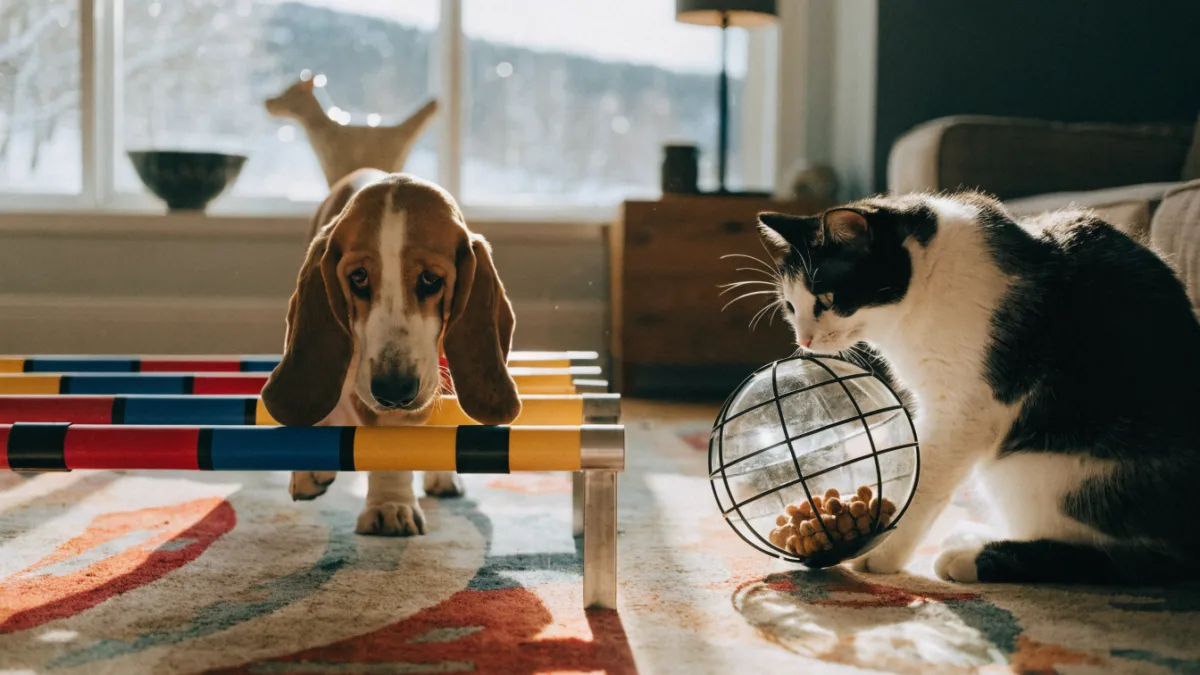
This is where foraging toys become game-changers for indoor cat exercise. Instead of pouring kibble into a bowl, you place portions of your cat’s daily food into puzzle feeders that require manipulation to release the kibble. Some require batting with paws. Others involve rolling, tipping, or sliding compartments. This approach forces the cat to “hunt” for their meal, engaging both their predatory instincts and their problem-solving intelligence.
I recommend starting simple. Ball-style treat dispensers with adjustable difficulty settings are excellent for beginners. Once your cat masters those, you can introduce more complex puzzle boards with multiple compartments and mechanisms. The goal is to slow down eating while simultaneously adding physical and mental activity to what would otherwise be a passive, two-minute meal.
When I suggested food puzzles for Moose, Karen was skeptical. “He’s lazy,” she warned me. Two weeks later, she sent me a video of Moose aggressively batting a puzzle ball across the kitchen floor, fully committed to extracting every last piece of kibble. His evening activity had increased naturally, without anyone forcing him to “work out.”
Short, Focused Play Sessions
Aim for two to three play sessions of 10-15 minutes each, using interactive toys that mimic prey movement. Wand toys with feather attachments, motorized toys that flutter unpredictably, and even app-controlled laser devices can all be effective. The important thing is to mimic the stalk-chase-catch sequence that defines feline hunting behavior. End each session by letting your cat actually “catch” the toy — this provides the satisfaction that completes the predatory sequence and prevents frustration.
Dog Winter Fitness: Indoor Solutions for Bored Dogs
Dogs need engagement just as much as they need physical exercise, and winter is the perfect time to discover that mental stimulation can be just as tiring as a long walk. Fifteen minutes of focused problem-solving work can tire a dog out as effectively as a forty-minute stroll.
DIY Indoor Agility Courses
You don’t need expensive equipment to create a dog winter fitness circuit in your living room. Use a broom handle balanced on two books for a low jump. Drape a blanket over two chairs to create a tunnel. Line up a row of small obstacles for weaving. Guide your dog through the sequence using treats and praise, and you’ve got a workout that challenges their body, mind, and obedience skills simultaneously.
Take Remy, a young Border Collie mix who was destroying furniture out of winter boredom until his owner, Priya, started doing ten-minute indoor agility sessions each evening. The destructive behavior disappeared within a week. Remy wasn’t a bad dog — he was an under-stimulated dog.
Hallway Fetch and Indoor Games
A long hallway becomes an excellent fetch corridor for medium and smaller dogs. For larger breeds, try hide-and-seek games where family members take turns hiding and calling the dog. Tug-of-war with appropriate toys provides both physical exertion and bonding time. Rotate toys regularly to maintain novelty — dogs, like humans, get bored with the same routine.
Maintaining Safe Outdoor Walks
Whenever safely possible, keep outdoor walks in your dog’s routine. Even shortened versions provide valuable sensory enrichment that indoor activities can’t fully replicate. Invest in high-visibility gear — reflective collars, LED attachments, or light-up harnesses — for those late-afternoon walks in darkness. If ice or extreme cold makes walking dangerous, focus your energy on the indoor alternatives rather than risking injury.
Finding the Right Balance
The debate between cutting calories and increasing exercise is one I hear constantly. Some owners feel guilty reducing food portions and prefer to simply add more activity. Others find it easier to adjust the food bowl than to carve out extra playtime. The honest answer, supported by veterinary nutrition research, is that both approaches matter — but they work best together.
Slightly reducing calories while simultaneously increasing indoor activity prevents pets from feeling deprived. If you only cut food, your pet may feel hungry and beg persistently. If you only add exercise, you may not create enough of a caloric deficit to prevent weight gain, especially in pets who are already overweight. Combining a modest dietary adjustment with enriched daily activity addresses both sides of the energy equation.
I always remind owners that the emerging world of pet technology can help. App-controlled interactive toys, motorized prey-simulation devices, and programmable treat dispensers offer new ways to keep pets engaged when you’re busy or away. These aren’t replacements for human interaction, but they’re valuable tools for the long winter hours between your morning departure and evening return.
Key Takeaways
- Watch for the seasonal shift. Even indoor pets experience winter’s activity slowdown. Catching the pattern early makes prevention far easier than correction.
- Measure meals, always. Transition away from free feeding and serve scheduled, portioned meals. If you’re unsure how much to feed, ask your veterinarian to calculate your pet’s specific caloric needs.
- Make them work for it. Foraging toys and food puzzles transform mealtime from passive consumption into active engagement — especially valuable for cats.
- Get creative indoors. DIY agility courses, hallway games, and short training sessions keep dogs physically and mentally fit regardless of weather.
- Adjust proactively. Don’t wait for spring to realize your pet has gained weight. Make small nutritional and lifestyle adjustments at the first sign of reduced activity.
The most compassionate thing we can do for our pets is to recognize that their needs change with the seasons — and to adapt alongside them. Winter doesn’t have to mean weight gain. With a bit of planning, some creative indoor enrichment, and a willingness to rethink the food bowl, your cat or dog can emerge from the cold months just as healthy and vibrant as they entered them. And if you’re reading this in January, already noticing a little extra padding on your pet, don’t panic. You haven’t failed. You’ve just identified the pattern — and now you know exactly how to change it.